
Is a Rowing Machine for Office Gyms the Smarter Cardio Choice?
Office gyms are under more pressure than many buyers expect. The space is often small, the users are mixed, noise matters, and the equipment must be easy to clean, easy to share, and useful enough that employees actually use it.
That is why a rowing machine deserves serious attention in office gym planning. It gives employees a compact cardio option that supports low-impact training, short workout sessions, and full-body movement without turning a workplace wellness room into a crowded commercial gym.
Table of Contents
Why Are Office Gyms Rethinking Cardio Equipment?
Office wellness spaces used to be treated as a bonus. Now they are more connected to employee experience, retention, and daily movement habits. The CDC’s employer guidance for physical activity notes that workplace physical activity programs can support employee health, productivity, morale, and retention.
For facility managers, this changes the buying logic. The question is no longer, “Which cardio machine looks impressive?” A better question is, “Which machine fits the way employees actually use the office?”
A treadmill may feel familiar. A bike may be simple. An elliptical may be popular. But each one has limits in a small corporate fitness room. Treadmills can be noisy and take up permanent floor space. Bikes may not feel like enough of a full-body workout. Ellipticals can be bulky.
A rowing machine sits in a useful middle ground. It can support short cardio sessions, strength endurance, and low-impact movement while staying practical for smaller wellness rooms.
What Makes Rowing Different from Other Office Cardio Options?
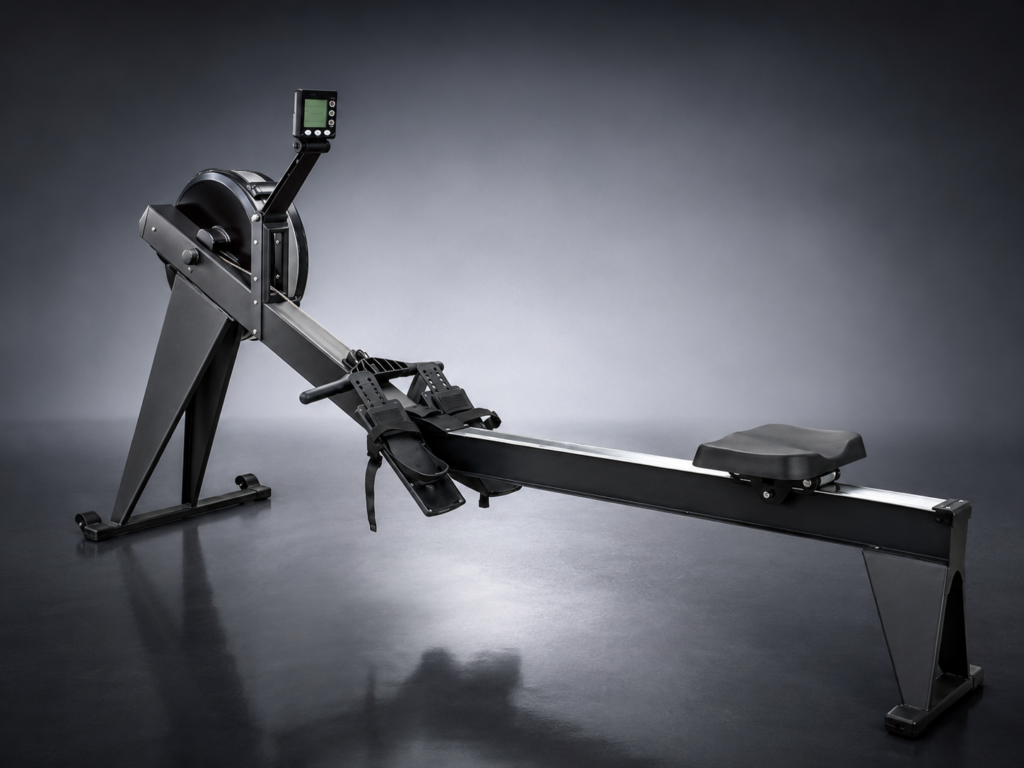
A rowing machine is not just another seated cardio machine. The Wikipedia page on indoor rowers explains that indoor rowers simulate the rowing stroke and are used for fitness and training. In practical office terms, this matters because rowing involves the legs, hips, core, back, shoulders, and arms in one coordinated movement.
For employees with only 10 to 20 minutes, that efficiency is valuable.
A rowing machine also works well for different fitness levels. A beginner can row slowly with moderate resistance. A fitter user can row intervals. A busy employee can use it for a short warm-up before stretching or strength training.
This flexibility is important in office gyms because users are not all athletes. Some may be desk workers returning to exercise. Some may want light cardio after long meetings. Others may want a stronger training session after work.
Buyer Insight: In an office gym, the best cardio machine is not the one with the most features. It is the one that matches space, noise, user confidence, and daily repeat use.
What Problems Do Office Gyms Usually Need to Solve?
The biggest office gym problem is space. Many workplace wellness rooms are converted from spare rooms, storage areas, or small amenity spaces. Buyers may want multiple cardio options, but the room may only support one or two machines comfortably.
A rowing machine can be long during use, but many models allow upright storage or easier movement compared with large fixed cardio equipment. That makes it easier to design a flexible room with mats, light strength equipment, or stretching space.
Noise is another issue. A wellness room may sit near meeting rooms, open desks, or reception areas. Resistance type matters here. Air rowers can create fan noise. Magnetic rowing machines are often quieter. Water rowers create a different sound profile that some users enjoy, but they may require different maintenance checks.
If you are comparing resistance systems, size, and budget at a broader level, this rowing machine buying guide can be used as a supporting reference before narrowing the decision for an office gym.
The third issue is maintenance. Office gyms are often managed by HR, admin teams, or facility staff, not full-time gym technicians. Equipment must be simple to clean and easy to inspect.
Why Does Low-Impact Cardio Matter at Work?
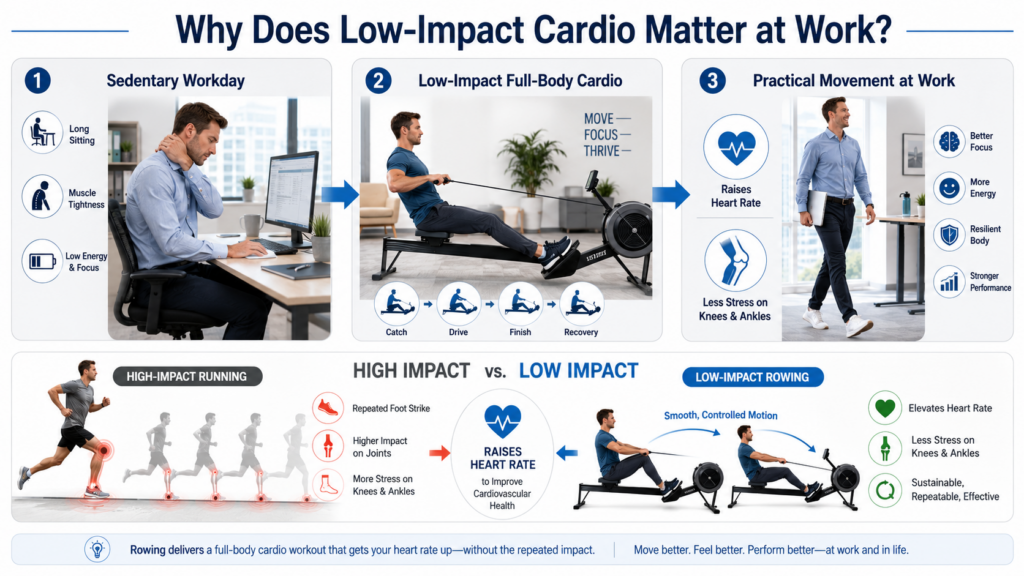
Not every employee wants high-impact exercise during the workday. Some may be wearing office clothes before changing. Some may be easing back into exercise. Others may prefer a workout that does not feel hard on the knees or ankles.
This is where rowing fits well. Rowing can raise heart rate without the repeated foot strike of running. It also gives employees a structured movement pattern, which can be useful in offices where people sit for long periods.
The WHO guidelines on physical activity and sedentary behaviour highlight the importance of regular physical activity and reducing sedentary time. An office rowing area cannot solve sedentary work alone, but it can give employees a practical way to add movement into the day.
Where Does a Rowing Machine Fit Best in an Office Gym?
A rowing machine works especially well in offices where the gym is small but expected to serve many people.
It fits these spaces well:
- corporate wellness rooms;
- coworking fitness areas;
- office buildings with shared amenities;
- technology company wellness spaces;
- call center break-area gyms;
- executive fitness rooms;
- hybrid workplace wellness corners.
In these environments, users often want short sessions rather than long workouts. A rowing machine can support warm-ups, moderate cardio, interval training, and end-of-day stress relief.
For higher-traffic office gyms, durability becomes more important. If the machine will be used by many employees every day, buyers should look closer at frame strength, rail quality, handle durability, seat rollers, monitor reliability, and service access. This is where a more detailed comparison of commercial rowing machine requirements can help buyers avoid choosing a light-duty model for a shared-use environment.
How Should Buyers Choose a Rowing Machine for Office Gyms?
Start with the room, not the machine.
Measure the available floor area, storage position, walking paths, door access, ventilation, and clearance behind the user. Then think about how employees will use the machine during real workdays.
Key buying checks include:
1.Noise level:Choose resistance type based on nearby work areas. Magnetic rowers are often preferred where quiet operation matters.
2.Storage and footprint:Check both active-use dimensions and storage dimensions. A machine that stores upright may be useful in smaller rooms.
3.Shared-use durability:Office equipment needs to handle different body sizes, workout styles, and usage frequency.
4.Ease of cleaning:Handles, seats, rails, footrests, and screens should be easy to wipe down between users.
5.Simple controls:Employees should not need a long setup process just to start a short session.
6.Comfort and accessibility:Seat height, foot adjustment, handle grip, and smooth rail movement affect whether beginners feel comfortable using the machine.
7.Maintenance access:Facility staff should be able to inspect straps, rails, bolts, resistance components, and monitors without complicated disassembly.
Pro Tip: Place a short technique card near the machine. A simple reminder such as “legs, core, arms — then arms, core, legs” helps beginners avoid turning rowing into an arm-only movement.
Is a Rowing Machine Always the Right Choice?
No. It depends on the office, the users, and the space.
A rowing machine may not be the first choice if most employees prefer walking, if the room is too narrow for proper rail clearance, or if the company wants equipment that requires almost no technique learning. In that case, a bike or walking treadmill may be easier to introduce.
But when the goal is compact cardio, low-impact movement, shared use, and full-body training, rowing becomes a strong option. It is especially practical for offices that want one machine to serve multiple fitness levels without using the footprint of several cardio stations.
Conclusion
A rowing machine can be a smart cardio choice for office gyms because it solves several workplace fitness problems at once: limited space, mixed user levels, low-impact training needs, shared use, and manageable maintenance.
It should not be chosen only because rowing is popular. It should be chosen when it matches the room, the users, the noise limits, and the company’s wellness goals. For many modern offices, that combination makes rowing one of the more practical cardio options for employee wellness spaces.
FAQ
Is a rowing machine good for an office gym?
Yes. A rowing machine is useful for office gyms because it provides cardio training, low-impact movement, and full-body exercise in a relatively compact setup.
Is rowing too noisy for an office wellness room?
It depends on the resistance type. Magnetic rowers are usually quieter, while air rowers may create more fan noise. Room placement and flooring also matter.
What type of rowing machine is best for shared employee use?
For shared office use, choose a durable frame, smooth rail, easy cleaning surfaces, simple controls, stable footrests, and reliable resistance.
How much space does an office rowing machine need?
Buyers should check both the active workout footprint and storage dimensions. Enough clearance is needed behind and around the user for safe movement.
Can beginners use a rowing machine safely?
Yes, if they start slowly and learn basic technique. A short instruction card or staff demonstration can help new users feel more confident.
Is a rowing machine better than a treadmill for office gyms?
Not always. A treadmill is familiar and good for walking. A rowing machine is often better when the office needs compact storage, lower impact, and full-body cardio.