
Home Cardio Equipment Trends Are Changing: Why Rowing Machines Fit Modern Home Gyms
Home cardio equipment trends are moving away from one simple question: “Which machine burns calories?” Today’s home fitness buyers care about space, joint comfort, training efficiency, noise level, data tracking, and whether the machine will still be used after the first month.
That shift explains why the rowing machine is getting more attention. It is not just another indoor cardio machine. It fits a broader change in how people build home gyms: lower impact, more muscles involved, smarter tracking, and better use of limited space.
Table of Contents
Why Home Cardio Equipment Trends Are Moving Beyond Treadmills
Treadmills still have a clear place in home fitness. They are familiar, easy to understand, and useful for walking or running routines. But newer home cardio equipment trends show that buyers are becoming more selective.
The American College of Sports Medicine lists wearable technology, mobile exercise apps, and exercise programs for older adults among the top 2025 fitness trends. That points to a broader market shift: home fitness is becoming more connected, more measurable, and more inclusive for different ages and fitness levels. ACSM’s report on top fitness trends for 2025 is useful background for understanding why buyers now care about tracking, usability, and long-term adherence—not just machine size or speed.
For home users, the question is no longer “treadmill or nothing.” It is “Which home gym equipment gives me the most useful workout in the space I actually have?”
The Real Problems Home Fitness Buyers Are Trying to Solve
The biggest home cardio problems are practical.
Many people do not have a dedicated gym room. They have an apartment corner, a garage wall, a spare bedroom, or a shared family space. A large machine that looks good online may become a storage problem at home.
Other buyers worry about joint impact. Running can be effective, but not everyone wants repeated impact on knees, ankles, or hips. Some people also want a machine that does more than train the lower body.
This is where home cardio equipment trends start to favor machines that combine several advantages:
- lower-impact movement
- compact or upright storage
- full-body training feel
- measurable workout data
- quiet or controlled indoor use
- beginner-friendly routines
- interval and steady cardio options
A rowing machine fits many of these needs, which is why it is appearing more often in conversations about smarter home gym equipment.
Why Rowing Machines Are Popular in Home Fitness Trends
One reason why rowing machines are popular is simple: they offer a lot of training value in one machine.
Cleveland Clinic describes rowing as a low-impact, full-body workout that can help build strength and stamina. That combination matters for home fitness because many buyers want cardio without feeling like they need several separate machines. The article on rowing machine benefits is a good health-focused explanation of why rowing appeals to users looking for both cardio and muscular endurance.
A rowing workout uses the legs, core, back, shoulders, and arms in one coordinated movement. For a user with only 20–30 minutes, that can feel more efficient than an indoor cardio machine that mainly trains one movement pattern.
This is the heart of rowing machine for home fitness trends: users want equipment that gives them more complete training without making the home gym bigger.
Rowing Machine vs Traditional Indoor Cardio Machine Options
Different cardio machines solve different problems. The right choice depends on space, training preference, comfort, and long-term use.
| Equipment | Main Advantage | Limitation | Best For |
|---|---|---|---|
| Treadmill | Natural walking and running | Larger footprint, higher impact when running | Walkers and runners |
| Exercise bike | Low-impact seated cardio | Mainly lower-body training | Quiet daily cardio |
| Elliptical | Low-impact standing cardio | Often large and less compact | Joint-friendly cardio |
| Rowing machine | Full-body, low-impact cardio | Requires proper rowing form | Efficient home workouts |
The value of a rowing machine is not that it replaces every other machine. It is that it answers several buyer concerns at once: compact training, low-impact movement, and full-body effort.
Low-Impact Cardio Is Becoming a Bigger Home Priority
Low-impact training is not only for beginners. It is also useful for people who want sustainable workouts they can repeat several times per week.
The CDC’s adult activity guidance states that adults need both aerobic activity and muscle-strengthening activity each week. That does not mean every workout has to be intense or high-impact. It means people need realistic routines they can keep doing. The CDC’s page on adult physical activity guidelines is useful for grounding the article in public health recommendations.
A rowing machine can support this trend because it raises heart rate while keeping the user seated and reducing pounding impact. For many home users, that makes rowing feel more sustainable than running every day.
Space Efficiency Is Changing Home Gym Equipment Choices
Space is one of the strongest forces behind current home cardio equipment trends.
A treadmill may dominate a small room. A large elliptical may be difficult to move. Some exercise bikes are compact, but they usually focus more on lower-body movement.
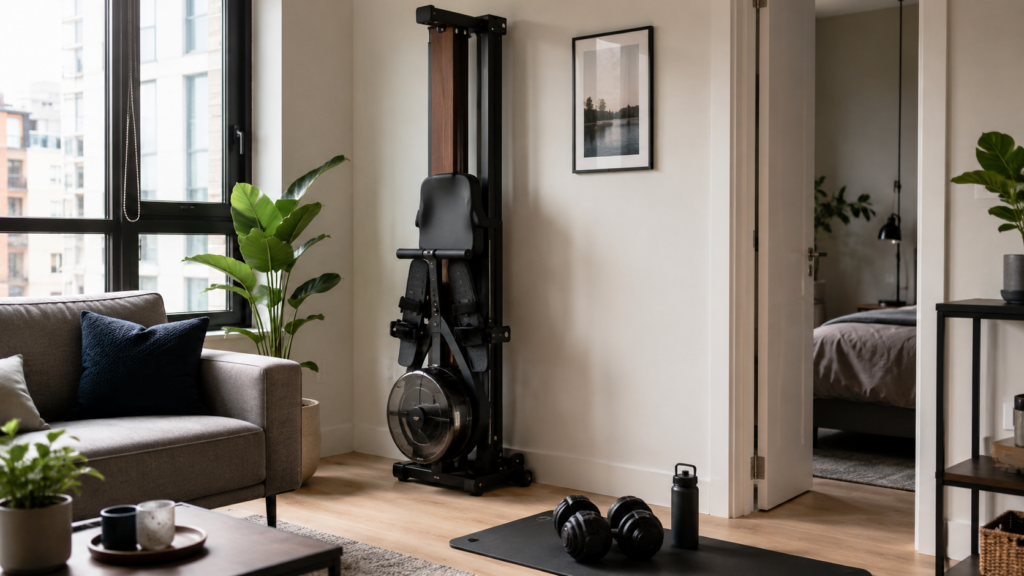
Many rowers can be stored vertically or designed with folding rails, depending on the model. That makes them attractive for apartments, home offices, garage gyms, and shared rooms.
For buyers searching for the best home cardio equipment for small spaces, the rowing machine has a clear advantage: it can deliver a full-body session without requiring a full gym room.
Full-Body Training Is the Rowing Machine Advantage
A treadmill is excellent for walking and running. A bike is good for seated cardio. An elliptical can provide a low-impact standing movement.
But a rowing machine stands out because it connects lower body drive, core stability, and upper body pulling into one rhythm.
Mayo Clinic’s article on aerobic exercise benefits explains that aerobic exercise can improve stamina, fitness, and strength over time. Rowing fits neatly into this idea because it can be used for steady cardio, interval sessions, and endurance-building workouts.
That is why a rower can feel like more than a cardio machine. For many users, it becomes a practical bridge between cardio and muscular endurance.
Where Rowing Machines Fit in Real Home Workout Scenarios
A rower works especially well in these home fitness situations:
- apartment gym corners
- garage gyms
- family fitness rooms
- home office workout breaks
- beginner cardio routines
- low-impact conditioning
- 20-minute interval sessions
- shared equipment for multiple users
This is why home cardio equipment trends are not only about technology. They are about lifestyle fit. A machine has to work with real homes, real schedules, and real motivation levels.
What Buyers Should Check Before Choosing a Rowing Machine
A rowing machine can be a smart choice, but buyers should still compare details before purchasing.
Check these factors:
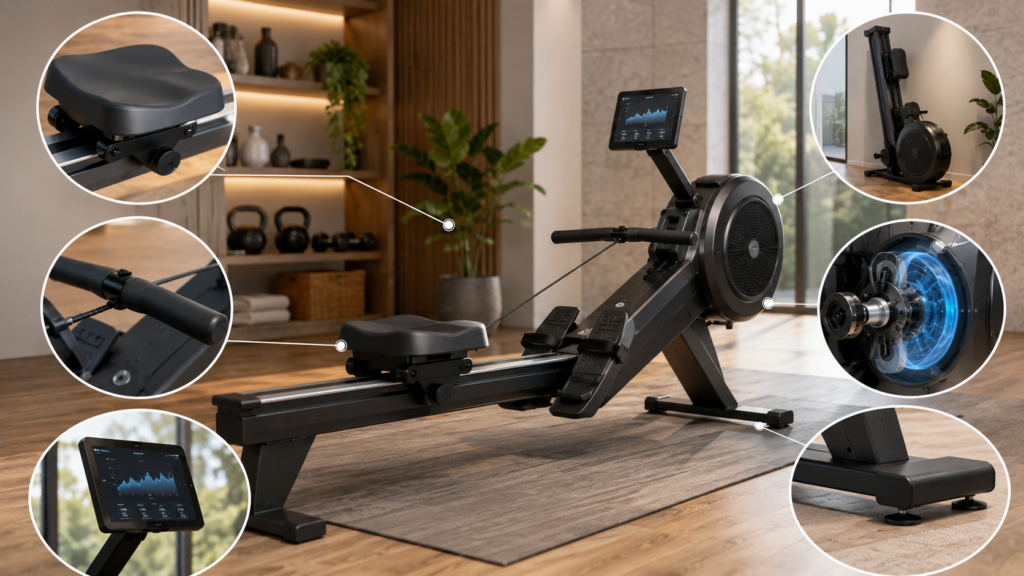
- resistance type
- frame stability
- seat comfort
- handle grip
- rail length
- user height and weight capacity
- monitor data
- storage design
- noise level
- maintenance
- budget
For buyers comparing comfort, resistance, storage, and training goals, this rowing machine buying guide can help turn the trend into a practical purchase decision.
Air, Water, Magnetic, or Smart Rowers: The Next Decision
Once buyers decide that rowing fits their home cardio plan, the next question is resistance type.
Air rowers often feel dynamic and respond well to higher effort. Water rowers are known for a natural rowing feel and water sound. Magnetic rowers are often quieter, making them useful for apartments. Smart rowers add screens, programs, data, and connected training experiences.
For buyers comparing feel, noise, maintenance, and training style, this guide on air rowing machine vs water rowing machine is a useful next step.
Conclusion
Home cardio equipment trends are changing because buyers want more than a machine that simply burns calories. They want equipment that fits smaller spaces, supports low-impact training, delivers useful workout data, and keeps them engaged over time.
That is why rowing machines are becoming a smarter choice for modern home gyms. A rowing machine is not perfect for everyone, but for users who want full-body cardio, compact design, and long-term training value, it fits where many home cardio equipment trends are heading.
FAQ
Why are rowing machines becoming popular?
Rowing machines are becoming popular because they combine low-impact cardio, full-body movement, compact storage, and measurable workouts in one indoor cardio machine.
Is a rowing machine good home gym equipment?
Yes. A rowing machine can be a strong home gym equipment choice for users who want cardio, muscular endurance, and space efficiency.
Is rowing better than running for home cardio?
It depends on the user. Running is great for runners. Rowing may be better for users who want lower impact and more full-body involvement.
Is a rowing machine good for small spaces?
Yes, many rowing machines are foldable or can be stored upright, making them useful for apartments and compact home gyms.
What type of rowing machine is best for home use?
It depends on noise, budget, resistance feel, and training style. Air, water, magnetic, and smart rowers each fit different needs.
Are rowing machines beginner-friendly?
Yes, but beginners should learn proper form, start with short sessions, and increase intensity gradually.
What is the biggest mistake when buying home cardio equipment?
The biggest mistake is choosing by popularity alone instead of matching the machine to space, training goals, comfort, noise level, and long-term use.