
A commercial rowing machine is not just another cardio unit to place beside treadmills and bikes. In a gym, hotel fitness room, studio, or fitness center, it may be used by beginners, athletes, heavier users, and group training members every day. That is why durability, comfort, maintenance, and long-term value matter more than appearance alone.
This guide explains how to judge whether a commercial rowing machine is suitable for high-frequency use and what buyers should check before placing single or bulk orders.
Table of Contents
Why gyms need more than a home-use rower
A home-use rower may work well for one person training a few times per week. A commercial rowing machine in a busy gym faces a different workload: repeated pulling, sweat, cleaning chemicals, seat movement, foot strap adjustment, and users with different body weights and training habits.
This is why commercial buyers should think in terms of lifecycle value. A cheaper gym rowing machine can become expensive if it needs frequent repairs, causes member complaints, or stays out of service during peak hours.
What makes a rowing machine commercial grade?
A commercial rowing machine should be built for repeated daily use, not occasional personal workouts. The difference is usually found in the frame, rail, resistance system, seat rollers, handle, footrests, monitor, and service support.
Key signs of commercial-grade design include:
- Reinforced frame structure
- Stable seat rail with smooth travel
- Higher user weight capacity
- Durable handle, chain, belt, or strap
- Strong footrests and adjustable straps
- Stable resistance under repeated use
- Easy-to-clean surfaces
- Replaceable wear parts
- Clear monitor and simple operation
- Reliable warranty and parts supply
A commercial rowing machine should feel stable under pressure. If the rail shakes, the handle feels weak, or the seat movement is rough, the unit may not be suitable for a fitness club environment.
Commercial rowing machine for fitness centers and daily use
A commercial rowing machine for fitness centers must handle different training styles. Some users will row slowly for warm-up. Others will use it for HIIT intervals, group classes, or power training.
That means the gym rowing machine must deliver consistent resistance even when users pull hard. It also needs to remain comfortable for longer sessions. If the seat is uncomfortable, the handle grip is poor, or the footrests are difficult to adjust, members may avoid the machine.
For fitness club equipment, usage rate is part of the investment. A rower that members enjoy using can support cardio zones, warm-up areas, group training, and low-impact conditioning programs.
Durability factors buyers should check first
Durability is the first filter when selecting a commercial rowing machine. In a commercial setting, small design weaknesses can become repeated maintenance problems.
| Durability Factor | Why It Matters in Gyms |
|---|---|
| Frame strength | Supports repeated daily use |
| Seat rail | Affects smooth rowing movement |
| Handle and belt or chain | High-wear components |
| Footrests | Support user safety and comfort |
| Resistance system | Determines training feel and consistency |
| Monitor and wiring | Affects user experience and service needs |
| Spare parts | Reduces downtime |
A commercial rowing machine should also be evaluated for cleaning access. Sweat and dust build up quickly in gyms, so rails, handles, footrests, and resistance housings should be easy to wipe and inspect.
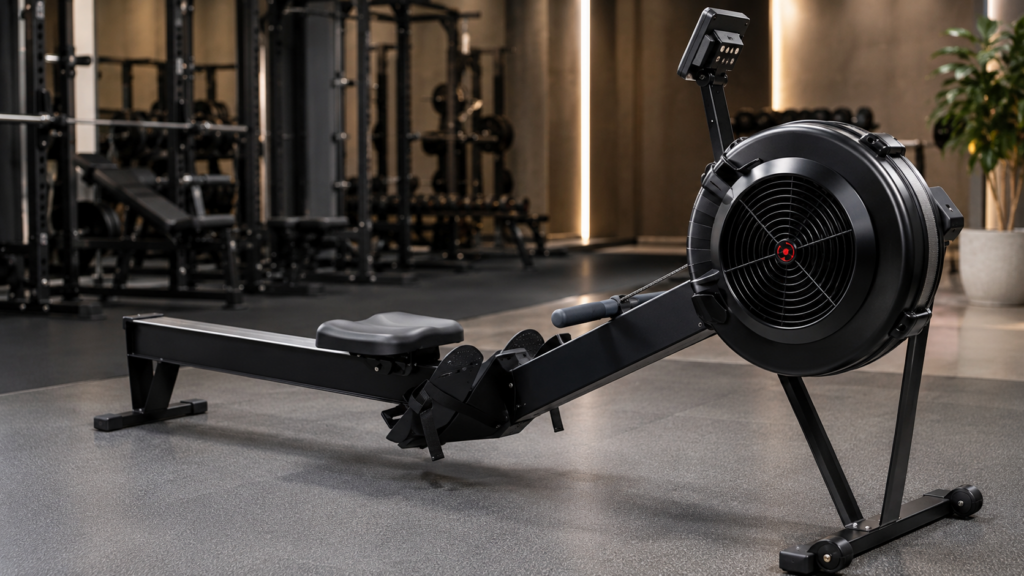
User comfort affects machine usage
Commercial buyers sometimes focus heavily on strength and forget comfort. That is a mistake. A commercial rowing machine must be durable, but it also has to feel good for different users.
Important comfort details include:
- Smooth seat travel
- Comfortable handle grip
- Easy foot strap adjustment
- Stable foot platform
- Clear monitor display
- Natural resistance feel
- Manageable noise level
- Suitable rail length for taller users
- Easy mounting and dismounting
For gyms and hotels, user comfort also affects brand perception. A noisy, unstable, or uncomfortable rower may make the fitness area feel poorly managed.
Air, water, or magnetic resistance for commercial gyms
Resistance type is one of the biggest choices in a gym rower buying guide.
Air rowing machines are popular in performance gyms because resistance responds naturally to pulling effort. They can be excellent for HIIT, group training, and athletic conditioning, but they may produce more noise.
Water rowing machines offer a smooth, natural rowing feel and often look attractive in hotel gyms or boutique studios. Buyers should consider water tank care and long-term maintenance.
Magnetic rowing machines are usually quieter and may be easier to place in hotels, apartments, corporate gyms, or smaller studios where noise matters.
If you are comparing resistance types in detail, this air rowing machine vs water rowing machine guide explains how different systems affect training feel, noise, maintenance, and user experience.
Maintenance and downtime matter more than buyers expect
A commercial rowing machine should be easy to maintain because downtime affects both member experience and operating cost.
Concept2’s RowErg maintenance guidance recommends wiping the monorail regularly and avoiding harsh chemicals such as mineral acids or bleach. See its RowErg maintenance page. Even if your gym uses a different machine, the principle is useful: regular cleaning and simple checks protect performance.
Typical maintenance checks include:
- Wipe the rail after heavy use
- Check handle, strap, belt, or chain condition
- Inspect foot straps
- Tighten loose bolts
- Clean around the seat rollers
- Check monitor function
- Maintain water tanks if using water resistance
- Keep spare wear parts available
A commercial rowing machine with poor parts support can create longer downtime than expected. For commercial buyers, serviceability is part of the purchase decision.
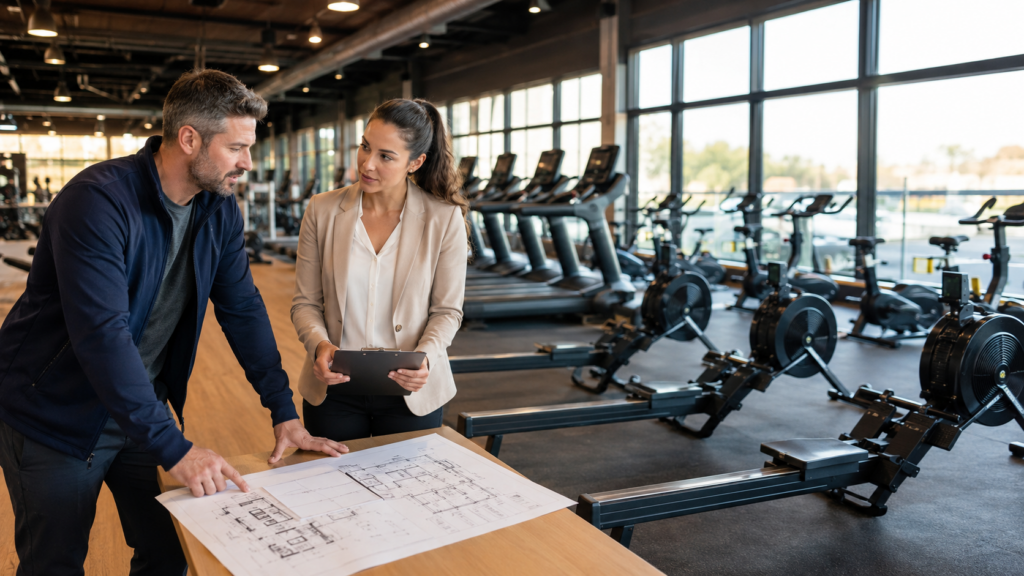
Planning bulk purchase for gyms, hotels, and studios
A single commercial rowing machine may be enough for a small hotel gym. A fitness center may need several units depending on member traffic and programming.
Before bulk purchase, buyers should consider:
- Floor space and spacing between machines
- Expected daily usage
- Group class requirements
- Noise level
- User weight range
- Storage or movement needs
- Packaging and shipping
- Installation support
- Warranty terms
- Spare parts plan
- After-sales response time
A commercial rowing machine for fitness centers should not be selected only by unit price. Bulk buyers should compare long-term maintenance, user satisfaction, and supplier support.
For a broader buying framework, this rowing machine buying guide can help buyers compare resistance type, structure, size, display, storage, and training needs before making a final decision.
When a commercial rowing machine may not be the right fit
A commercial rowing machine is valuable, but it is not always the right first purchase. If your gym has very limited space, no maintenance plan, or low demand for rowing-based training, another type of cardio equipment may be used more often.It may also be a mistake to buy home-use rowers for a high-traffic gym just to reduce upfront cost.
If the machines wear out quickly, the total cost may become higher.
Future trend in gym cardio equipment
Rowing is becoming more important in gyms because it supports full-body cardio, low-impact training, interval workouts, and class programming. The American College of Sports Medicine notes that regular physical activity offers many health benefits and provides exercise guidance through its physical activity guidelines resource.
For commercial facilities, the trend is clear: buyers want cardio equipment that is durable, space-efficient, easy to maintain, and useful for different users. A commercial rowing machine fits this direction when it offers stable construction, smooth resistance, clear data display, and reliable support.
Conclusion
A commercial rowing machine should be judged by durability, user comfort, maintenance needs, resistance type, and long-term value. For gyms, hotels, studios, and fitness centers, the best choice is not always the cheapest model or the most attractive design.
A reliable commercial rowing machine should handle repeated daily use, support different users, remain easy to maintain, and fit the facility’s training style. When selected carefully, a commercial rowing machine can become one of the most practical cardio equipment investments in a busy fitness space.
FAQ
What is a commercial rowing machine?
A commercial rowing machine is designed for repeated use in gyms, fitness centers, hotels, and studios, with stronger structure and better durability than home-use models.
How do I choose a rowing machine for a gym?
Check frame strength, user weight capacity, resistance type, seat rail durability, maintenance needs, comfort, spare parts, and supplier support.
Is an air or water rower better for gyms?
Air rowers are popular for performance training and group workouts. Water rowers offer a smoother natural feel and quieter user experience. The better choice depends on your facility.
Are rowing machines good cardio equipment for fitness clubs?
Yes. Rowing supports full-body cardio training, low-impact conditioning, warm-ups, and group workouts, making it useful fitness club equipment.
How many rowers does a fitness center need?
It depends on member traffic, floor space, class programming, and whether rowing is used for warm-up, cardio zones, or group training.
Do commercial rowing machines need much maintenance?
Good models are not difficult to maintain, but gyms should clean rails, check straps or chains, inspect bolts, and maintain water tanks if using water resistance.