
Air rowing machine vs water rowing machine is usually not a question of “which one is better.” The better question is: which resistance system fits your training style, home space, noise tolerance, maintenance habits, and budget?
Both an air rower and a water rower can support effective cardio training. The difference is how they feel, sound, respond to effort, and fit into daily use. This guide compares air rowing machine vs water rowing machine by rowing machine resistance, training feel, noise, maintenance, price, home use, gym use, and long-term value.
Table of Contents
Why Rowing Machine Resistance Matters More Than Appearance
When buyers compare rowing machines, they often start with frame style, screen size, storage, or price. Those details matter, but resistance system affects the workout more directly.
For a broader buying framework, including size, storage, user goals, and resistance options, you can also refer to our rowing machine buying guide. This article goes deeper into air rowing machine vs water rowing machine specifically, because air and water resistance create very different workout experiences.
Air, Water, or Magnetic Rowing Machine: Should You Compare All Three?
An air rower uses a fan. The harder and faster you pull, the more air resistance you create. It feels responsive and powerful, especially during interval training.
A water rower uses paddles inside a water tank. The faster you pull, the more resistance the water creates. It usually feels smoother and more natural.
A magnetic rower uses magnets to control resistance. It is often quieter and more controlled, but the resistance may feel less dynamic than air or water.
So, when comparing water rower vs air rower vs magnetic, the decision usually looks like this:
- Choose air for intensity and training feedback.
- Choose water for natural feel and home comfort.
- Choose magnetic for quiet, controlled resistance.
How an Air Rower Works
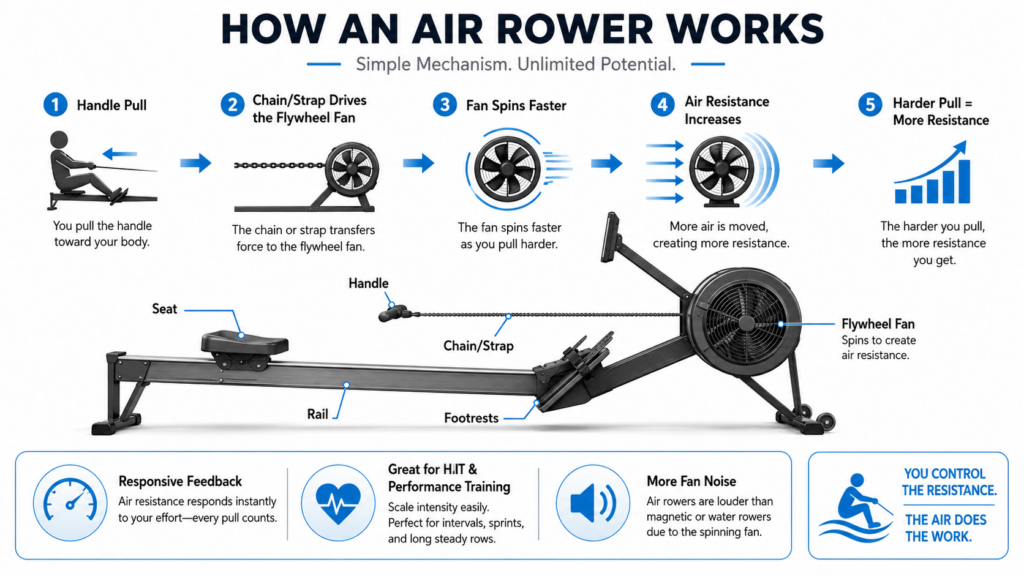
An air rower uses a flywheel fan to create resistance. As you pull the handle, the fan spins. The harder you pull, the more resistance you feel.
This makes an air rower popular for HIIT, performance training, gym use, and users who like clear effort feedback. It rewards strong pulls immediately. If you sprint, the resistance rises. If you slow down, the resistance drops.
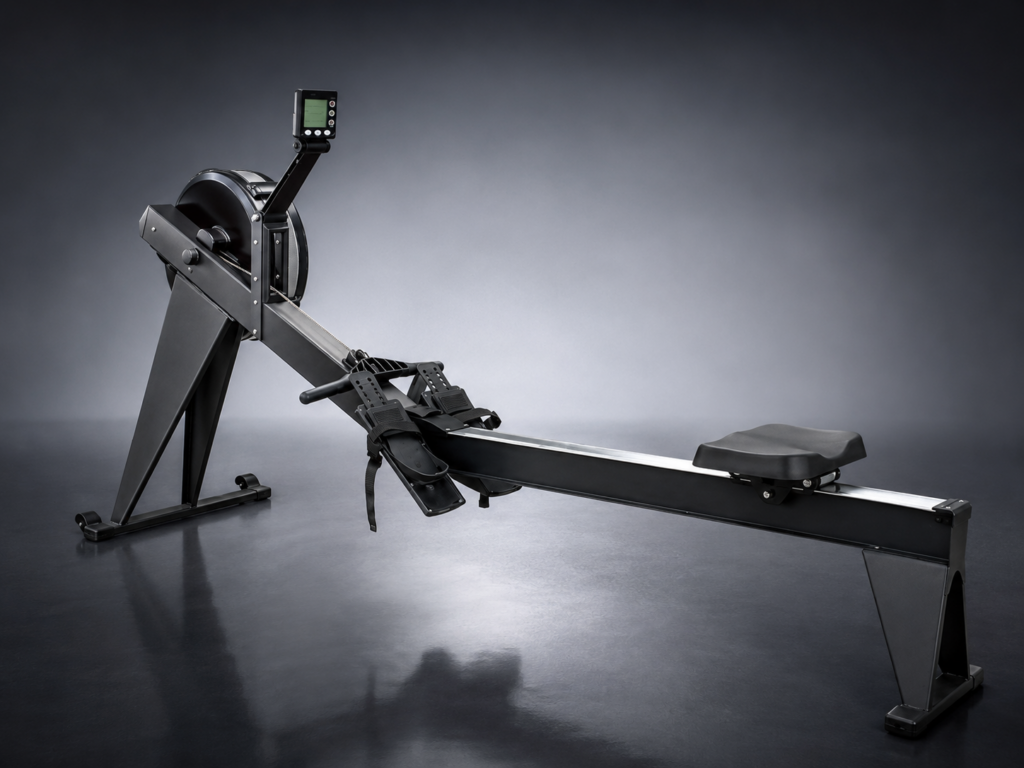
For buyers who need a performance-oriented air rower for high-frequency training, the Rowing Machine ZF6100-2 can be considered for gyms, training rooms, and users who prefer responsive air resistance.
The main tradeoff is sound. Air rowers usually produce more fan noise, especially during hard intervals. For a garage gym or commercial fitness space, that may be acceptable. For a quiet apartment, it may matter more.
How a Water Rower Works
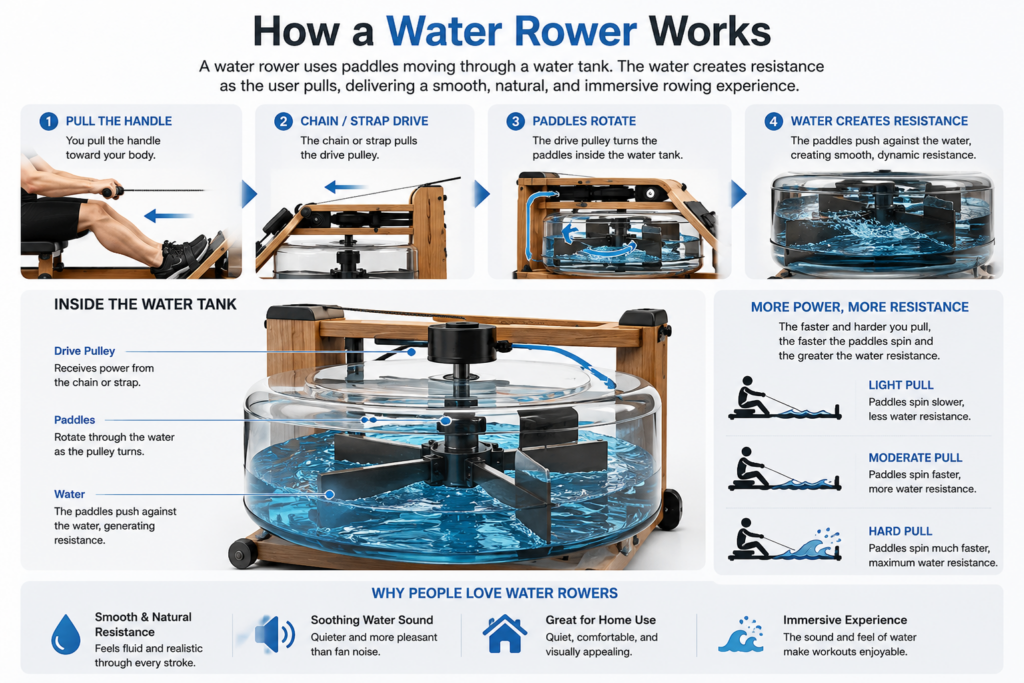
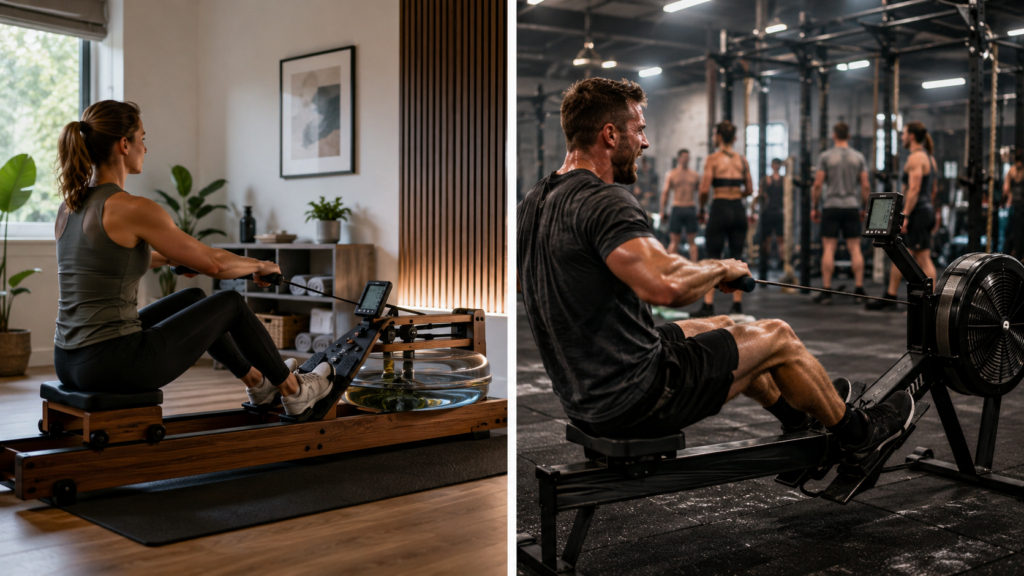
A water rower uses paddles moving through a water tank. The water creates resistance as the user pulls. This gives a smoother, more fluid feeling.
Many people like the natural sound of water. It can feel less harsh than fan noise and more comfortable for steady cardio sessions. This is one reason searches like water rowing machine benefits and is water rowing machine good are common.
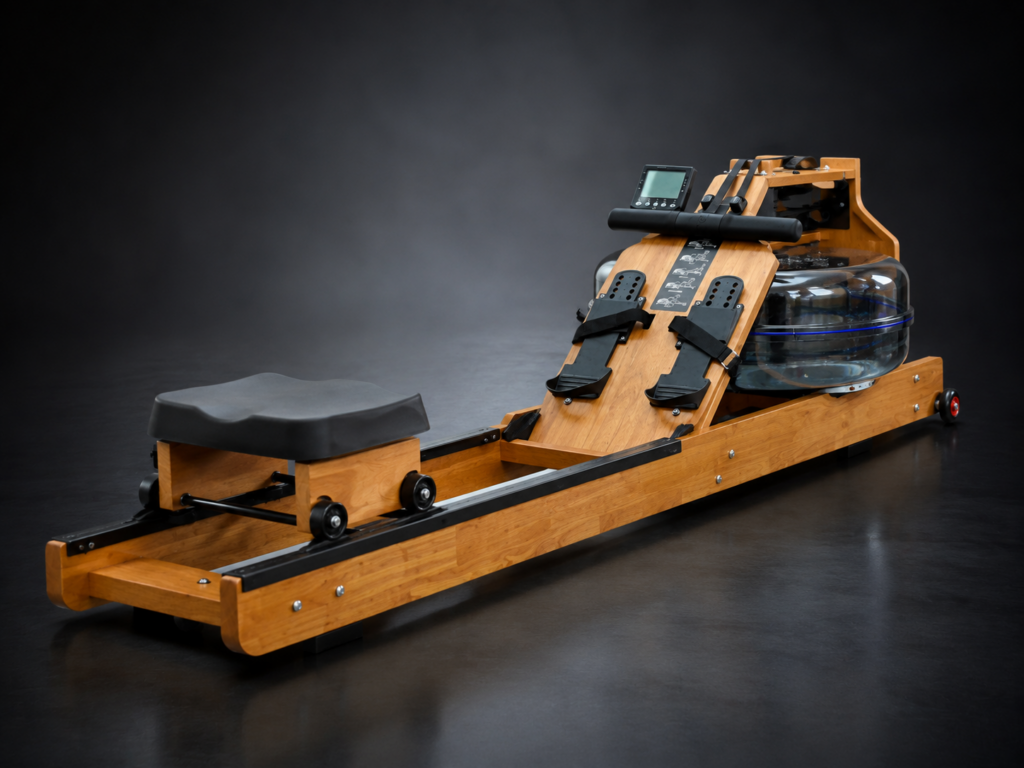
For home users or boutique fitness spaces that prefer a smoother rowing feel and quieter training atmosphere, the 7200 Water Rowing Machine can be a suitable water rower option.
Air rowing machine vs water rowing machine becomes easier to understand here: air feels more direct and athletic; water feels smoother and more immersive.
Air Rowing Machine vs Water Rowing Machine: Training Feel
Training feel is one of the most important differences.
An air rower feels sharp, responsive, and intense. It is well suited for sprint intervals, competitive workouts, and users who like measurable effort changes. Many commercial gyms choose air rowers because they handle high-intensity training well.
A water rower feels smoother and more rhythmic. The resistance builds naturally through the stroke, and the sound of water can make longer sessions feel more comfortable. For beginners, that smoother rhythm may feel less intimidating.
If your goal is hard conditioning, an air rower may feel better. If your goal is steady cardio, home fitness, or enjoyable consistency, a water rower may be easier to keep using.
That is why air rowing machine vs water rowing machine should be judged by training purpose, not only by product appearance.
Noise Level: Which Rower Is Better for Home Use?
Noise is a major reason people search air or water rowing machine for home.
An air rower produces fan noise. The harder you train, the louder it gets. Some users like that sound because it matches workout intensity. Others find it too loud for apartments, shared rooms, or late-night training.
A water rower produces water movement sound. It is still not silent, but the sound is usually softer and more natural. For a living room, home gym, or boutique studio, this can be a strong advantage.
If you train in a garage gym or commercial facility, air noise may not be a problem. If you train near family members, neighbors, or shared walls, the water rower may be more comfortable.
Are Water Rowing Machines Good for Weight Loss and Home Fitness?
A common search question is: is a water rowing machine good for weight loss?
The advantage of a water rower for home fitness is consistency. If the machine feels smoother, sounds better, and fits the home environment, users may be more likely to keep training.
However, air rowing machine vs water rowing machine for weight loss still depends on effort. A hard air rower workout can also be very effective.
Maintenance: Fan Cleaning vs Water Tank Care
Maintenance is where many buyers change their minds.
An air rower does not require water tank care. Basic maintenance usually includes cleaning the rail, checking the seat rollers, inspecting the chain or belt, and keeping the fan area free of dust.
A water rower needs attention to the water tank. Users should check water quality, follow the manufacturer’s water treatment guidance, avoid long-term direct sunlight, and inspect for leakage or tank issues.
Neither type is difficult to maintain, but they ask for different habits. Air rowers are usually more direct. Water rowers are not complicated, but the water tank should not be ignored.
For commercial gyms, easier maintenance and high-frequency durability may favor air rowers. For home users, water rower maintenance may be acceptable because usage is usually lighter.
Price and Long-Term Value
Price should not be judged only by the purchase number.
An air rower often provides strong value for training intensity, durability, and commercial use. If many users will train hard every day, its resistance response and simple maintenance can make sense.
A water rower often provides value through feel, sound, and home-friendly design. If the user cares about atmosphere, natural rowing feel, and quieter sessions, the higher perceived comfort may be worth it.
Long-term value depends on:
- training frequency;
- user type;
- maintenance habits;
- home or gym setting;
- available space;
- warranty and service;
- replacement parts;
- expected workout intensity.
In other words, air rowing machine vs water rowing machine is a value decision, not only a price comparison.
Which Is Better for Home, Gym, or Commercial Use?
| Scenario | Better Choice | Why |
|---|---|---|
| Apartment home gym | Water rower | Softer sound and smoother feel |
| Garage gym | Air rower or water rower | Depends on training style |
| HIIT training | Air rower | Strong resistance response |
| Beginner home user | Water rower | More comfortable rowing feel |
| Commercial gym | Air rower | Durable and training-focused |
| Boutique fitness studio | Water rower | Better sound and visual experience |
| Performance training | Air rower | More direct intensity feedback |
For home buyers asking air or water rowing machine for home, water is often easier to live with. For gyms asking about high-frequency training, air often makes more sense.
Air Rower vs Water Rower Comparison Table
| Factor | Air Rower | Water Rower |
|---|---|---|
| Resistance system | Fan-based air resistance | Water tank resistance |
| Training feel | Strong, responsive, intense | Smooth, natural, steady |
| Noise | Louder fan sound | Softer water sound |
| Maintenance | Fan, rail, chain or belt cleaning | Water tank care and rail cleaning |
| Best for | HIIT, gyms, performance training | Home use, comfort, steady cardio |
| Beginner-friendly | Good, but can feel intense | Often more comfortable |
| Commercial use | Strong option | Good for boutique spaces |
| Price logic | Broad range | Often mid-to-premium |
This is the practical difference behind water rowing machine vs air rower searches: air is usually chosen for performance, while water is often chosen for experience.
How to Choose the Right Rowing Machine for Your Space
Before making a decision, ask these questions:
1.What is your training goal?
Choose air for HIIT, conditioning, and intense performance sessions. Choose water for steady cardio, comfort, and natural rowing feel.
2.How much noise can your space accept?
Choose water if you train in an apartment or shared room. Choose air if fan noise is acceptable.
3.How do you feel about maintenance?
Choose air if you prefer simple cleaning. Choose water if you are comfortable maintaining a water tank.
4.Is the machine for home or commercial use?
Air rowers are strong for high-use training spaces. Water rowers work well in home gyms, hotels, and boutique fitness rooms.
5.What experience keeps you consistent?
The best rowing machine is the one you will actually use.
Conclusion
Air rowing machine vs water rowing machine comes down to resistance feel, noise, maintenance, cost, and where the machine will be used.
Choose an air rower if you want strong response, hard intervals, performance training, and commercial durability. Choose a water rower if you want smooth resistance, natural sound, home comfort, and steady cardio consistency.
The right choice is not the rower that looks better online. The right choice is the one that fits your training style, space, and long-term habits. Once you compare air rowing machine vs water rowing machine by real use, the decision becomes much easier.
FAQ
Is an air rowing machine better than a water rowing machine?
Not always. An air rower is usually better for high-intensity training, performance feedback, and commercial gym use. A water rower is usually better for natural feel, smoother cardio, and quieter home training.
Is a water rowing machine good for weight loss?
Yes. A water rowing machine can support weight loss when used consistently with proper workout intensity and diet control. Rowing is a full-body cardio exercise, but results depend on consistency.
What are the main water rowing machine benefits?
The main water rowing machine benefits are smooth resistance, natural rowing feel, softer water sound, home-friendly training, and steady cardio comfort.
Water rower vs air rower vs magnetic: which is best?
Air is best for intense training feedback. Water is best for natural feel. Magnetic is best for quiet controlled resistance. The right choice depends on your space and training goal.
Is a water rower quieter than an air rower?
Usually yes. A water rower creates water movement sound, while an air rower creates fan noise that gets louder during harder strokes.
Do water rowers need more maintenance?
Water rowers need tank care and water treatment. Air rowers do not need water maintenance, but they still need rail, fan, chain, or belt cleaning.
Is rowing safe for high blood pressure, hip replacement, or joint concerns?
Rowing is generally low impact, but people with high blood pressure, recent surgery, hip replacement, or medical conditions should ask a doctor or physical therapist before starting a rowing routine.