
A rowing machine buying guide should help you make a confident decision before you spend money, not just list product features. A rowing machine can support cardio training, strength endurance, and low-impact full-body workouts, but the right model depends on your space, resistance preference, budget, noise tolerance, user weight, and whether the machine is for home or commercial use.
This rowing machine buying guide walks through the key choices so you can compare a home rowing machine, a commercial rowing machine, and different resistance systems without guessing.
Table of Contents
Why Choosing a Rowing Machine Is Not Just About Price
Many buyers start with price, but that often leads to the wrong machine. A low-cost rowing machine may be enough for light home workouts, but it may feel unstable for taller or heavier users. A commercial rowing machine may be durable, but it can be too large, loud, or expensive for an apartment.
This rowing machine buying guide starts with use case because a machine for daily gym traffic needs different priorities from a machine used three times a week at home.
The American Council on Exercise explains that rowing recruits many muscle groups and can provide a total-body cardiovascular and muscle-building workout while remaining low impact. You can reference the ACE rowing workout guide when explaining why rowing remains popular for both beginners and experienced users.
What a Rowing Machine Actually Trains
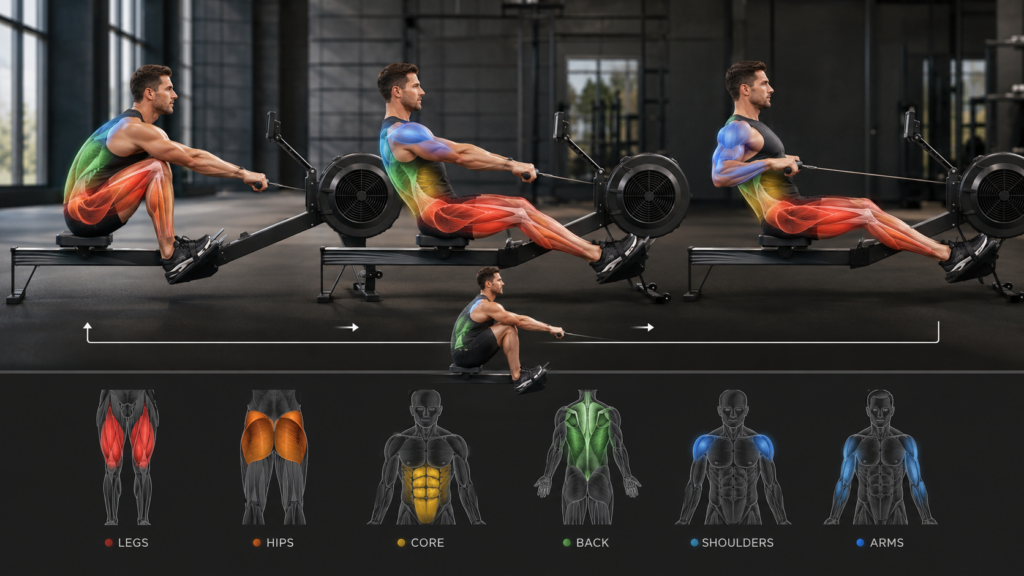
A rowing machine is an indoor fitness machine that simulates the rowing stroke. It works through a repeated drive and recovery pattern involving the legs, hips, core, back, shoulders, and arms. The Wikipedia page on the indoor rower gives a useful overview of how indoor rowing machines are used for training and exercise measurement.
For buyers, the key point is simple: rowing is not only an arm workout. A good stroke uses leg drive first, then body swing, then arm pull. That full-body pattern is why many home users choose a rowing machine instead of a treadmill or bike when they want cardio and muscular endurance in one machine.
This rowing machine buying guide focuses on buying decisions, but proper technique still matters. A poorly designed machine or unstable rail can make correct form harder to maintain.
Rowing Machine Types Compared: Water, Air, Magnetic, and Hydraulic
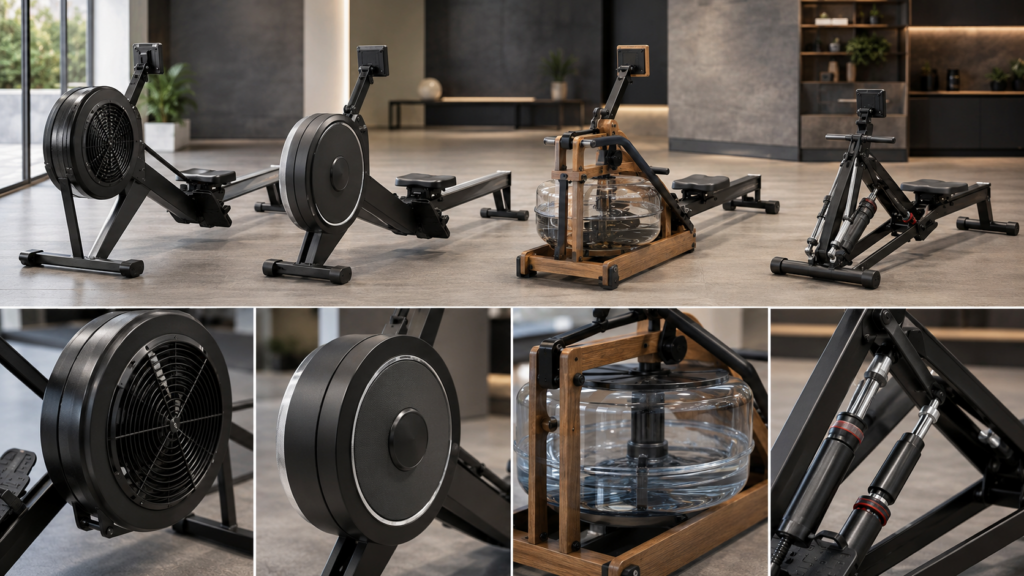
Not every rowing machine feels the same. The resistance system changes the rowing experience, noise level, maintenance needs, storage design, and long-term suitability. This is one of the most important parts of any rowing machine buying guide, especially for buyers comparing home and commercial use.
| Rowing Machine Type | Rowing Feel | Noise Level | Maintenance | Best For |
|---|---|---|---|---|
| Water rowing machine | Smooth, natural, closer to outdoor rowing | Medium, with water sound | Water tank care may be needed | Premium home gyms, users who want realistic rowing feel |
| Air rowing machine | Dynamic and responsive; resistance increases as you row harder | Medium to high fan noise | Low | Athletes, HIIT training, commercial gyms |
| Magnetic rowing machine | Smooth, quiet, and adjustable | Low | Low | Apartments, home users, quiet workouts |
| Hydraulic rowing machine | Compact, basic resistance | Low to medium | Varies by model | Small spaces, budget users, light training |
A water rowing machine is often chosen for its natural rowing feel and visual appeal. It can be a strong option for home users who want a more immersive workout experience and do not mind some water tank maintenance.
An air rowing machine is popular in performance training because resistance responds to rowing effort. The harder the user pulls, the more resistance the flywheel generates. This makes it suitable for interval training, gym use, and users who want a more athletic feel. Concept2 explains in its damper setting article that damper position affects airflow into the flywheel and changes the feel of the stroke.
If you are mainly choosing between air resistance and water resistance, read our detailed
A magnetic rowing machine is usually the quietest choice. It is often better for apartments, shared homes, and users who want controlled resistance without much noise.
A hydraulic rowing machine is typically more compact and budget-friendly, but it may not provide the same smooth stroke path or durability as higher-end air, water, or magnetic models.
Buyer Insight: If quiet operation matters most, start with a magnetic rowing machine. If realistic rowing feel matters most, compare water models. If performance training and durability matter most, air resistance is usually worth considering. If space and budget are the main limits, hydraulic models may be enough for light use.
How to Choose a Rowing Machine for Home Use
A home rowing machine should fit your living space and your workout habits. The best model is not always the largest or most advanced one. It is the one you will actually use consistently.
For home use, check:
- Floor space during use
- Foldable or upright storage
- Noise level
- Resistance type
- Seat comfort
- Rail length
- Maximum user weight
- Ease of assembly
- Maintenance requirements
- Warranty and replacement parts
This rowing machine buying guide recommends magnetic resistance for many apartment users because it is usually quieter. Water resistance can feel more natural, but it may need more space and water care. Air resistance works well for performance training, but fan noise may be noticeable in shared housing.
Commercial Rowing Machine: What Gyms Should Check
A commercial rowing machine has to survive repeated use by different body sizes, skill levels, and training styles. Gym owners should think less about first price and more about lifecycle value.
Important checks include:
1.Frame strength
2.Maximum user weight
3.Rail durability
4.Seat roller quality
5.Handle and strap wear resistance
6.Easy cleaning
7.Monitor reliability
8.Monitor reliability
9.Warranty and service support
This rowing machine buying guide treats commercial use as a durability problem. A machine that feels fine in a showroom may still fail quickly if it cannot handle daily traffic.
For broader fitness context, rowing is often considered a full-body, low-impact exercise option, and medically reviewed fitness resources such as GoodRx also discuss rowing machine workout benefits, including aerobic fitness and proper-form considerations.
Home Rowing Machine vs Commercial Rowing Machine
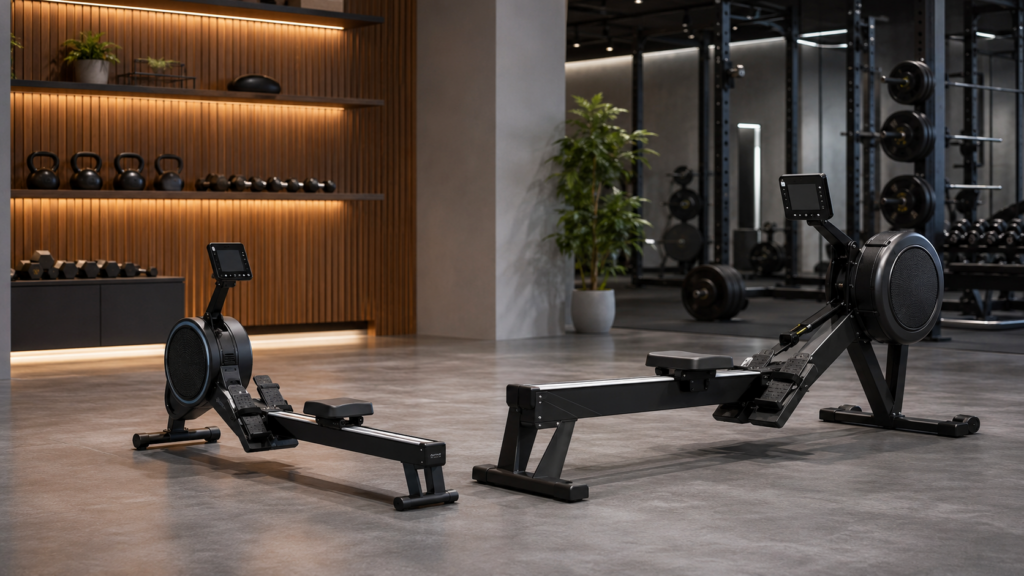
This rowing machine buying guide separates home and commercial models because the usage pattern changes everything.
| Factor | Home Rowing Machine | Commercial Rowing Machine |
|---|---|---|
| Use frequency | Light to moderate | Heavy daily traffic |
| Space | Compact preferred | Larger acceptable |
| Noise | Very important | Depends on gym layout |
| Frame | Standard to strong | Heavy-duty |
| Budget | Price sensitive | Lifecycle cost matters |
| Maintenance | Low maintenance preferred | Serviceability matters |
For a home rowing machine, comfort and storage are often more important than maximum durability. For a commercial rowing machine, frame stability, parts support, cleaning access, and long-term reliability matter more.
Best Rowing Machine for Home and Gym: What Really Matters
The phrase best rowing machine for home and gym can be misleading because one model may not serve both needs equally. Instead of chasing a universal “best,” match the machine to the user.
For beginners, choose comfort, smooth motion, and simple controls.
For serious training, choose accurate resistance feel and a strong frame.
For small homes, choose foldability and quiet operation.
For commercial gyms, choose durability and serviceability.
This rowing machine buying guide uses one rule: the right machine should match the workout environment before it impresses you with extra features.
Space, Noise, and Weight Capacity
Space is one of the most common reasons buyers regret a rowing machine. Measure the machine in working position, not only folded position. Also leave clearance around the handle path and rail.
Noise depends mostly on resistance type. Magnetic models are usually quietest. Air rowers create fan noise. Water rowers create a rhythmic water sound, which some users like and others do not.
Weight capacity should not be treated as a minor detail. A higher user weight capacity often reflects a stronger frame, rail, and support structure. Taller users should also check rail length and foot position.
This rowing machine buying guide recommends checking the user profile before comparing prices. A compact rower that feels unstable will not be a good value.
Budget: What Should You Pay For?
Budget should be connected to expected use. A light-use home machine does not need the same build level as a commercial gym rower. But an extremely cheap machine may cost more over time if it is uncomfortable, unstable, or hard to repair.
Pay attention to:
- Resistance system
- Frame material
- Rail stability
- Monitor functions
- Foldability
- Seat comfort
- Warranty
- Replacement parts
- Maintenance cost
A rowing machine buying guide should not push buyers toward the most expensive model. It should help them avoid paying for features they do not need while still protecting long-term usability. In this rowing machine buying guide, budget is treated as a value decision, not simply a price filter.
Common Buying Mistakes to Avoid
The most common mistake is buying for appearance instead of use case. A rower may look premium but still be noisy, too long, too light, or unsuitable for frequent commercial use.
Avoid these mistakes:
- Choosing only by price
- Ignoring resistance type
- Forgetting machine length
- Buying a noisy machine for an apartment
- Ignoring weight capacity
- Overvaluing screen features
- Underestimating maintenance
- Buying a home model for a commercial gym
Conclusion
A rowing machine buying guide should help you choose based on real use, not marketing claims. A home rowing machine should fit your space, noise tolerance, budget, and consistency goals. A commercial rowing machine should focus on durability, user capacity, serviceability, and long-term value.
Before choosing, compare resistance type, footprint, noise, frame strength, comfort, maintenance, and who will use the machine most often. When those factors match your environment, a rowing machine becomes much easier to choose and much more likely to be used. This rowing machine buying guide can also serve as a starting point for deeper comparisons, such as water vs magnetic resistance, small-space models, and commercial gym equipment planning.
FAQ
What type of rowing machine is best for home use?
A magnetic rowing machine is often a good home choice because it is quiet, smooth, and usually easier to store.
What is the best rowing machine for commercial gyms?
A commercial rowing machine should have a strong frame, high user weight capacity, durable rail system, reliable resistance, and easy maintenance.
Is a water rowing machine better than a magnetic rowing machine?
Water rowers feel more natural. Magnetic rowers are usually quieter and easier to maintain.
Is an air rowing machine good for training?
Yes. Air rowing machines are popular for performance training because resistance responds to rowing effort.
How much space do I need for a rowing machine?
Measure the full working length, not only the folded size. Leave enough room for the handle path and safe mounting.
What should I look for when buying a rowing machine?
Check resistance type, frame strength, noise level, weight capacity, size, comfort, maintenance, warranty, and intended use.