
Types of Leg Press Machines: Which is Right for You?
Introduction
Table of Contents
Leg press machines are a staple in both home and commercial gyms, offering a powerful way to build lower body strength and muscle mass. They allow for controlled, isolated movements that target the quadriceps, hamstrings, glutes, and calves, making them essential for anyone looking to enhance their leg workouts. However, with the various types of leg press machines available, each designed to target muscles differently and provide unique benefits, it can be challenging to determine which one is right for you. This comprehensive guide will explore the different types of leg press machines, their advantages, and how to choose the best one for your fitness needs.
Understanding the Different Types of Leg Press Machines
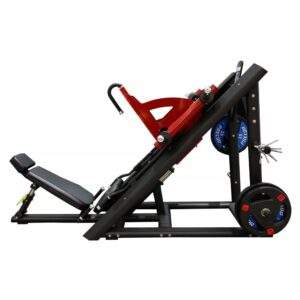
What is a Leg Press Machine?
A leg press machine is a piece of exercise equipment designed to strengthen the lower body. It allows users to perform leg presses by pushing against resistance with their legs while seated or lying down. This resistance can come from weights or a mechanical system, depending on the type of machine. Leg press machines are highly effective for building muscle and improving leg strength, and they can be used by people of all fitness levels.
Common Types of Leg Press Machines
There are three main types of leg press machines commonly found in gyms:
Horizontal Leg Press Machine
45-Degree Leg Press Machine
Vertical Leg Press Machine
Each type offers distinct advantages and is suitable for different fitness levels and workout goals. Understanding these differences is crucial for selecting the right machine for your needs.
Horizontal Leg Press Machine
The horizontal leg press machine features a seated position where users push a weighted platform away from their body in a horizontal motion. This type of leg press is often considered beginner-friendly due to its straightforward design and ease of use. The horizontal leg press machine typically provides a stable and controlled environment, making it ideal for those new to strength training or with mobility issues.
45-Degree Leg Press Machine
The 45-degree leg press machine positions users in a reclined seat at a 45-degree angle, pushing the weighted platform upward and away from the body. This design allows for a greater range of motion and the ability to lift heavier weights. The 45-degree angle provides a balance between the vertical and horizontal positions, offering a comprehensive lower body workout that targets multiple muscle groups.
Vertical Leg Press Machine
The vertical leg press machine involves lying on the back and pushing a weighted platform directly upward. This type of leg press allows for a vertical range of motion and is less commonly found in commercial gyms. The vertical leg press machine can provide a unique challenge and is known for its ability to engage the core and lower body muscles intensely.
Table: Comparison of Different Types of Leg Press Machines
| Feature | Horizontal Leg Press | 45-Degree Leg Press | Vertical Leg Press |
|---|---|---|---|
| Body Position | Seated | Reclined at 45° | Lying on back |
| Range of Motion | Moderate | High | High |
| Space Requirements | Moderate | High | Low |
| Weight Load Capacity | Moderate to High | High | High |
| Ease of Use | Easy | Moderate | Moderate to Difficult |
| Primary Muscle Targets | Quads, Glutes | Quads, Glutes, Calves | Quads, Glutes, Hamstrings |
Horizontal Leg Press Machine
Design and Functionality
The horizontal leg press machine features a simple design that makes it accessible to users of all fitness levels. The user sits on a padded seat and places their feet on a platform connected to a weight stack or resistance system. By extending their legs, the user pushes the platform away, engaging the quadriceps and glutes primarily. The horizontal orientation ensures a stable and controlled movement, reducing the risk of injury.
Benefits of Horizontal Leg Press Machines
Ease of Use: Ideal for beginners and those with limited mobility, providing a controlled and stable movement.
Moderate Space Requirements: Takes up less space compared to other types, making it suitable for home gyms.
Effective Lower Body Workout: Targets the quadriceps and glutes effectively, offering a solid lower body workout.
Reduced Strain on Lower Back: The seated position minimizes the load on the lower back, making it a safer option for individuals with back issues.
Considerations
Limited Range of Motion: May not provide as extensive a range of motion as other leg press machines, potentially limiting muscle engagement.
Weight Load Capacity: While sufficient for most users, it may not support extremely heavy weights as effectively as other types, which might be a limitation for advanced lifters.
45-Degree Leg Press Machine
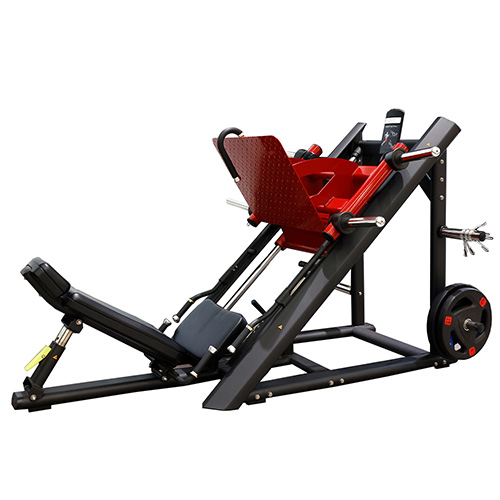
Design and Functionality
The 45-degree leg press machine features a more complex design than the horizontal version. Users recline at a 45-degree angle on a padded seat, placing their feet on a platform connected to a weight stack. The inclined position allows for a greater range of motion, and users push the platform upward and away from their bodies, engaging the quads, glutes, and calves. This design is popular in both commercial and home gyms for its comprehensive workout capabilities.
Benefits of 45-Degree Leg Press Machines
- High Range of Motion: Offers an extensive range of motion, enabling deeper muscle activation and more effective workouts.
- Increased Weight Capacity: Suitable for advanced lifters who want to push heavy weights, as the design supports larger loads.
- Comprehensive Lower Body Workout: Effectively targets the quads, glutes, and calves, providing a well-rounded lower body exercise.
- Enhanced Muscle Engagement: The inclined position allows for better engagement of the lower body muscles, leading to improved strength and muscle growth.
Considerations
- Space Requirements: Requires more space due to its larger footprint, which might be a constraint for smaller home gyms.
- Moderate Ease of Use: May be slightly intimidating for beginners or those unfamiliar with the equipment, requiring some learning and adjustment.
- Increased Risk of Injury: The greater range of motion and higher weight capacity can increase the risk of injury if not used with proper form and technique.
Vertical Leg Press Machine
Design and Functionality
The vertical leg press machine involves lying on the back and pushing a weighted platform directly upward. This type of leg press allows for a vertical range of motion and is less commonly found in commercial gyms. The vertical leg press machine can provide a unique challenge and is known for its ability to engage the core and lower body muscles intensely. Users lie on a padded bench and place their feet on a platform above them, pushing the platform upwards against the resistance of weights or a mechanical system.
Benefits of Vertical Leg Press Machines
- High Range of Motion: Provides a unique vertical motion that targets muscles differently compared to other leg press machines, enhancing muscle activation and growth.
- Compact Design: Requires less floor space, making it suitable for home gyms with limited space, and offers a space-saving solution without compromising workout quality.
- Effective Muscle Activation: Engages the quads, glutes, and hamstrings intensely, offering a challenging workout that promotes significant strength gains.
- Improved Core Engagement: The vertical position helps engage the core muscles, providing an additional benefit of core strengthening along with lower body training.
Considerations
- Difficulty of Use: May be more challenging for beginners or those with back issues due to the unique motion and positioning, requiring proper technique and experience.
- Safety Concerns: Proper form is crucial to avoid injury due to the vertical weight movement, and users should be cautious and seek guidance if unsure.
- Less Common: Vertical leg press machines are less common in commercial gyms, which may make them harder to find and less familiar to users.
Choosing the Right Leg Press Machine for Your Needs
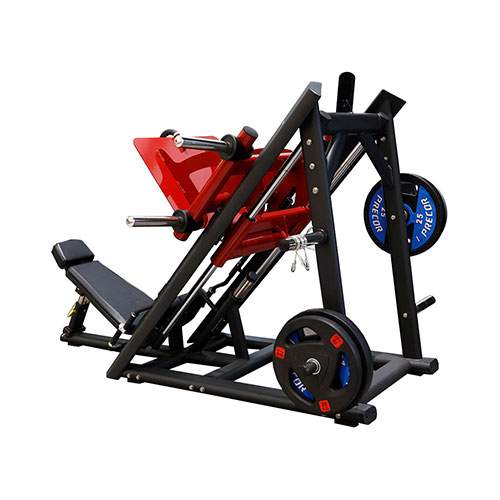
Assessing Your Fitness Goals
When selecting a leg press machine, it’s essential to consider your fitness goals. Are you looking to build muscle mass, improve strength, or enhance endurance? Different types of leg press machines offer varying benefits that align with specific fitness objectives.
- Building Muscle Mass: If your primary goal is to build muscle mass, the 45-degree leg press machine may be the best option due to its ability to support heavy weights and provide a deep range of motion.
- Improving Strength: For improving overall leg strength, both the horizontal and 45-degree leg press machines are suitable, depending on your experience level.
- Enhancing Endurance: For endurance training, the horizontal leg press machine may be more appropriate due to its ease of use and lower risk of injury during high-repetition workouts.
Evaluating Space Availability
Space availability is another critical factor. If you have limited space in your home gym, a vertical leg press machine might be the best option due to its compact design. Conversely, if space is not an issue, a 45-degree leg press machine offers extensive range of motion and weight capacity.
- Home Gyms: Vertical leg press machines are ideal for home gyms with limited space, offering a full workout without taking up too much room.
- Commercial Gyms: For commercial gyms with ample space, both horizontal and 45-degree leg press machines can be accommodated to provide a variety of options for users.
Considering Experience Level
Your experience level with weightlifting and leg press machines should also influence your decision. Beginners might find the horizontal leg press machine more approachable, while advanced lifters may prefer the 45-degree or vertical leg press machines for their increased challenge and weight capacity.
- Beginners: The horizontal leg press machine is user-friendly and less intimidating, making it a great starting point for those new to strength training.
- Intermediate and Advanced Lifters: For those with more experience, the 45-degree and vertical leg press machines offer the ability to push heavier weights and achieve greater muscle activation.
Budget Considerations
Budget is always a factor when purchasing gym equipment. Horizontal leg press machines are typically more affordable, while 45-degree and vertical leg press machines may come with higher price tags due to their advanced features and weight capacities.
- Affordable Options: Horizontal leg press machines generally have a lower price point, making them a cost-effective choice for home gyms.
- Investment for Advanced Training: For those willing to invest more for advanced training, the 45-degree and vertical leg press machines provide greater versatility and functionality.
Long-Term Goals and Commitment
Consider your long-term fitness goals and commitment when choosing a leg press machine. Investing in a machine that aligns with your future aspirations can help ensure you continue to use it and achieve your desired results.
- Long-Term Fitness Goals: If you plan to advance your training and increase your lifting capacity over time, investing in a 45-degree or vertical leg press machine may be worthwhile.
- Consistency and Commitment: Choose a machine that you feel comfortable using consistently, as regular use is key to achieving long-term fitness goals.
Conclusion
Choosing the right leg press machine depends on various factors, including your fitness goals, available space, experience level, and budget. Understanding the differences between horizontal, 45-degree, and vertical leg press machines can help you make an informed decision that best suits your needs. Each type offers unique benefits, ensuring that you can find the perfect leg press machine to enhance your lower body workouts and achieve your fitness objectives.
FAQ
What are the most common types of leg press machines?
The most common types of leg press machines include the horizontal leg press machine, the 45-degree leg press machine, and the vertical leg press machine. Each of these types of leg press machines offers unique benefits and is suitable for different fitness levels and workout goals.
How do the different types of leg press machines affect muscle engagement?
Different types of leg press machines affect muscle engagement by providing varying ranges of motion and resistance angles. Horizontal leg press machines primarily target the quads and glutes, 45-degree leg press machines offer a comprehensive lower body workout including calves, and vertical leg press machines intensely engage the quads, glutes, and hamstrings.
Which types of leg press machines are best for beginners?
For beginners, the best types of leg press machines are typically horizontal leg press machines. These types of leg press machines are easier to use, provide stable and controlled movements, and are less intimidating compared to other types of leg press machines.
What are the space requirements for different types of leg press machines?
The space requirements for different types of leg press machines vary. Horizontal leg press machines generally require moderate space, 45-degree leg press machines need more space due to their larger footprint, and vertical leg press machines are more compact and suitable for home gyms with limited space.
Can types of leg press machines be used for rehabilitation purposes?
Yes, certain types of leg press machines can be used for rehabilitation purposes. Horizontal leg press machines are often preferred in rehab settings due to their controlled movements and ease of use, making them safe for individuals recovering from injuries.
How do I choose the right types of leg press machines for my fitness goals?
Choosing the right types of leg press machines depends on your fitness goals. If you aim to build muscle mass, a 45-degree leg press machine might be ideal. For general strength improvement, both horizontal and 45-degree leg press machines are suitable. If space is a concern, consider vertical leg press machines.
What are the cost differences between various types of leg press machines?
The cost differences between various types of leg press machines can be significant. Horizontal leg press machines are generally more affordable, 45-degree leg press machines tend to be more expensive due to their advanced features and weight capacity, and vertical leg press machines fall in between, offering a balance of cost and functionality.
How does the range of motion differ among types of leg press machines?
The range of motion differs significantly among types of leg press machines. Horizontal leg press machines offer a moderate range of motion, 45-degree leg press machines provide a high range of motion for deeper muscle engagement, and vertical leg press machines also offer a high range of motion but with a unique vertical movement.
Are types of leg press machines suitable for home gyms?
Yes, many types of leg press machines are suitable for home gyms. Vertical leg press machines are particularly compact and space-efficient, while horizontal leg press machines also fit well in home gym setups. The choice depends on the available space and your specific workout needs.
What are the primary muscle targets for different types of leg press machines?
Different types of leg press machines target different primary muscle groups. Horizontal leg press machines primarily target the quads and glutes, 45-degree leg press machines target the quads, glutes, and calves, and vertical leg press machines focus on the quads, glutes, and hamstrings.