
Introduction
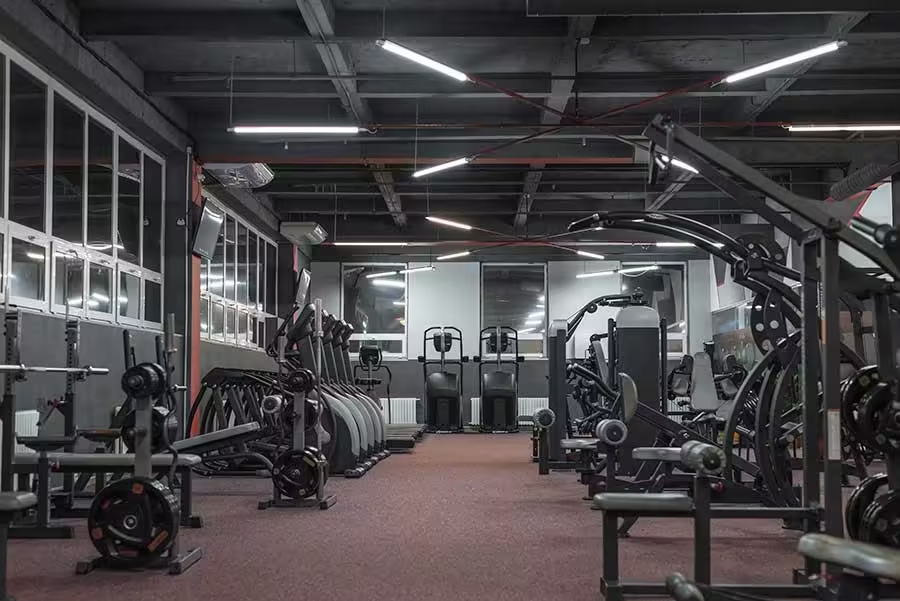
Offering a knee-friendly alternative to traditional back squats thanks to its angled backrest and stabilizing construction, the V-Squat machine has secured a reputation as an intense leg toner. However, with limited exposure among amateur fitness enthusiasts coupled with an imposing sled-like engineering unlike common gym equipment, several misconceptions shroud these apparatus leading many to simply eyeball them warily without comprehending the tangible advantages on offer. This guide illuminates everything relevant from the science behind operational techniques, individual model comparisons, practical benefits and common myths—arming readers with authoritative awareness to consider adding this game-changing apparatus to their training.
Table of Contents
Functional Mechanics Explained
True to the distinctive angled silhouette from which it draws its name, the V-Squat:
● Positions users at a sloped 45-60 degree incline against a padded backrest secured with a waistbelt.
● Bearing the bodyweight load isolates focus on the quadriceps and glutes without spinal loading.
● Integrated design elements like pivoting footplates accommodating natural angles aid lift mechanics through a fuller range activating more muscle groups.
● Adjustable sled trajectories allow determining ideal resistances for both strength enhancement and rehabilitation purposes.
Understanding these biomechanical principles builds intuitive operational command and capability awareness.
Leading Commercial Model Comparison:
| Model | Resistance Range | Max User Weight | Key Highlights |
|---|---|---|---|
| Matrix V-Squat | 50-500 lbs | 700 lbs | 4-roller sled system for stability |
| Inspire S-Squat | 50-600 lbs | 1000 lbs | Raised heels; Converging press handles option |
| Legend Fitness V-Squat Assisted | 20-260 lbs | 750 lbs | Counterbalanced assisting mechanism |
| HOIST V-Squat | Up to 670 lbs | 750 lbs | Multi-grip pull handles allowing custom hand spacing |
With sturdy corrections welded frameworks boasting user capacities reaching 1000 lbs and resistance increments exceeding 650 lbs even before adding external plates, commercial V-Squats accommodate even competitive strength levels safely compared to retail models.
Advantages Over Common Squats
Unlike back squats burdening the lower back or Smith Machine squats restricting mobility through fixed vertical paths, the V-Squat optimizes lifts through numerous advantages:
● Reduces knee sheer force and ligament strain up to 36% protecting joint health.
● Engages quadriceps and glutes up to 40% greater muscle activation measured.
● Pre-determined fixed path eliminates injury risk from imbalanced loads.
This superlative muscle incineration with joint security promotes injury-free progressive loading capabilities unmatched by traditional alternatives.
Individual Needs Accommodation
The V-Squat’s customizability empowers trainees across special conditions, including:
● Rehabilitation – Load increments beginning under 50 lbs allows progressive knee strengthening.
● Women – Open stance spacing and supportive backrest aid confidence for beginners.
● Bodyweight Challenged – Resistance diversity enables high intensities for even lightweight individuals.
The adaptable methodology makes tangible strength upgrades safely attainable for all.
Common Myths and Misconceptions
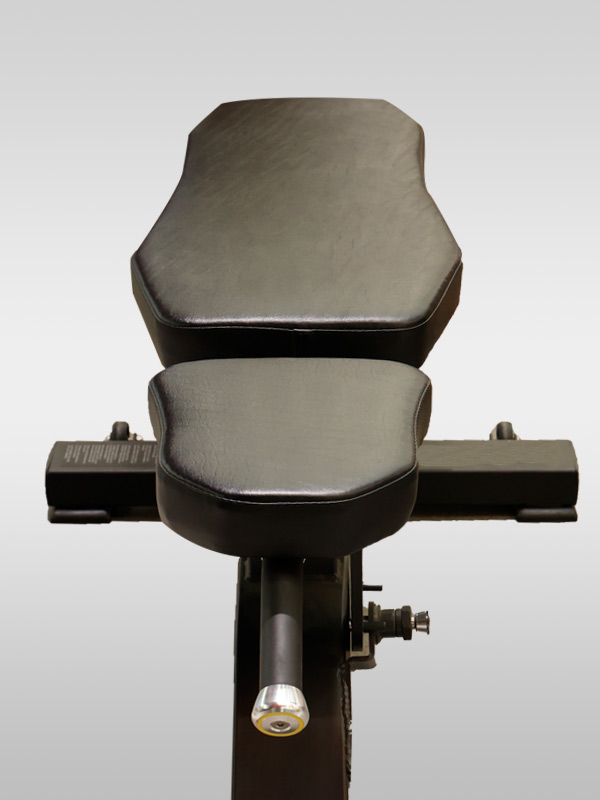
Before writing off the V-Squat based on hearsay without gathering hands-on evidence, dispelling common myths is key:
- Myth: The V-Squat looks intimidating and limits mobility.
- Fact: The supported reclined stance and aligned track enables safely pushing limits through fuller mobility.
- Myth: It overly isolates quadriceps without holistic benefit.
- Fact: The hip extension movement engages posterior chains with leg press alternatives isolating quads more.
- Myth: The pec strap seems unnecessary and restrictive.
- Fact: It ensures ideal back positioning preventing rounding that risks injury. Adjustable looseness allows free breathing.
Trying it out outweighs doubting from assumptions.
Conclusion
With thorough insight into the biomechanics optimizing squat strength curves safely as well effective model differentiation from basic retail variants, the V-Squat’s tangible advantages materialize clearly for gymgoers. Its accommodating customizability empowers even rehabilitation trainees and women beginners with compact resistance starting points progressing to formidable weights rivaling staunchest strength athletes. Backed by irrefutable science nullifying misconceptions, the V-Squat earns recognition as an enabling musculoskeletal sculptor.
FAQs
Q: What maintenance best practices maximize operational lifetime?
Follow prescribed lubricating schedules for pivot joints annually alongside inspecting belts, cables and handles quarterly to identify wear signs early.
Q: What compliant user guidelines secure safety?
Advisable practices involve securing waist belts firmly throughout sets; maintaining control avoiding hyperextension locks; and limiting loads to 75% 1RM capacity when starting off.
Q: How does the V-Squat compare against the Hack Squat for quads targeting?
With greater lumbar support and stance range allowing fuller mobility, the V-Squat surpasses Hack Squats for overall leg engagement, use flexibility and joint security.