
Welcome to My Blog!
Before we dive into the content, I’d love for you to join me on my social media platforms where I share more insights, engage with the community, and post updates. Here’s how you can connect with me:
Facebook:https://www.facebook.com/profile.php?id=61553215985287
LinkedIn:https://www.linkedin.com/showcase/99329941/admin/dashboard/
Tiktok:www.tiktok.com/@shandongvitalfitness
Now, let’s get started on our journey together. I hope you find the content here insightful, engaging, and valuable.
Table of Contents
Introduction
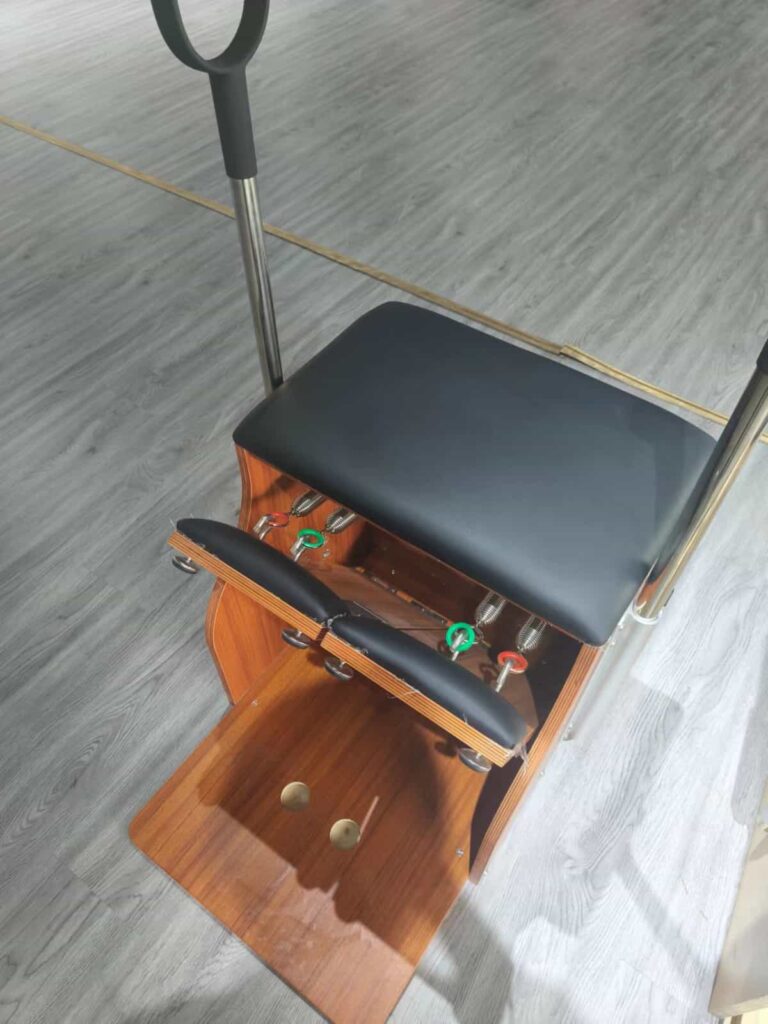
Pilates chair exercises are a great way for beginners to develop strength, flexibility, and balance while engaging their core muscles. The Pilates chair, also known as the reformer chair, is an excellent tool for various full-body workouts that target both upper and lower body muscles. If you’re just starting with Pilates, this guide will walk you through the top seven tips that can help you get the most out of your Pilates chair exercises.
Understanding Pilates Chair Exercise
Pilates chair exercises utilize a specialized piece of equipment designed to enhance Pilates routines. The chair features springs, a seat, and footrests that provide both resistance and support. The exercises focus on controlled movements to increase flexibility, improve posture, and promote balance. Learning how to properly use a Pilates chair will enable you to perform these exercises more effectively and avoid unnecessary strain.
Key Benefits of Pilates Chair Exercise
Pilates chair exercises provide a wide range of benefits for both beginners and advanced practitioners. Some of the key benefits include:
- Improved Core Strength: Pilates chair exercises specifically target your core muscles, helping you achieve better stability and posture.
- Increased Flexibility: Regular practice of these exercises helps stretch and lengthen the muscles, promoting overall flexibility.
- Enhanced Balance: The Pilates chair engages various muscle groups, which helps to improve your coordination and balance.
- Low-Impact Workout: Pilates chair exercises are low-impact, making them ideal for individuals with joint issues or those recovering from an injury.
By consistently practicing Pilates chair exercises, you can develop a more toned and balanced body over time.
Pilates Chair Exercise Tips for Beginners
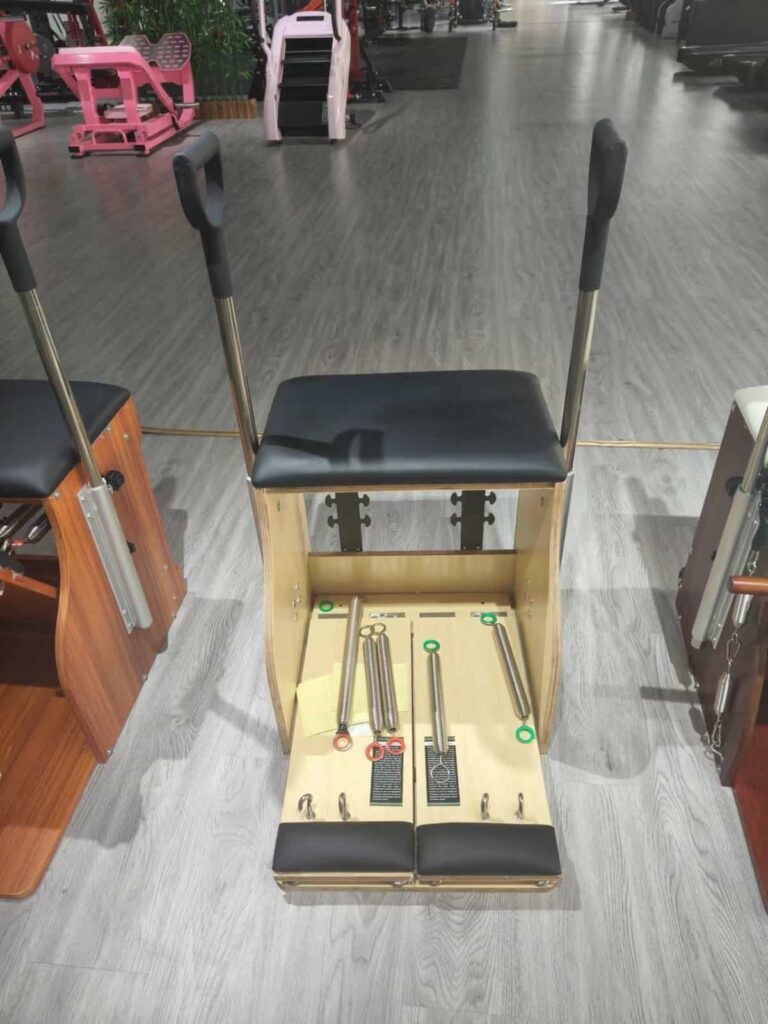
Start Slow and Focus on Form
One of the most important Pilates chair exercise tips for beginners is to take it slow. Pilates is all about controlled movements, so it’s crucial to focus on your form. Pay close attention to your posture and alignment, especially when performing exercises that require core engagement. Starting with simpler movements will allow you to build strength and flexibility gradually.
Learn How to Adjust the Springs for Proper Resistance
The Pilates chair comes with adjustable springs that provide resistance during exercises. As a beginner, it’s essential to familiarize yourself with the different spring settings. The springs can be adjusted to suit your fitness level and the specific exercise you are performing. Begin with lighter resistance to avoid straining your muscles, and gradually increase the tension as your strength improves.
Engage Your Core Throughout Each Movement
A key component of Pilates is core engagement. To get the full benefit of Pilates chair exercises, focus on keeping your core muscles active throughout each movement. This helps to stabilize your spine and pelvis while improving your overall balance and posture. Imagine pulling your navel toward your spine during each exercise to activate your core properly.
Incorporate Breathing Techniques
Breathing is essential when performing Pilates chair exercises. Proper breathing allows you to maintain control over your movements and ensures that you are not holding your breath during challenging exercises. Inhale deeply as you prepare for each movement, and exhale as you execute the movement. This breathing pattern helps activate the muscles you need to work while maintaining the flow of the exercise.
Practice Regularly for Consistent Results
Consistency is key when it comes to Pilates chair exercises. To see the best results, commit to regular practice. You don’t need to work out for long periods; even 20-30 minutes a few times a week can make a significant difference. As you practice more regularly, your strength, flexibility, and control will improve, and you’ll begin to feel the physical and mental benefits of Pilates.
Recommended Pilates Chair Exercises for Beginners
| Exercise Name | Focus Area | Difficulty Level | Key Benefits |
|---|---|---|---|
| Seated Push-Up | Upper Body | Beginner | Strengthens chest, shoulders, and arms |
| Knee Stretch Series | Core, Legs | Beginner | Improves balance and core stability |
| Footwork | Lower Body, Legs | Beginner | Strengthens legs and engages glutes |
| Tendon Stretch | Core, Flexibility | Intermediate | Improves flexibility and lengthens hamstrings |
| The Teaser | Core, Balance | Advanced | Targets core and improves balance |
The table above highlights some common Pilates chair exercises suitable for beginners. These exercises engage different muscle groups and offer a variety of benefits. As a beginner, starting with these exercises will help you build a solid foundation before progressing to more challenging movements.
Understanding Pilates Chair Adjustments
Adjusting Footrest Position
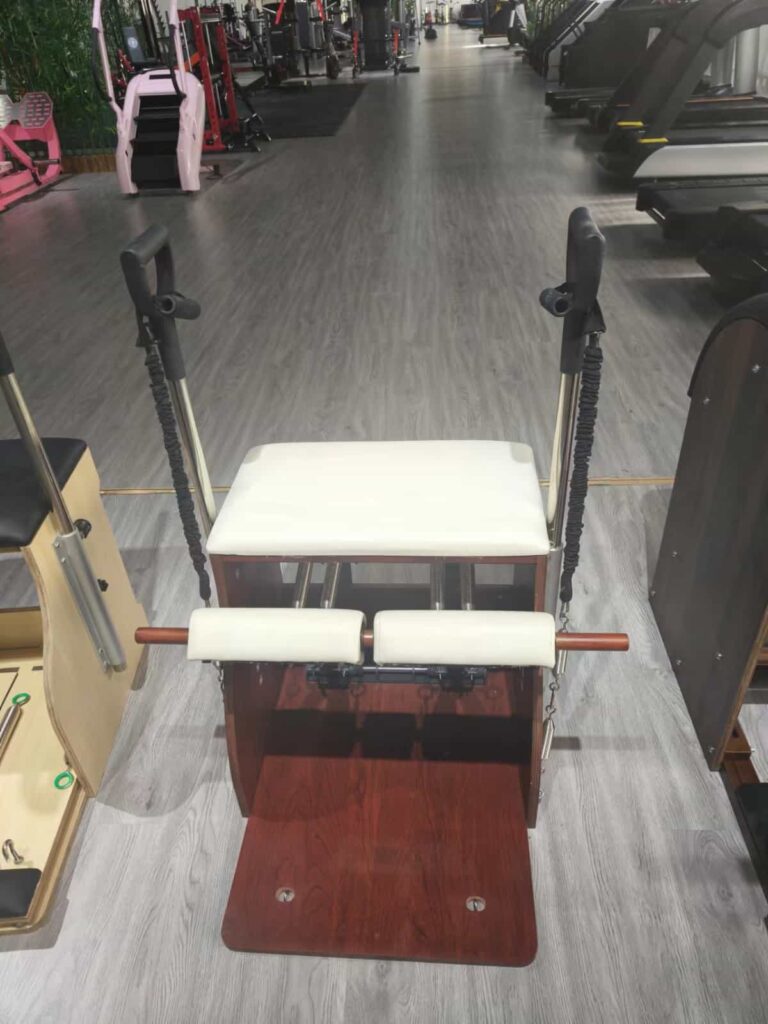
The footrest position on the Pilates chair can be adjusted depending on the exercise you’re doing. For some exercises, such as footwork, the footrest is used to help stabilize your body and allow for smoother movement. Experiment with different footrest positions to find what works best for your body and the specific exercise.
Adjusting Spring Tension
The Pilates chair uses spring tension to provide resistance. The resistance level can vary, so it’s important to adjust the springs depending on your strength and experience. Beginners may want to start with a lighter resistance setting to ensure they can perform each movement properly.
Conclusion
Pilates chair exercises are a fantastic way for beginners to improve strength, flexibility, and overall body control. By following these seven tips, you can build a solid foundation in Pilates and gradually progress to more advanced exercises. Remember, consistency and proper form are key to seeing the best results.
If you’re ready to take your Pilates practice to the next level, consider investing in your own Pilates chair today for a more personalized workout experience.
What is a Pilates chair?
A Pilates chair, or reformer chair, is a piece of equipment designed for Pilates workouts. It has springs that provide resistance and a seat that allows for a wide range of movements targeting different muscle groups.
Are Pilates chair exercises suitable for all fitness levels?
Yes, Pilates chair exercises can be adapted for different fitness levels, from beginners to advanced practitioners. It’s important to start with simpler exercises and gradually increase the intensity as you gain more experience.
Can I use a Pilates chair at home?
Yes, a Pilates chair is compact enough for home use and can provide a full-body workout in the comfort of your own space.
Is Pilates chair exercise safe?
When done with proper form and technique, Pilates chair exercises are safe and low-impact, making them a suitable choice for people of all ages and fitness levels.