
In the rapidly evolving world of hybrid fitness—where athletes are expected to deadlift 500 pounds and run a sub-20-minute 5K—the search for the “perfect” training tool is relentless. Most cardio equipment focuses solely on aerobic capacity, often at the expense of muscle mass or joint integrity. However, elite competitors have long identified a specific piece of hardware as their primary force multiplier: the rowing ergometer.
Unlike a basic rower found in a hotel gym, a true rowing ergometer (or “erg”) is a sophisticated power measurement device. For the hybrid athlete, it represents the bridge between raw strength and metabolic conditioning, offering a high-intensity stimulus that mimics the explosive drive of a clean or a deadlift.
Table of Contents
The Physics of Power: Why it’s an “Ergometer,” Not a Machine
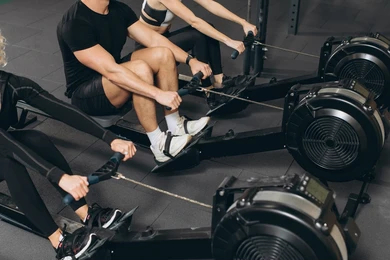
To understand why the rowing ergometer is a secret weapon, one must understand the technology. The term “ergometer” is derived from the Greek words ergon (work) and metron (measure). Unlike a treadmill where the belt moves at a fixed speed, the rowing ergometer responds directly to the force you apply. The more power you generate during the leg drive, the more air resistance the flywheel creates.
This relationship allows for a 1:1 measurement of work output. For a hybrid athlete, this data is invaluable. By monitoring your “500m split” or “Watts,” you can track your absolute power output in real-time. This level of precision is why the rowing ergometer is the gold standard for testing an athlete’s “engine” in functional competitions like Hyrox or CrossFit.
Building a Bulletproof Posterior Chain

One of the greatest challenges for hybrid athletes is maintaining leg strength while increasing aerobic volume. Running provides excellent cardiovascular benefits but offers little in the way of posterior chain development. The rowing ergometer solves this paradox.
A technically sound rowing stroke is approximately 60% leg drive. The explosive extension of the hips and knees on the rowing ergometer mirrors the mechanics of a power clean or a sled push. By incorporating high-intensity intervals on the erg, athletes can build massive muscular endurance in the glutes and hamstrings without the central nervous system (CNS) fatigue associated with heavy barbell training. This makes the rowing ergometer a primary tool for developing the “functional horsepower” required to pull heavy sleds and climb hills.
Mastering the Lactate Threshold
Hybrid racing is a game of lactate management. The ability to perform high-skill movements while your heart rate is redlined is what separates the podium finishers from the rest of the pack. The rowing ergometer is perhaps the most efficient tool for training this specific physiological state.
According to the American College of Sports Medicine (ACSM), High-Intensity Functional Training (HIFT) on a rowing ergometer significantly improves both aerobic and anaerobic pathways simultaneously. By utilizing “Lactate Threshold Intervals”—such as 4 x 1000m with 2 minutes of rest—athletes learn to clear metabolic byproducts while maintaining a consistent power curve. This specific adaptation allows a hybrid athlete to transition from the rower to a heavy sandbag carry without their heart rate spiraling out of control.
Drag Factor Calibration: The Professional’s Edge
A common mistake among DIY enthusiasts is assuming that a higher damper setting (the lever on the side of the flywheel) equates to a better workout. In reality, elite hybrid athletes focus on the “Drag Factor.”
The rowing ergometer calculates the rate at which the flywheel slows down to determine the true resistance, regardless of dust buildup or local air pressure. Most professional hybrid athletes calibrate their rowing ergometer to a drag factor between 120 and 135. This simulates the resistance of a racing shell on the water and ensures that the power output measured is accurate. Understanding this technical nuance is what allows athletes to standardize their training and ensure that a sub-7:00 2000m row in London is the same as one in New York.
Low-Impact Longevity: Saving the Knees
In 2026, longevity is a core pillar of the hybrid movement. High-mileage running programs often lead to overuse injuries like shin splints or stress fractures. The rowing ergometer offers a “zero-impact” alternative. Because the feet are strapped into footplates and the weight is supported by a sliding seat, the joints are spared from the eccentric loading of pavement pounding.
For the hybrid athlete who needs to protect their joints for heavy lifting, the rowing ergometer acts as a high-volume aerobic filler. It allows for a massive caloric burn and VO2 max improvement without compromising the integrity of the patellar tendons or ankles.
DIY Maintenance: Keeping the Erg Race-Ready
For the athlete with a home setup, maintaining the rowing ergometer is as critical as training on it. A neglected chain or a dusty flywheel can skew your data by several seconds.
- Chain Lubrication: Use a high-quality mineral oil every 50 hours of use to ensure a smooth return.
- Flywheel Cleaning: Use a vacuum or compressed air to clear the intake mesh. If air cannot flow freely, the rowing ergometer will feel “heavy” and your split times will suffer.
- Battery Management: Always check the PM5 monitor batteries before a high-stakes time trial to avoid data loss mid-session.
Conclusion
The rowing ergometer is more than just a piece of cardio equipment; it is a diagnostic tool for the modern athlete. By providing a low-impact, high-power stimulus that builds the posterior chain and tests the lactate threshold, the rowing ergometer has earned its reputation as the secret weapon of the hybrid community. Whether you are prepping for a Hyrox debut or simply looking to build an unbreakable engine, the erg is your most honest coach.
FAQ
Should I row with the damper set to 10 for maximum power?
No. Setting the damper to 10 often leads to poor technique and early fatigue. Use the “Display Drag Factor” setting on your rowing ergometer to find a setting between 120-135 for the best balance of power and efficiency.
How often should a hybrid athlete use the rowing ergometer?
Incorporating 2-3 sessions per week is ideal. One session should focus on long-duration aerobic base building (30-40 mins), while the others should focus on high-intensity intervals (500m or 1000m repeats).
Does rowing help my deadlift?
Yes. The “catch” and “drive” phases of the stroke on a rowing ergometer strengthen the same muscle groups used in the initial pull of a deadlift, improving your explosive power from the floor.