
Welcome to My Blog!
Before we dive into the content, I’d love for you to join me on my social media platforms where I share more insights, engage with the community, and post updates. Here’s how you can connect with me:
Facebook:https://www.facebook.com/profile.php?id=61553215985287
LinkedIn:https://www.linkedin.com/showcase/99329941/admin/dashboard/
Tiktok:www.tiktok.com/@shandongvitalfitness
Now, let’s get started on our journey together. I hope you find the content here insightful, engaging, and valuable.
Table of Contents
Introduction
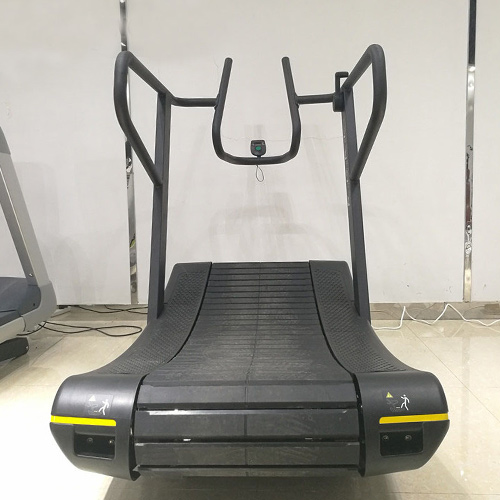
While running at home offers convenience, not all treadmills protect your joints. Overlooking poor cushioning can lead to knee strain or injury. Choosing the best treadmills for running at home is essential to safeguard your long-term joint health.
This blog focuses on treadmills that prioritize knee protection, detailing advanced cushioning technologies like air and spring systems, plus honeycomb structures. We’ll also cover curved, self-powered machines designed for natural impact reduction and posture correction, guiding you to make an informed, knee-friendly decision for your home running needs.
Understanding Knee Impact: Why Standard Treadmills May Harm Your Joints
Running is a high-impact activity. Every time your foot hits the ground, your knees absorb shock equivalent to several times your body weight. Outdoor surfaces like concrete and asphalt are notoriously harsh, but indoor running on a treadmill isn’t automatically better—unless you pick the right equipment.
Many budget or outdated treadmills rely on stiff, unforgiving decks that transfer this force directly into your joints. Over time, this can wear down cartilage and aggravate conditions like runner’s knee or arthritis.
This is why you must seek out the best treadmills for running at home—machines designed specifically to reduce this repetitive impact through intelligent engineering.
Key Cushioning Technologies to Look for in the Best Treadmills for Running at Home
Not all treadmills are built the same, and cushioning is where they differ the most. Here are the top impact-reducing systems found in treadmills designed to protect knees and joints.
Air Cushioning Systems: Floating Comfort with Every Step
Some of the best treadmills for running at home feature integrated air cushioning or pneumatic systems. These technologies use small air chambers within the deck to absorb shock dynamically based on your stride and weight distribution.
Benefits:
- Superior energy return reduces muscle fatigue.
- Protects knees by absorbing sudden pressure peaks.
- Adaptive to different user weights and stride lengths.
This system is perfect for multi-user households, where everyone from teenagers to seniors may use the treadmill.
Spring-Based Decks: Classic Shock Absorption with Proven Results
Spring systems remain a trusted solution in cushioning technology. High-quality treadmills incorporate industrial-grade springs beneath the running surface to diffuse downward impact forces before they reach your joints.
Advantages include:
- Time-tested shock absorption.
- Stable but flexible deck feel.
- Encourages natural running stride without “dead spots.”
When comparing the best treadmills for running at home, spring-based models stand out for users looking for simple, effective impact reduction.
Honeycomb Structure Decks: The Latest Innovation in Joint Protection
An emerging trend in treadmill design is the honeycomb cushioning structure. Inspired by nature’s geometry, this design involves layers of hexagonal cells under the deck that deform under pressure and disperse force laterally rather than downward.
Benefits for knee health:
- Even pressure distribution across the deck.
- Reduced peak impact on knee joints.
- Longer deck lifespan due to load-sharing design.
Honeycomb systems are fast becoming a defining feature of the best treadmills for running at home, especially for runners recovering from injuries or those prone to joint pain.
Curved, Self-Powered Treadmills: A Natural, Electricity-Free Solution
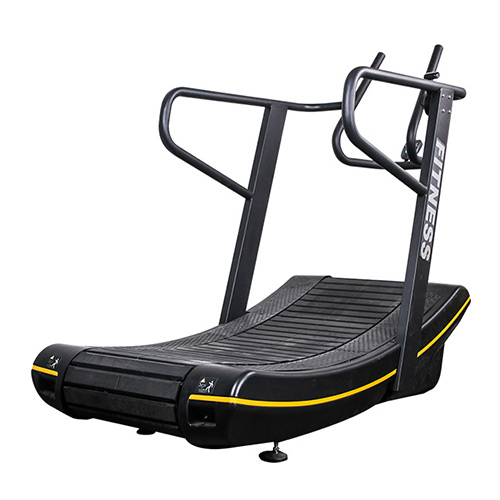
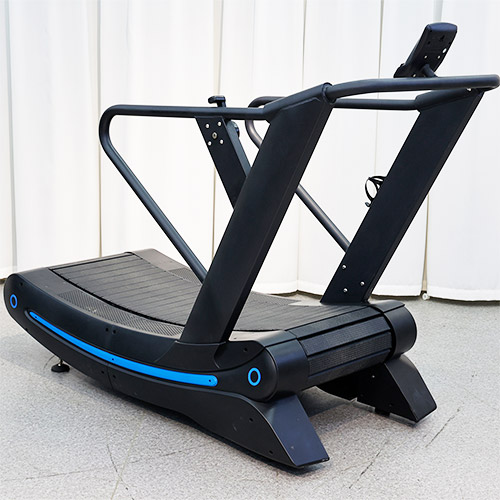
Another game-changing development in treadmill design is the curved, self-powered treadmill. Unlike motorized models, these treadmills are powered solely by your movement—your body’s inertia drives the belt. The curved shape naturally encourages a midfoot strike, correcting poor running posture and reducing the load on your knees.
Key advantages:
- No motor, no plugs—rely purely on human energy.
- Reduced joint shock due to the arc-shaped surface.
- Encourages proper running form: prevents heel striking (a major cause of knee stress).
- Minimal maintenance, no parts to replace.
For serious runners or those seeking an eco-friendly and joint-protective machine, curved treadmills are often considered among the best treadmills for running at home.
Comprehensive Comparison Table: Best Treadmills for Running at Home and Knee Protection
| Treadmill Type | Cushioning Technology | Impact on Knee Protection | Suitable For | Power Requirement | Maintenance Needs |
|---|---|---|---|---|---|
| Air-Cushioned Treadmill | Pneumatic/Air Chambers | Excellent shock absorption; ideal for joint care | Multi-user households; recovery training | Electric | Moderate |
| Spring-Deck Treadmill | Industrial Springs | High impact diffusion; good energy return | General fitness; casual runners | Electric | Low |
| Honeycomb-Deck Treadmill | Hexagonal Cell Structure | Superior pressure distribution; reduced joint stress | Injury prevention; long-distance runners | Electric | Low |
| Curved Self-Powered Treadmill | Human-Powered Inertia | Natural stride correction; reduced joint shock | Professional runners; posture improvement | None (Manual) | Minimal |
Why Manual, Curved Treadmills May Be the Best Treadmills for Running at Home for Knee Care
One of the biggest surprises in the fitness world is the rise of manual curved treadmills—not only for performance enhancement but also for joint protection.
These treadmills force runners to engage proper form. Because you power the belt yourself, you naturally avoid overstriding and heel striking—two habits that cause severe knee strain on traditional flat belts.
Moreover:
- There’s no engine dragging you along, so you control your pace entirely.
- The deck’s curve acts as a natural shock absorber, reducing repetitive joint loading.
- The design encourages a forefoot or midfoot strike, putting less pressure on the knees and hips.
For anyone seeking joint longevity, this treadmill type deserves serious consideration when hunting for the best treadmills for running at home.
Additional Features That Matter for Joint Health
When investing in a treadmill that protects your knees, you should also consider these secondary but crucial features:
Adjustable Incline Without Motor Stress
Manual incline adjustments add variety to your workout and reduce the strain of monotonous flat running. Incline training also engages the posterior chain more than knees, easing joint burden.
Wide Running Surface
A wider deck (at least 20 inches) allows for natural foot placement, reducing the chance of awkward steps that can jar the knee joint.
Low Deck Height
Low-profile decks reduce the risk of stumbling and make stepping on/off easier—especially important for users with existing knee issues.
Conclusion
The right treadmill is a crucial investment for long-term health, particularly for knee and joint preservation. Modern designs, including air-cushioned, spring-decked, honeycomb-structured, or curved and self-powered options, offer safe, pain-free running experiences at home, making them among the best treadmills for running at home.
Prioritize your body’s comfort and protection over flashy features. Choose your treadmill thoughtfully, ensuring it prioritizes superior cushioning and deck technology, and your knees will thank you for years to come!
FAQ
Are curved treadmills better for knees than flat, motorized treadmills?
Generally, yes. Curved treadmills encourage midfoot striking and proper posture, reducing joint shock. However, they require more effort and may not suit beginners.
Is air cushioning more effective than spring-based decks?
Both are excellent, but air systems offer adaptive cushioning based on the runner’s weight, making them great for households with multiple users.
Can manual treadmills provide the same joint protection as powered ones?
Yes—especially curved manual models. Their design naturally reduces impact, corrects form, and avoids the repetitive shock typical in motorized treadmills.
How wide should the running surface be for safe home use?
At least 20 inches is recommended. This allows your natural stride to remain aligned, preventing twisting forces on the knees.