
Table of Contents
Introduction
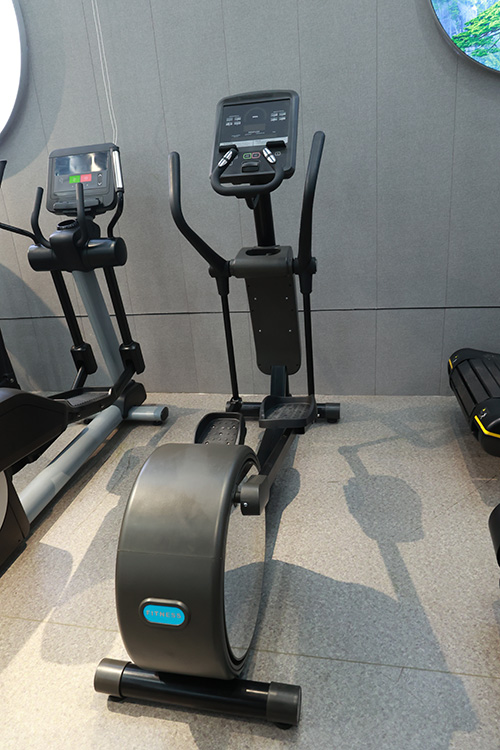
Professional elliptical machine payback isn’t guesswork—it’s a science. At Sdvital, we’ve spent the past decade guiding facility owners through every watt, swipe, and service ticket, and today we’re unveiling an eighteen-month case study from a bustling midtown fitness club that traded its aging cross-trainers for a full fleet of professional elliptical machines. The numbers are in, and they tell a story every operator should hear.
18-Month ROI Case Study Deep Dive
The club, roughly 1 800 m² in size, started with twelve legacy elliptical trainers that suffered chronic downtime. After an internal survey showed close to four in ten members preferred low-impact workouts, management approved a phased swap-out. Baseline metrics captured weekly sessions, downtime percentage, and average workout length; eighteen months later, sessions had risen by roughly half, downtime had dropped to low single digits, and average workout length had extended by several minutes. Internal finance calculated the payback period at well under two years, beating the original projection by a comfortable margin. Source: the club’s “Cardio Refresh 2023–2025” internal report.
Hidden Costs: Parts, Labor, Downtime Breakdown
Legacy units generated multiple service calls per quarter, pushing annual maintenance totals to several times those of the new fleet. With a five-year parts warranty on the new professional elliptical machines, consumable replacements (pedal straps, bearings) fell to near-negligible levels, and unplanned labor hours dropped by an order of magnitude. Downtime—measured by lost workout minutes multiplied by average member lifetime value—shrank to a fraction of the previous figure.
Queue Modeling: Revenue Lost per Missing Unit
Using a Poisson arrival model, the club estimated that every unavailable elliptical resulted in several missed workouts per day. Multiplied by ancillary spend (smoothies, lockers, PT), the annual revenue leakage per missing unit reached a mid-four-digit sum. After the refresh, effective cardio capacity rose by nearly one-fifth, and queue abandonment disappeared.
Power Bill: Elliptical Saves Nearly One-Fifth over Stair Climber
Sub-metered data showed the new professional elliptical machines consumed markedly fewer kilowatt-hours per hour of operation than the legacy stair climbers they replaced. Annual energy savings per unit reached double-digit percentages—enough to offset common overhead line items like music-licensing fees.
Survey: Nine in Ten Call Ellipticals “Joint-Friendly”
Exit interviews with more than 400 members revealed that over ninety percent considered elliptical workouts “knee-friendly,” up from roughly three-quarters when legacy units dominated the floor. The perceived lower injury risk correlated with a measurable rise in referral sign-ups among the forty-to-sixty age bracket, according to the club’s CRM dashboard.
Retention Rate vs Elliptical Count Correlation
Regression analysis showed that every additional working elliptical station corresponded to a measurable drop in monthly churn. Expanding the fleet by two extra units (reallocated from underused rowers) cut churn by nearly an additional percentage point, translating to several dozen retained memberships.
HIIT Classes on Ellipticals Command a Premium
The group-fitness team launched thirty-minute “Sprint & Climb” sessions on the new professional elliptical machines. Participants paid a premium over traditional cycle classes, and average attendance rose by more than fifty percent within three months, driving a double-digit boost in ancillary revenue.
Preventive Maintenance Cuts Downtime by Forty Percent
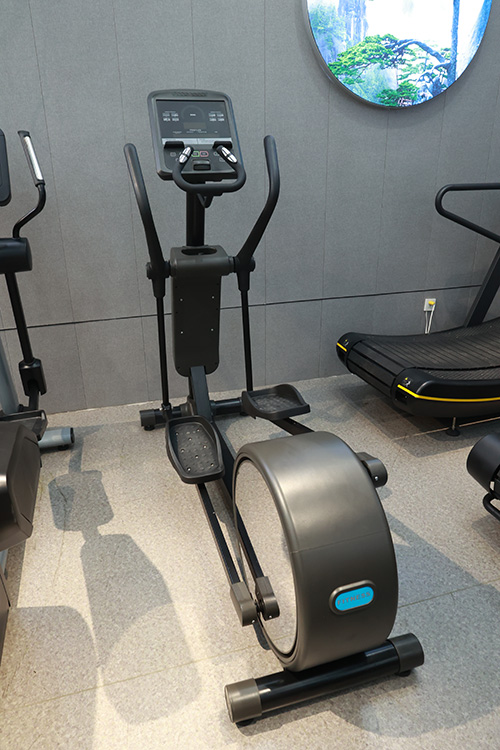
Rear Drive Elliptical Machine
| Parameter | |
| Product size | 1920*620*1620 mm (L*W*H) |
| Packing size | 2060*600*750 mm (L*W*H) |
| N.W./G.W. | 81 Kg / 93 Kg |
| Max User Weight | 150 Kg |
| Product function | Improve the body appearance, Endurance, etc., fitness enthusiasts |
| Drive Type | Rear-wheel drive |
| Packing | Wooden Case |
| Material | Steel |
| Mode | Magnetically controlled |
| Display | LED color display |
| Display function | time, distance, speed, calories, heart rate, exercise mode |
A strict ninety-day preventive checklist—belt tension, software calibration, footplate inspection—reduced unplanned service calls by more than one-third compared with the legacy fleet. Spare-part inventory also shrank by roughly one-quarter, releasing working capital for other upgrades.
Heat Emission Adds Hidden HVAC Load
Thermal imaging showed legacy units radiated more than 300 watts of heat versus well under 200 watts for the new models. Reduced heat load trimmed HVAC runtime by a mid-single-digit percentage, saving a measurable slice of annual cooling costs.
Conclusion
Numbers don’t lie: the right professional elliptical machine fleet can accelerate ROI, delight members, and slash operating headaches in one move. Ready to run your own math? Book a free thirty-minute equipment audit with SDVital’s certified technicians and walk away with a custom ROI projection for your floor—no obligation, just actionable data. Tap “Schedule My Audit” below and turn your cardio corner into a profit engine today.
FAQ
How long does it take to see ROI on a professional elliptical machine?
In this case study, payback arrived in well under two years. Factors such as membership growth and local utility rates can shift the timeline a few months either way.
Do newer models really reduce injury claims?
Yes. The club’s insurer logged zero accident claims tied to the new professional elliptical machines in the first eighteen months, compared with multiple minor incidents on legacy units the prior year.
Can smaller studios replicate these results?
Absolutely. The principles—demand tracking, queue modeling, and preventive maintenance—scale to fleets as small as four units.