
Table of Contents
Introduction
An Olympic squat rack is traditionally known as a staple for strength training, particularly for squats, bench presses, and overhead lifts. However, when used correctly, it can also become a powerful tool to strengthen your core and sculpt your abs. For fitness professionals and gym managers, understanding how to maximize this equipment for ab training not only enhances client results but also improves retention by offering versatile workout options. In this guide, we’ll explore safe techniques, practical exercises, and professional insights for targeting your abs using an Olympic Squat Rack.
Why Use an Olympic Squat Rack for Ab Training
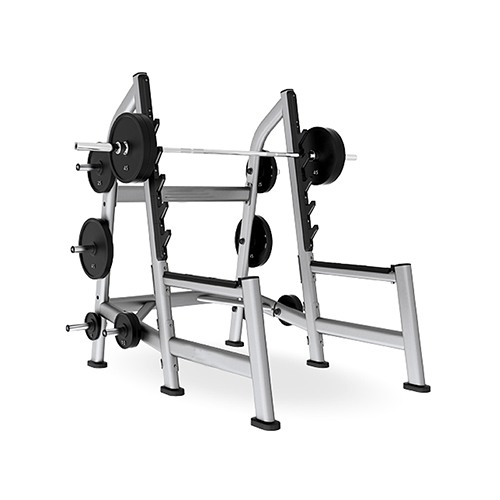
The Olympic Squat Rack provides a secure structure to perform a variety of ab exercises. Unlike floor-based movements, it allows you to incorporate resistance and stability challenges that activate the entire core. Exercises like hanging knee raises, rotational twists, and barbell front rack holds engage multiple muscle groups simultaneously, including the rectus abdominis, obliques, and lower back. According to a study published in the Journal of Strength and Conditioning Research, compound movements that involve stabilization around a fixed apparatus are more effective at activating the core than isolated ab exercises alone.
Key Safety Tips Before Training Abs with a Squat Rack
Before incorporating ab exercises with an Olympic squat rack, it is essential to focus on safety:
- Adjust the bar height to match shoulder or chest level depending on the exercise.
- Use safety bars or a spotter when performing hanging or weighted movements.
- Warm up the core and surrounding stabilizer muscles.
- Maintain proper breathing techniques, exhaling during core engagement.
- Avoid swinging or jerking motions that can compromise form and increase injury risk.
Top Ab Exercises Using an Olympic Squat Rack
Hanging Knee Raise with Squat Rack
Purpose: Focuses on lower abs and core stability.
Instructions:
- Set the bar at a height you can comfortably hang from.
- Grip the bar with both hands and stabilize your core.
- Raise your knees toward your chest, then slowly lower them.
- Control your body to prevent swinging and maximize core activation.
Pro Tips: Straight-leg variations increase difficulty and further engage the lower abs. Grip straps can assist if your hands fatigue quickly.
Landmine Twist Using the Squat Rack
Purpose: Strengthens obliques and rotational core muscles.
Instructions:
- Secure one end of the barbell in the squat rack.
- Stand with a shoulder-width stance, holding the free end with both hands.
- Rotate the barbell from one side of your body to the other.
- Keep knees slightly bent and maintain a strong core throughout the movement.
Pro Tips: Slow, controlled rotations prevent strain and ensure proper engagement.
Barbell Front Rack Hold for Core Stability
Purpose: Engages deep core muscles while improving posture and squat stability.
Instructions:
- Set the barbell at chest height.
- Use a front rack grip and lift the barbell in front of your shoulders.
- Hold for 10–30 seconds, keeping the core tight and back straight.
Pro Tips: Start with lighter loads and focus on maintaining proper alignment.
Slow-Tempo Squats for Core Engagement
Purpose: Activates the entire core through controlled squatting movements.
Instructions:
- Position the barbell for a traditional back squat.
- Descend slowly, counting 3–5 seconds, and rise at the same controlled pace.
- Keep the core engaged throughout to protect your spine.
Pro Tips: Focus on slow, deliberate movement rather than adding more weight for optimal core activation.
Core-Focused Exercises Table
| Exercise Name | Target Areas | Difficulty | Best For |
|---|---|---|---|
| Hanging Knee Raise | Lower abs, core stability | Medium | Intermediate & advanced users |
| Landmine Twist | Obliques, rotational power | Medium | Users seeking rotational strength |
| Front Rack Hold | Deep core muscles, posture | Easy–Medium | All fitness levels |
| Slow-Tempo Squat | Full core, glutes, legs | Medium | Core stability & strength focus |
| Barbell Anti-Rotation Hold | Transverse abs | Medium–High | Users aiming to prevent rotation |
Training Plan for Effective Ab Workouts with a Squat Rack
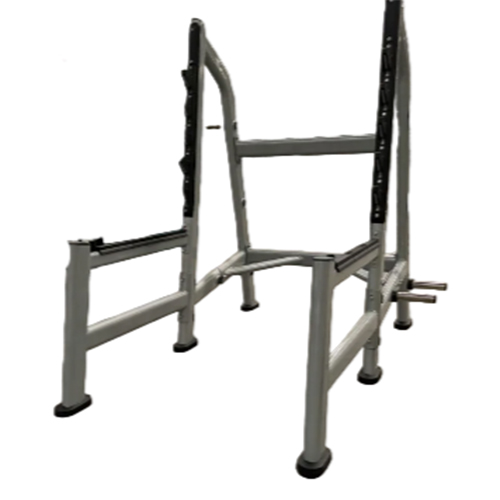
For optimal results, integrate core-focused exercises 2–3 times per week. Perform 2–3 sets per exercise, aiming for 8–12 reps or 10–20 seconds for static holds. Gradually increase difficulty by adding resistance, increasing repetitions, or extending hold times. A well-rounded plan will include both dynamic movements and static core stabilization exercises to ensure complete abdominal development and functional strength.
Common Mistakes to Avoid
- Relying on arms instead of engaging the core.
- Allowing excessive body swinging during exercises.
- Holding your breath instead of exhaling during core contractions.
- Incorrect bar height leading to poor form or injury.
Conclusion
The Olympic Squat Rack is more than just a tool for squats or presses; it’s a versatile piece of equipment that can elevate your core training. By combining hanging, rotational, anti-rotation, and stability exercises, you can build strong, functional abs that support overall performance.
For gym owners and fitness professionals looking to equip their facilities with durable, professional-grade squat racks and complementary core training solutions, SDVital provides comprehensive equipment designed for safety, performance, and versatility. Take action today to integrate these ab-focused exercises into your training programs and maximize your clients’ results.
FAQ
Can beginners use an Olympic squat rack for abs?
Yes. Start with less complex exercises such as front rack holds or slow-tempo squats before progressing to hanging movements.
Is using the squat rack more effective than traditional ab exercises?
Yes. The rack allows for resistance-based, compound movements that engage multiple core muscles at once, offering more functional strength development.
How many exercises should I perform per session?
2–3 exercises per session are sufficient for focused core work without overfatigue.