
If you are trying to squeeze a high-intensity cardio workout into a packed daily schedule at 5:00 AM, the biggest hurdle isn’t your internal alarm clock—it’s the constant anxiety of waking up your family or triggering a noise complaint from the neighbors downstairs. Choosing the wrong fitness machine can turn a peaceful morning routine into an uncomfortable household argument.
By reading this guide, you will learn exactly how different cross-trainer braking systems impact acoustic output, why fan-based fitness units fail the residential noise test, and how to configure an indoor workout space that keeps your household completely undisturbed. If you want a machine that operates at true, whisper-quiet levels, investing in a premium magnetic resistance elliptical is the most effective engineering solution available.
Table of Contents
How Eddy Currents Eliminate Friction Noise
To understand why a magnetic resistance elliptical is structurally superior for home environments, you have to look at the underlying mechanical physics of fitness equipment. Traditional exercise hardware relies on mechanical friction pads or physical brake shoes pressing directly against a spinning metal flywheel to generate tension. This physical contact creates an immediate, grinding hum that travels straight through the frame of the machine and vibrates down into your structural flooring.
A high-quality magnetic resistance elliptical bypasses physical contact entirely by utilizing a phenomenon known as eddy currents. Inside the drive housing, a series of powerful, rare-earth magnets are positioned adjacent to a heavy, balanced steel flywheel. When you adjust the tension on the digital console, an internal servo motor changes the physical proximity of those magnets to the spinning flywheel without ever making physical contact.
As the metal flywheel cuts through the magnetic field, localized electrical currents oppose the rotational motion, creating smooth, progressive resistance. Because there are no rubbing parts, a magnetic resistance elliptical eliminates mechanical friction noise at the source. The only sound generated is a faint, rhythmic sweep from the internal drive belt, keeping the machine well within the limits of comfortable indoor acoustics.
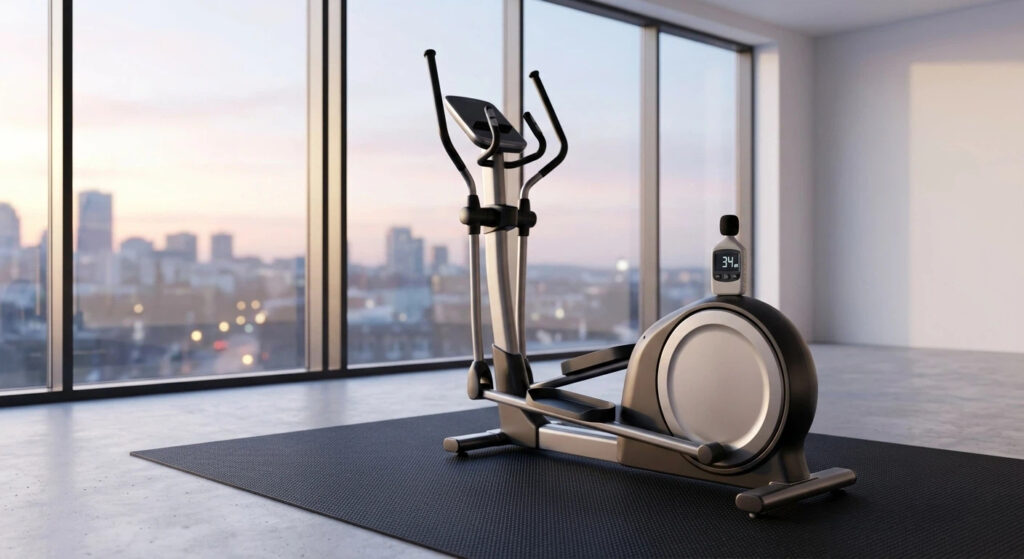
Air Resistance Flywheels vs. The Shared-Wall Apartment Test
In contrast to the silent operation of a magnetic setup, air-resistance ellipticals operate on the same aerodynamic principles as commercial rowing machines or assault bikes. These units utilize a large flywheel fitted with wide fan blades. As the user pedals faster, the blades slice through the surrounding air, creating aerodynamic drag to provide the necessary workout tension.
While fan-based resistance offers an organic, infinite scaling workload that cross-fit athletes love, it introduces a severe acoustic penalty. The fast-spinning fan blades create a continuous wind roar that scales exponentially with your speed. If you double your RPM during a high-intensity interval, the ambient noise in your room can instantly jump from a modest hum to a loud rushing sound.
For anyone living in a shared-wall apartment or a multi-story timber home, this structural wind roar is highly problematic. High-frequency air turbulence easily penetrates standard drywall and resonates through hollow floor joists. According to architectural acoustic criteria published by the U.S. Department of Housing and Urban Development Noise Guidebook, indoor residential noise levels should ideally remain below a sustainable threshold to prevent sleep disruption. A fan-driven system routinely breaches these thresholds during intense training sessions, making it poorly suited for tight residential environments.
Acoustic Decibel Benchmarks for Residential Silent Home Gym Equipment
When building a distraction-free workout environment, managing the overall decibel (dB) footprint of your machinery is critical. The human ear perceives sound logarithmically, meaning a 10 dB increase represents a perceived doubling of loudness. To maintain a truly harmonious household, every machine selected must fit into a strict acoustic framework designed for silent home gym equipment.
The Centers for Disease Control and Prevention (CDC) Noise Damage Guidelines state that sounds at or below 60 dB are generally safe and non-disruptive for daytime environments. However, early morning or late-night workouts require a much lower acoustic floor to avoid waking light sleepers. A premium magnetic resistance elliptical typically operates between 30 dB and 40 dB, which is equivalent to the background ambience of a public library.
Let’s look at how a standard magnetic resistance elliptical compares directly to an air-resistance alternative across different workout intensities:
| Workout Intensity | Magnetic Resistance System | Air Resistance System | Residential Impact |
| Warm-up (Low RPM) | 32 dB (Whisper quiet) | 52 dB (Moderate hum) | Safe for adjacent bedrooms |
| Steady-State Cardio | 38 dB (Library environment) | 64 dB (Loud conversation) | Air system risks waking children |
| HIIT Sprints (Max RPM) | 42 dB (Soft background white noise) | 75 dB (Vacuum cleaner roar) | Air system penetrates shared walls |
As the data shows, a magnetic resistance elliptical keeps its acoustic footprint flat and predictable regardless of how hard you push your pace. This makes it an invaluable foundational asset when you curate a collection of high-performance, silent home gym equipment that can be used at any hour without structural compromise.
How to Choose the Quietest Elliptical Machine for Early Morning Workouts

Selecting the quietest elliptical machine for early morning workouts requires looking beyond the braking mechanism alone. Even the most advanced magnetic system can be undermined by poor ancillary engineering. When auditing equipment schematics, savvy buyers must analyze the entire internal drivetrain to ensure total acoustic isolation.
First, verify the drive belt configuration. Avoid any vintage or low-end models that utilize chain drives, as metal-on-metal links produce an unavoidable clicking sound over time. Instead, look for a modern multi-groove Poly-V belt drive. These reinforced rubber belts glide silently across machined pulleys, delivering smooth power transfer without generating a single click or squeak.
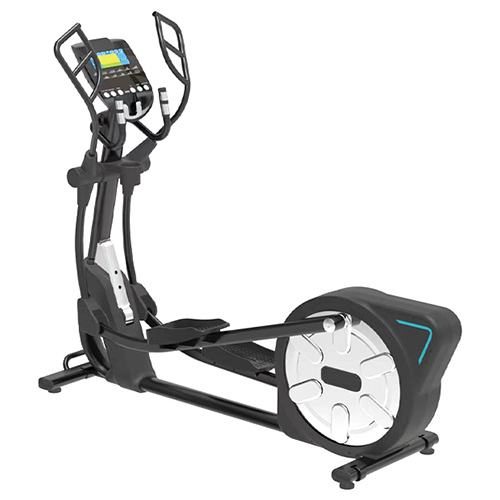
Second, evaluate the total weight of the internal flywheel assembly. A heavier flywheel provides greater rotational inertia, which evens out the mechanical jerks in your stride. This fluid motion prevents the internal frame from flexing and creaking under shifting body weight. For a commercial-grade experience, prioritize a magnetic resistance elliptical that houses a flywheel weighing 20 pounds or more.
Finally, inspect the wheel track architecture. Many compact designs use a single-rail track system where the foot pedals glide along a single central beam. Over months of heavy use, lateral forces can cause the roller wheels to misalign, leading to an irritating scraping sound. Opting for a dual-rail track system spreads your body weight evenly across two independent parallel tracks, stabilizing your stride and eliminating wheel-chatter noise completely.
Mechanical Wear and Long-Term Noise Evolution in a Magnetic Resistance Elliptical
One of the most overlooked advantages of a magnetic resistance elliptical is its long-term acoustic stability. Fitness equipment rarely stays quiet forever; mechanical components degrade under constant friction, accumulation of dust, and thermal stress. Understanding how a machine ages is essential for protecting your initial investment.
Because a magnetic resistance elliptical operates without physical friction pads, the core braking components experience zero mechanical wear. The magnets do not lose their magnetic flux over time, and the steel flywheel does not suffer from surface degradation. This engineering characteristic ensures that the noise profile of your machine remains consistently low on day 1,000 of ownership as it was on day one.
Conversely, air-resistance systems act as giant mechanical vacuums. The rapid rotation of the fan blades pulls ambient dust, pet dander, and carpet fibers directly into the internal fan housing. Over time, this debris accumulates on the leading edges of the blades and inside the protective cage, disrupting the aerodynamic balance of the fan. This imbalance creates an unbalance-induced shaking sound and a low-frequency rumble that ruins any attempt at a stealthy workout.
Furthermore, alternative friction-based systems require routine application of specialized silicone lubricants to prevent the felt brake pads from squealing. If you skip this tedious maintenance, the dry pads will emit a high-pitched screech that can wake an entire household instantly. Investing in a low-maintenance magnetic resistance elliptical frees you from these mechanical chores while guaranteeing a lifetime of silent performance. To read more about the underlying industrial principles of electromagnetic induction braking, check the engineering guides on Britannica Eddy Current Principles.
Final Verdict
Compromising your fitness goals because you are terrified of waking your family or disturbing your neighbors is an unsustainable way to manage your health. Choosing the wrong fitness hardware forces you to choose between your physical conditioning and household harmony. Upgrading your personal training space with specialized, acoustically isolated machinery solves this dilemma permanently, allowing you to train hard at any hour of the day or night.
The long-term physiological advantages of maintaining a consistent sleep-wake training cycle are well documented by medical experts. A comprehensive study published by the National Institutes of Health (NIH) PMC Exercise Timing and Circadian Rhythms Analysis demonstrates that aligning high-intensity physical training with your natural early-morning circadian rhythm optimizes metabolic efficiency and cardiovascular health. By removing the psychological fear of sound disruption, you unlock the freedom to execute your routine exactly when your body is primed for peak performance.
Investing in a premium magnetic resistance elliptical is the single smartest decision you can make to protect your home’s acoustic environment. With zero friction points, silent poly-v belt drives, and a non-contact eddy current braking matrix, this technology ensures your early-morning fitness endeavors remain a strictly private affair. Stop walking on eggshells during your workouts; explore our complete catalog of ultra-quiet training platforms, choose a high-performance magnetic resistance elliptical, and master your fitness schedule on your own terms.
FAQ
Can a magnetic resistance elliptical operate completely without an electrical power outlet?
It depends on the specific model design. Manual magnetic units use a physical cable tension knob to move the magnets and require no plug, whereas motorized units require an electrical outlet to power the internal console and servo motors that shift the magnetic field. Both styles offer the same whisper-quiet operation.
How does the flywheel weight affect the sound output of a magnetic resistance elliptical?
A heavier flywheel increases rotational momentum, minimizing the micro-vibrations and structural jerks produced during high-speed pedaling. This added mechanical stability keeps the internal belt drive perfectly aligned, further dampening the noise output of your equipment.
Is it necessary to place a specialized rubber mat beneath a silent fitness machine?
Yes. Even a perfectly quiet machine transmits downward kinetic energy through its leveling feet. Placing a high-density rubber equipment mat underneath dampens these low-frequency acoustic vibrations before they can turn your subfloor into a giant speaker cone for the rooms below.