
It is the classic fitness catch-22: you know you need cardiovascular exercise to stay healthy, but every time you step on a treadmill, your knees pay the price. For many, the pounding of the pavement or the belt feels like a direct assault on the joints. This lead to a common hesitation—should you switch to the elliptical? And if you do, are you “cheating” your workout?
The answer lies in understanding how low-impact exercise benefits can actually accelerate your fitness goals while protecting your structural integrity. Far from being a “soft” option, the elliptical is a precision tool engineered to manage mechanical load. For anyone navigating the complexities of recovery, prioritizing these specific advantages is the smartest move you can make for your long-term mobility.
Table of Contents
Mastering Zero-impact Mechanics
The primary reason to choose an elliptical over a treadmill is the shift toward zero-impact mechanics. When you run, your body weight is magnified by gravity every time your foot strikes the ground. This shock is absorbed directly by your meniscus and cartilage.
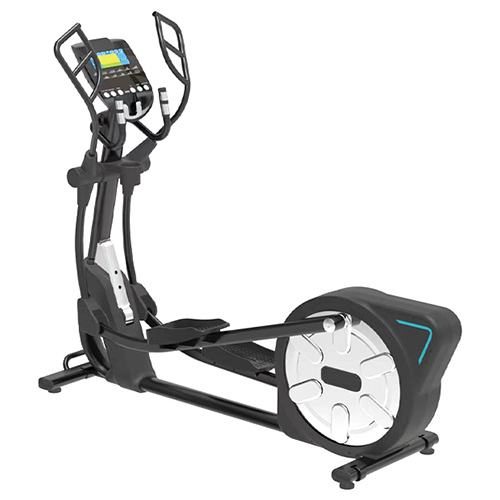
By contrast, the elliptical removes the “flight phase” of movement. Because your feet never leave the pedals, you eliminate the jarring collision between your body and the floor. This is a primary pillar of low-impact exercise benefits, allowing the joints to move through a full range of motion without the micro-trauma associated with high-impact sports. For a patient in knee rehab, this environment is the only way to build cardiovascular capacity without risking further inflammation.
The Power of Closed-chain Kinetic Exercise
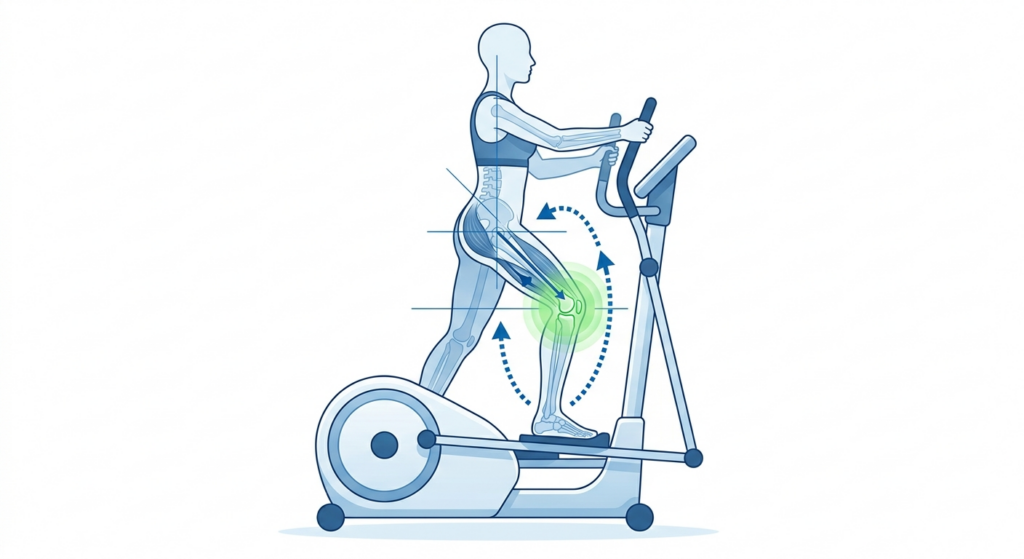
If you’ve ever wondered, “Is an elliptical machine good for bad knees and joints?” the clinical answer involves the concept of “closed-chain” movement. In physical therapy, a closed-chain kinetic exercise is one where the foot is fixed against a resistance surface (the pedal).
Resolving the Elliptical vs Treadmill for Knee Osteoarthritis Debate
For those dealing with chronic conditions, the choice between Elliptical vs Treadmill for knee osteoarthritis is often a turning point in their health. Osteoarthritis involves the wearing down of protective cartilage. Running on a treadmill acts like sandpaper on that sensitive area.
The elliptical, however, promotes the circulation of synovial fluid—the “joint oil” that nourishes cartilage—without the grinding force of impact. By maximizing low-impact exercise benefits, patients with osteoarthritis can stay active long enough to lose weight, which in turn reduces the daily load on their knees. It is a virtuous cycle that starts with choosing the right machine.
Addressing the Calorie Burn Skepticism
A major pain point for users is the fear of losing intensity. They often ask: “Can you burn as many calories on an elliptical as a treadmill?”
Technical Training: How to use an Elliptical for Knee Physical Therapy
To truly unlock the core of low-impact exercise benefits, you must focus on your form. Simply “gliding” isn’t enough. When learning how to use an elliptical for knee physical therapy, the most important rule is the “Heel-Down” technique.
Many users instinctively push through their toes. This puts unnecessary pressure on the patellar tendon. By keeping your heels in contact with the pedals, you trigger glute-to-knee activation. Your glutes are the strongest muscles in your body; when they are engaged, they “steer” the knee, preventing it from collapsing inward. This technical shift turns a simple cardio session into a functional knee rehab workout.
The Importance of Proper Alignment
Equipment quality matters. If you are shopping for a machine, look for the best elliptical pedal design for ankle and knee alignment. Some high-end machines feature a 2-degree inward tilt on the pedals. This subtle angle mimics the natural “Q-angle” of the human pelvis, ensuring that your knees don’t flare out or cave in during the stride.
Unlocking low-impact exercise benefits is difficult on a cheap, poorly designed machine that forces your legs into an unnatural path. Proper alignment ensures that the friction remains in the machine’s flywheel, not in your joints.
Comparative Performance Table
| Feature | Treadmill Running | Elliptical Training |
| Impact Stress | 250% of Body Weight | Zero-Impact Mechanics |
| Kinetic Type | Open-Chain | Closed-Chain Kinetic Exercise |
| Muscles Targeted | Lower Body Only | Full Body (Core/Arms/Legs) |
| Rehab Safety | Low (Risk of flare-ups) | High (Standard for Knee Rehab) |
| Cardio Efficiency | High | High (Through Resistance) |
| Joint Longevity | Potential Wear & Tear | Preserves Cartilage Integrity |
Scaling Up Intensity Without the Risk
As you progress, you can scale up low-impact exercise benefits by manipulating the incline and resistance. Unlike a treadmill, where “harder” usually means “faster and more impact,” a harder elliptical workout simply means more muscular tension.
By increasing the ramp, you target the hamstrings and glutes even more aggressively. This builds the strength necessary to support the knee during daily activities like climbing stairs. This transition from joint-friendly cardio to strength-endurance is what makes the elliptical an indispensable tool for athletes and seniors alike.
Long-Term Health and Prevention
Conclusion
The choice between a treadmill and an elliptical isn’t about which one is “harder.” It’s about which one allows you to train consistently for the next 20 years. Embracing low-impact exercise benefits is a commitment to your future self.
Stop punishing your joints in the name of “intensity.” By utilizing zero-impact mechanics and focusing on proper glute-to-knee activation, you can reach your weight loss and fitness goals faster and with significantly less pain. The A6 standard of low-impact exercise benefits is here to stay—make sure your fitness routine reflects that reality. Protect your joints today, and they will support you for a lifetime.
FAQ
Will the elliptical make my knees weaker?
No. By providing a safe environment for movement, it helps strengthen the supporting muscles, which actually makes the knee joint more resilient.
Is it better to pedal forward or backward?
Both are excellent. Pedaling backward is one of the unique low-impact exercise benefits that targets the hamstrings and calves, which are often neglected in standard walking.
How long should a rehab session last?
Start with 15–20 minutes at low resistance. As you gain confidence in your joint-friendly cardio capacity, you can increase the duration.
What is the most important of all low-impact exercise benefits?
The most notable of all low-impact exercise benefits is the ability to achieve high-intensity cardiovascular conditioning while maintaining a near-zero rate of orthopedic injury.