
The fitness industry has spent decades obsessed with “the burn,” high-intensity intervals, and pushing the human body to its absolute limits. However, for those navigating the golden years, the objective shifts. It is no longer about how much weight you can lose, but how much mobility you can keep. This is why low impact cardio for seniors has become the cornerstone of modern geriatric wellness.
As we age, the cartilage between our joints—specifically the knees, hips, and lower back—begins to thin. Traditional cardio, such as running or high-impact aerobics, creates a “shockwave” effect that can exacerbate osteoarthritis and lead to chronic inflammation. Choosing a path that protects these vital tissues while strengthening the heart is the most important health decision an aging adult can make.
Table of Contents
why low impact cardio for seniors is so essential
To understand why low impact cardio for seniors is so essential, we have to look at the physics of the human stride. When you run, the force exerted on your joints can be up to three times your total body weight. For someone with decreasing bone density, this is essentially an “impact debt” that the body can no longer pay back through rapid tissue repair.
The Mayo Clinic notes that low-impact exercise minimizes the stress placed on joints, allowing for longer durations of activity without the subsequent “flare-ups” common in high-impact sports. By staying below the threshold of joint pain, seniors can maintain a consistent routine, which is the only way to achieve long-term cardiovascular benefits.
Bone Density vs. Joint Friction
There is a common myth in the fitness world: if you don’t pound the pavement, you won’t build bone density. While weight-bearing exercise is necessary to stimulate bone growth, it does not have to be high-impact.
When you engage in low impact cardio for seniors, you are still putting weight through your skeletal system—you are just doing it without the “hammering” effect. This controlled loading is exactly what the body needs to stimulate osteoblasts (bone-building cells) without causing micro-fractures in fragile cartilage.
For those managing osteopenia or osteoporosis, the goal is “functional loading.” You want the bones to feel the weight so they stay strong, but you want the joints to move like silk. This is precisely why the elliptical machine has surpassed the treadmill in senior living communities across the globe.
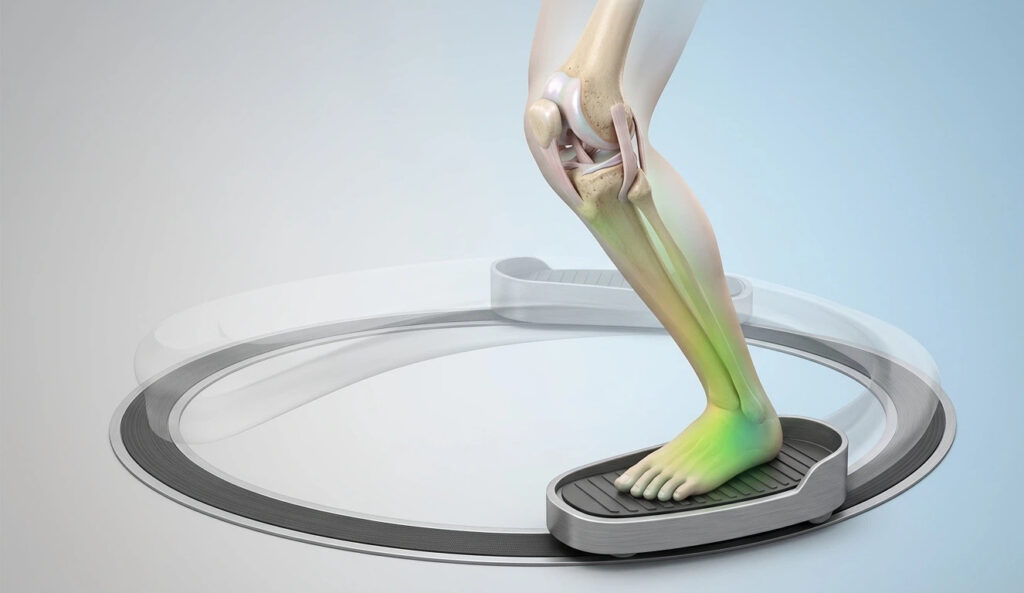
The Elliptical Advantage: Why It Tops the List of Safe Exercise Machines for Elderly
When we talk about Safe exercise machines for elderly users, the elliptical machine stands in a league of its own. It provides what kinesiologists call “closed-kinetic chain” exercise. This means your feet never leave the pedals, ensuring there is zero “strike” force.
The elliptical combines the motion of walking, running, and stair climbing into one fluid loop. For a senior, this serves three major purposes:
- Heart Health: It elevates the heart rate as effectively as running.
- Total Body Engagement: The inclusion of moving handlebars allows for upper-body conditioning, which is vital for maintaining shoulder mobility.
- Joint Longevity: The elliptical’s path mimics the natural gait of the human body, reducing the “twisting” forces that often cause hip pain on stationary bikes.
According to the Arthritis Foundation, the elliptical is one of the best tools for those with knee and hip replacements because it allows for a full range of motion without the jarring of a treadmill.
What are some low-impact cardio exercises suitable for seniors?
While the elliptical is a primary tool, variety is the key to preventing “overuse” injuries, even in a low-impact environment. When clients ask, “what are some low-impact cardio exercises suitable for seniors?” I typically suggest a rotation:
1.The Elliptical Machine: For weight-bearing benefits and upper-body integration.
2.Aquatic Aerobics: The ultimate in non-weight bearing cardio, though it does less for bone density than land-based options.
3.Recumbent Biking: Excellent for those with severe balance issues or lower-back stenosis.
4.Tai Chi or Power Yoga: While not traditional “cardio,” they improve the circulation and balance necessary to perform cardio safely.
By rotating these activities, you ensure that the body is being challenged from different angles, which is critical for low impact cardio for seniors to remain effective over years of use.
Non-Weight Bearing Cardio for Aging Joints and Balance
As balance becomes a primary concern, many look toward non-weight bearing cardio for aging joints and balance. While weight-bearing is good for bones, non-weight bearing (like swimming or certain seated machines) is the “safety net” for those with high fall risks.
The magic happens when you find a machine that bridges the gap. A high-quality elliptical offers a “semi-weight bearing” experience. Because you are holding onto handles and your feet are supported by large platforms, the risk of a fall is virtually eliminated compared to walking on a moving treadmill belt. This builds the confidence necessary for a senior to push their heart rate into the “aerobic zone” without the fear of a trip or stumble.
Is the Elliptical Right for You?
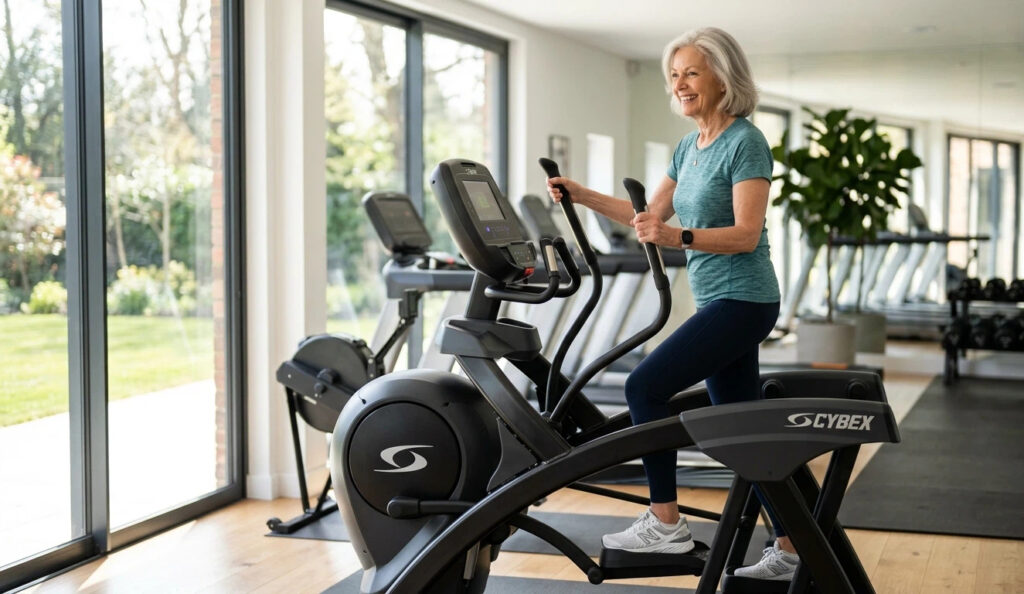
Not every machine is built the same, and when searching for Safe exercise machines for elderly family members, you must look at the technical specs. A “bargain” machine often has a short stride length that feels “choppy.” This chop is exactly what you want to avoid.
For low impact cardio for seniors to be truly effective, the machine needs:
- A Smooth Flywheel: To prevent jerky movements at the start and end of a stride.
- A Low Step-up Height: Many seniors struggle to “climb” onto a high machine. Look for a “rear-access” or “low-profile” design.
- Adjustable Resistance: This allows the user to start at a “rehab” level and slowly build up to a “strength” level.
The National Institute on Aging (NIA) emphasizes that endurance exercises like these are the best way to improve the health of your heart, lungs, and circulatory system.
Conclusion
Choosing low impact cardio for seniors isn’t about “taking it easy.” It is about training smarter. By utilizing Safe exercise machines for elderly users, specifically the elliptical, you are choosing to invest in your heart without spending your “joint capital.”
The goal is to keep moving well into your 80s and 90s. This requires a strategy that respects the biology of aging while pushing the boundaries of what your heart can do. Whether you are looking for non-weight bearing cardio for aging joints and balance or just a way to stay active after a knee surgery, the answer lies in the glide.
FAQ
Will low impact cardio for seniors actually help me lose weight?
Yes. Weight loss is a byproduct of consistent movement. Because low-impact exercise is easier on the joints, you can often work out for longer periods than you could with high-impact exercise, leading to higher total calorie expenditure over time.
Is the elliptical safe if I have a hip replacement?
In most cases, it is preferred. However, always consult your surgeon. The elliptical’s linear path prevents the lateral “shearing” forces that can be problematic for new hip implants.
How often should I do it?
The goal for low impact cardio for seniors is 150 minutes of moderate intensity per week. Breaking this into 30-minute sessions five days a week is the gold standard.
Should I worry about my heart rate?
Use the “Talk Test.” If you can talk but not sing, you are in the perfect aerobic zone for cardiovascular health without over-exertion.