
Welcome to My Blog!
Before we dive into the content, I’d love for you to join me on my social media platforms where I share more insights, engage with the community, and post updates. Here’s how you can connect with me:
Facebook:https://www.facebook.com/profile.php?id=61553215985287
LinkedIn:https://www.linkedin.com/showcase/99329941/admin/dashboard/
Tiktok:www.tiktok.com/@shandongvitalfitness
Now, let’s get started on our journey together. I hope you find the content here insightful, engaging, and valuable.
Table of Contents
Introduction
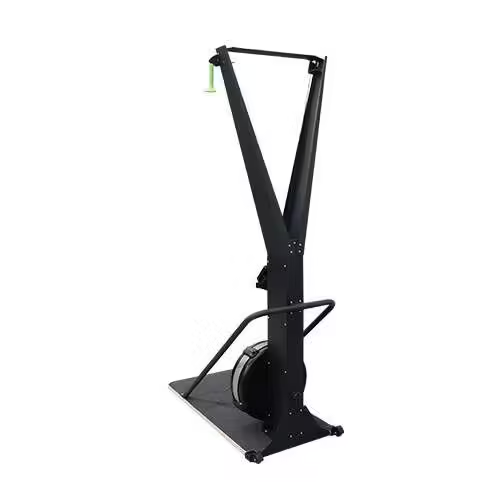
In today’s fast-paced world, maintaining a consistent fitness routine can be challenging. Traditional outdoor activities are often hindered by weather conditions, time constraints, and accessibility. This is where indoor ski machines, also known as ski ergometers or ski trainers, have emerged as a popular and effective solution. These innovative fitness devices simulate the motion of Nordic skiing, providing a full-body workout that is both engaging and efficient. Indoor ski machines offer a low-ipact yet high-intensity exercise that targets multiple muscle groups, making them a valuable addition to any home gym or fitness center. This comprehensive guide will delve into the world of indoor ski machines, exploring their benefits, proper usage, and why they are gaining traction as a premier fitness tool.
What are Indoor Ski Machines and How Do They Work?
Indoor ski machines are designed to mimic the poling motion of cross-country skiing. They typically consist of a flywheel, a handle or two poles connected to the flywheel by cords, and a monitor that tracks workout data such as time, distance, strokes per minute, and calories burned. The user pulls on the handles or poles, engaging the flywheel and creating resistance. This resistance can usually be adjusted to increase or decrease the intensity of the workout.
The key to the effectiveness of indoor ski machines lies in their ability to engage both the upper and lower body simultaneously. Unlike many other cardio machines that primarily focus on the legs, indoor ski machines require the user to actively use their arms, shoulders, back, core, and legs to generate power. This full-body engagement leads to a more comprehensive and efficient workout.
Understanding the Mechanics of Indoor Ski Machine Workouts
The mechanics of using an indoor ski machine involve a coordinated sequence of movements:
- Catch: The beginning of the stroke, where the hands are extended forward and the core is engaged.
- Pull: The main power phase, where the user pulls the handles or poles back towards their body, driving the flywheel.
- Finish: The end of the stroke, where the hands are near the body and the core is still engaged.
- Recovery: The return phase, where the hands are extended forward again, preparing for the next stroke.
This cyclical motion, when performed correctly, provides a challenging and rewarding workout.
Benefits of Using Indoor Ski Machines for a Full Body Workout
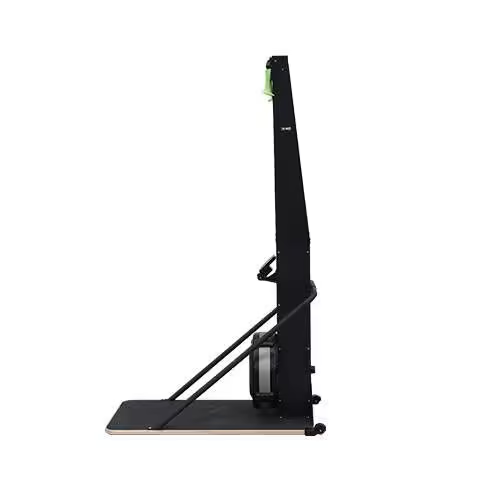
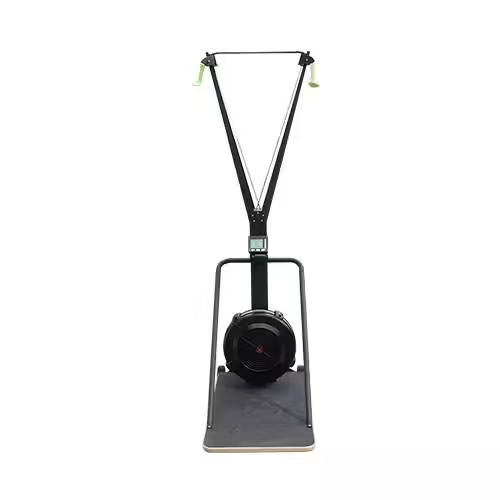
Indoor ski machine offer a plethora of benefits that make them a compelling choice for fitness enthusiasts of all levels.
Cardiovascular Health Improvement with Indoor Ski Machine
Indoor ski machine provide an excellent cardiovascular workout. The continuous, rhythmic motion elevates the heart rate and strengthens the cardiovascular system. Regular use can lead to improvements in endurance, stamina, and overall heart health.
Full-Body Muscle Engagement with Indoor Ski Machine
As mentioned earlier, indoor ski machine engage a wide range of muscle groups, including:
- Upper Body: Shoulders, back (lats, rhomboids, trapezius), biceps, triceps.
- Core: Abdominals, obliques, lower back.
- Lower Body: Legs (quadriceps, hamstrings, calves), glutes.
This comprehensive muscle activation contributes to increased strength, power, and muscle tone.
Low-Impact Exercise with Indoor Ski Machine
Unlike high-impact activities like running or jumping, indoor ski machine provide a low-impact workout that is gentle on the joints. This makes them a suitable option for individuals with joint pain, injuries, or those seeking a less stressful form of exercise.
Calorie Burning and Weight Management with Indoor Ski Machine
Due to the full-body engagement and high intensity, indoor ski machine are highly effective at burning calories. Regular use can contribute to weight loss, weight management, and improved body composition.
Improved Posture and Core Stability with Indoor Ski Machine
The proper use of an indoor ski machine requires good posture and core engagement. This can lead to improvements in posture, core stability, and balance.
Proper Technique for Using Indoor Ski Machines
Using proper technique is crucial to maximize the benefits of indoor ski machine and prevent injuries.
Correct Body Positioning on Indoor Ski Machine
- Stand with your feet shoulder-width apart, knees slightly bent.
- Maintain a straight back and engage your core.
- Grip the handles or poles with a comfortable grip.
The Pulling Motion on Indoor Ski Machine
- Initiate the pull by engaging your core and back muscles.
- Pull the handles or poles back towards your body, keeping your elbows close.
- Extend your legs slightly as you pull.
The Recovery Phase on Indoor Ski Machine
- Return your hands to the starting position in a controlled manner.
- Maintain a stable core and avoid rounding your back.
Common Mistakes to Avoid on Indoor Ski Machine
- Rounding the back.
- Overusing the arms and neglecting the core and legs.
- Pulling with jerky movements.
- Not adjusting the resistance appropriately.
Indoor Ski Machines: Workout Examples
Here are a couple of workout examples to get you started:
Beginner Indoor Ski Machine Workout
- Warm-up: 5 minutes of light rowing or other cardio.
- Workout: 3 sets of 10 minutes of skiing with 2 minutes of rest between sets. Focus on maintaining good form and a steady pace.
- Cool-down: 5 minutes of light stretching.
Intermediate Indoor Ski Machine Workout
- Warm-up: 5 minutes of light rowing or other cardio.
- Workout:
- 10 minutes of skiing at a moderate pace.
- 5 minutes of interval training (30 seconds of high-intensity skiing followed by 30 seconds of rest).
- 10 minutes of skiing at a moderate pace.
- Cool-down: 5 minutes of light stretching.
Comparing Indoor Ski Machines to Other Exercise Equipment
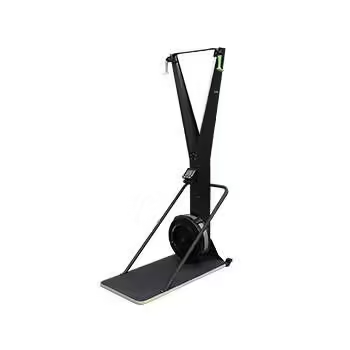
While indoor ski machines offer a unique and effective workout, it’s helpful to compare them to other popular exercise equipment.
| Feature | Indoor Ski Machines | Treadmills | Exercise Bikes | Rowing Machines |
|---|---|---|---|---|
| Muscle Engagement | Full body (upper, core, lower) | Primarily lower body | Primarily lower body | Full body (similar to ski machines, but different emphasis) |
| Impact | Low | High | Low | Low |
| Calorie Burn | High | High | Moderate | High |
| Skill Level | Relatively easy to learn, but technique is important | Easy to use | Easy to use | Technique is important |
| Space Requirements | Moderate | Moderate to large | Small to moderate | Moderate to large |
| Cost | Moderate to High | Moderate to High | Low to High | Moderate to High |
This table provides a concise overview of the key differences between indoor ski machines and other common fitness equipment.
Conclusion
Indoor ski machines offer a unique and effective way to achieve a full-body workout. Their low-impact nature, combined with their ability to engage multiple muscle groups and provide a cardiovascular challenge, makes them a valuable tool for individuals seeking to improve their fitness. By understanding the proper technique, exploring different workout options, and incorporating indoor ski machines into a regular fitness routine, individuals can reap the numerous benefits they offer. Whether you are a seasoned athlete or just beginning your fitness journey, the indoor ski machine is a worthy addition to your exercise arsenal. The versatility and effectiveness of indoor ski machines solidify their place as a leading choice in modern fitness. The ability to simulate a challenging outdoor activity within the comfort of your own home or gym makes them a practical and powerful tool for achieving your fitness goals. As technology continues to advance, we can expect even greater innovation and refinement in the design and functionality of indoor ski machines, further cementing their role in the future of fitness.
FAQ
Are indoor ski machines good for weight loss?
Yes, due to their full-body engagement and high-intensity nature, indoor ski machines are effective for burning calories and promoting weight loss.
Are indoor ski machines suitable for beginners?
Yes, with proper guidance and technique, beginners can safely and effectively use indoor ski machines. Starting with shorter workouts and focusing on form is recommended.
How often should I use an indoor ski machine?
The frequency depends on your fitness goals and current fitness level. A general recommendation is 2-3 times per week, with rest days in between.
Do indoor ski machines require any maintenance?
Minimal maintenance is typically required. Regularly wiping down the machine and checking the cords and flywheel are recommended.