
Welcome to My Blog!
Before we dive into the content, I’d love for you to join me on my social media platforms where I share more insights, engage with the community, and post updates. Here’s how you can connect with me:
Facebook:https://www.facebook.com/profile.php?id=61553215985287
LinkedIn:https://www.linkedin.com/showcase/99329941/admin/dashboard/
Tiktok:www.tiktok.com/@shandongvitalfitness
Now, let’s get started on our journey together. I hope you find the content here insightful, engaging, and valuable.
Table of Contents
Introduction
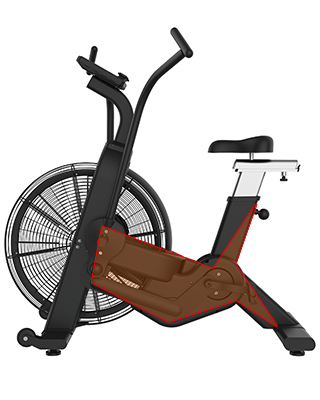
The air bike fat loss strategy is a practical, results-driven way to shed fat, boost endurance, and improve overall fitness. Whether you’re a personal trainer, gym owner, or home fitness enthusiast, understanding how to unlock its full potential can dramatically transform your approach to fat burning. Unlike other cardio machines, the air bike offers a total body workout, engaging both upper and lower muscles while significantly stimulating cardiovascular endurance.
This guide will show you why the air bike is a standout tool for fat loss. You’ll discover how to structure your workouts for optimal fat burning and learn strategies to keep your metabolism firing long after your session ends. Get ready to maximize your results and revolutionize your fitness routine.
The Science Behind Air Bike Fat Loss: Why It’s So Effective
Full-Body Engagement for Maximum Calorie Burn
Unlike treadmills or ellipticals, air bikes force your arms and legs to work simultaneously. This dual-action mechanism increases calorie expenditure significantly, turning your workouts into full-body fat-shredding sessions.
When muscles across your entire body are working, your energy demand spikes — resulting in greater fat oxidation compared to isolated lower-body cardio machines.
Metabolic Boost: Post-Exercise Fat Burning
One of the lesser-known benefits of air bike training is its impact on excess post-exercise oxygen consumption (EPOC), also known as the “afterburn effect.” This phenomenon means that after your intense air bike session, your body continues to burn calories at an elevated rate for hours — supporting sustained fat loss.
Structuring Your Air Bike Fat Loss Workouts: Strategies That Get Results
You can’t just hop on and pedal mindlessly. To truly ignite fat burning with the air bike, you need structure and variety. Here are three proven approaches:
1. HIIT (High-Intensity Interval Training)
One of the most effective ways to use the air bike for fat loss is through HIIT.
- Example Protocol: 30 seconds sprint / 90 seconds rest × 10 rounds.
- Why it works: Short, explosive bursts tax your anaerobic system, leading to maximal fat breakdown.
2. Steady-State Endurance Rides
For those who prefer moderate intensity:
- Example Protocol: 45–60 minutes at 60–70% max heart rate.
- Why it works: Burns fat efficiently over time without overloading joints.
3. Mixed-Modal Circuit Training
Integrate the air bike into strength circuits for metabolic conditioning:
- Example Protocol: 10 air bike calories → 10 push-ups → 10 squats → Rest 1 min → Repeat 5 times.
- Why it works: Builds muscle and shreds fat simultaneously.
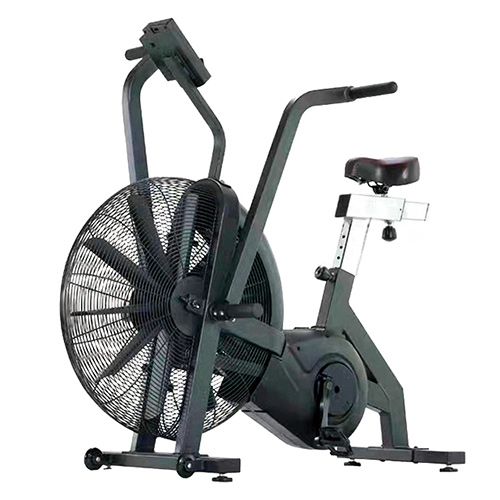
Air Bike Fat Loss Cardio Equipment Specifications
| Product size | 1380*550*1350MM |
| Packing size | 1350*270*890MM |
| N.W/G.W | 57KG/63KG |
| Max User Weight | 150KG |
| Display | LED:Time, distance, heart rate, calories |
| Resistance Adjustment | Wind resistance |
Customizing Air Bike Fat Loss Plans: Who Should Use What?
Every user is different. Here’s how you can tailor the air bike fat loss strategy depending on your fitness level:
Beginners: Building Foundations
- Workout: 20 minutes of moderate pace riding.
- Goal: Improve aerobic capacity and joint adaptability.
Intermediates: Introducing Intervals
- Workout: 5 rounds of 1-min fast / 2-min easy recovery.
- Goal: Start boosting EPOC and metabolism.
Advanced: Hardcore Fat Loss
- Workout: 10 rounds of 30-sec sprints / 90-sec rest.
- Goal: Maximal fat oxidation and metabolic shock.
Rehab or Special Populations
- Workout: 10–15 minutes at very low resistance.
- Goal: Maintain movement without stress on joints, ideal for post-injury recovery.
Nutrition and Recovery: Supporting Your Air Bike Fat Loss Journey
No fat loss strategy is complete without addressing fuel and recovery:
Eat to Burn
- Prioritize lean proteins, fibrous vegetables, and healthy fats.
- Avoid excessive carb-loading unless doing endurance rides.
Rest and Rebuild
- The air bike demands recovery. Schedule at least one rest day between intense sessions.
- Sleep, hydration, and mobility work enhance fat loss results.
Conclusion
The air bike fat loss versatility makes it a perfect fit for any fitness environment, from home gyms to commercial studios and rehabilitation centers. It’s ideal for all fitness levels, delivering exceptional value whether your goal is rapid weight loss, general fitness, or metabolic conditioning. Remember, consistency and intelligent programming are key to unlocking its full fat-burning potential.
FAQ
How often should I use the air bike for fat loss?
3–4 sessions per week is optimal for fat loss. Balance intense days with recovery.
Can beginners use the air bike effectively?
Absolutely. Start with low resistance and build gradually. The air bike is low-impact and suitable for all levels.
Is the air bike better than the treadmill for fat loss?
For total calorie burn and full-body engagement, the air bike generally outperforms the treadmill — especially in interval formats.
How long does it take to see fat loss results with the air bike?
Visible fat loss typically appears after 4–6 weeks with consistent training and proper nutrition.
Does the air bike help with muscle toning as well?
Yes. While primarily a cardio tool, the pushing and pulling action also engages shoulders, arms, and legs — contributing to muscle definition.