
Welcome to My Blog!
Before we dive into the content, I’d love for you to join me on my social media platforms where I share more insights, engage with the community, and post updates. Here’s how you can connect with me:
Facebook:https://www.facebook.com/profile.php?id=61553215985287
LinkedIn:https://www.linkedin.com/showcase/99329941/admin/dashboard/
Tiktok:www.tiktok.com/@shandongvitalfitness
Now, let’s get started on our journey together. I hope you find the content here insightful, engaging, and valuable.
Table of Contents
Introduction
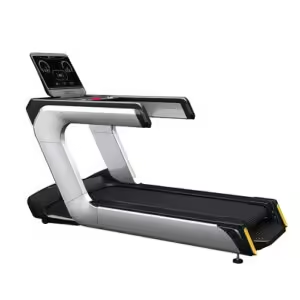
Choosing the right treadmill can be an overwhelming task due to the wide variety of models available on the market today. Whether you’re a seasoned runner, a beginner, or someone looking to use the treadmill for walking or rehabilitation, understanding the different types of treadmills and their features is essential. This guide will help you navigate through the options and make an informed decision to find the perfect treadmill for your fitness goals.
What Are the Different Types of Treadmills?
Understanding the different types of treadmills is crucial when choosing the right one for your needs. Broadly speaking, treadmills can be categorized into manual, motorized, and folding types, each catering to different fitness levels, workout intensities, and space requirements.
Manual Treadmills
Manual treadmills are simple, non-motorized devices that rely on the user’s movement to power the belt. They offer a more natural workout and are often used for walking or light jogging. These treadmills are typically more affordable and require less maintenance.
Motorized Treadmills
Motorized treadmills are equipped with an electric motor that powers the belt at adjustable speeds. These are ideal for people looking for more diverse workout options, including running, interval training, and incline walking. Motorized treadmills are also generally more comfortable and offer higher speed and intensity ranges.
Folding Treadmills
Folding treadmills are designed to save space, making them perfect for home gyms with limited room. These treadmills can be folded and stored upright when not in use, offering a convenient option for those looking to maximize their space.
Commercial Treadmills
These treadmills are designed for high usage and are commonly found in gyms and fitness centers. Built with durable components, commercial treadmills can withstand frequent and intense use while providing advanced features like higher weight capacities and advanced programs.
Features to Consider When Choosing Different Types of Treadmills
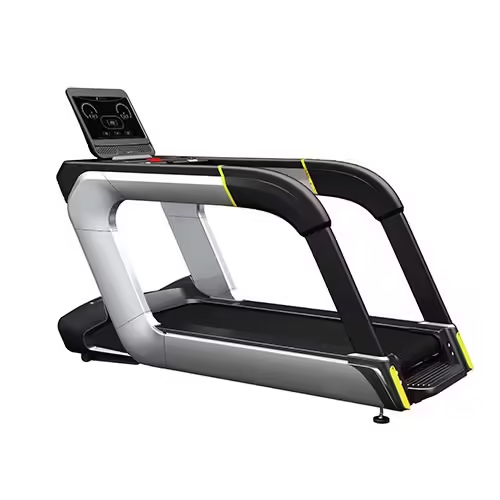
When choosing a treadmill, various factors should be considered depending on your fitness goals, preferences, and available space. Here are key features to keep in mind when evaluating different types of treadmills:
Motor Power and Speed Range
A powerful motor is essential for smooth running, particularly if you plan on using the treadmill for running or high-intensity workouts. Motorized treadmills typically offer a range of speeds, with commercial-grade models providing higher horsepower for intense use.
Cushioning and Deck Type
A treadmill’s cushioning system affects the comfort of your workout and helps reduce the risk of joint injuries. High-quality cushioning systems offer better shock absorption and a smoother feel underfoot.
Incline and Decline Features
Many motorized treadmills allow you to adjust the incline to simulate uphill running, which can increase workout intensity. Some high-end models even offer decline features for a more versatile workout routine.
Space and Portability
If you’re working with limited space, a folding treadmill can be a great choice. Consider the treadmill’s dimensions, whether it can be easily stored, and how much room you need for your workouts.
Technology and Workout Programs
Modern treadmills come with advanced technology, including built-in screens, heart rate monitors, and preset workout programs. These features help to track your progress and keep your workouts varied and engaging.
Table: Comparison of Different Types of Treadmills
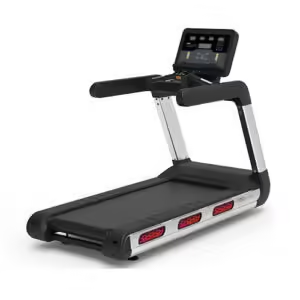
| Treadmill Type | Features | Ideal For | Price Range |
|---|---|---|---|
| Manual Treadmill | Simple, non-motorized, no electricity required | Light walking and budget-conscious users | Low |
| Motorized Treadmill | Electric motor, adjustable speeds, incline options | Runners and high-intensity users | Mid to High |
| Folding Treadmill | Compact, foldable design, space-saving | Home gyms with limited space | Mid |
| Commercial Treadmill | Heavy-duty construction, advanced features | Gym settings and professional use | High |
How to Choose the Right Treadmill for Your Fitness Goals
Selecting the right treadmill depends on your fitness level, goals, and available space. If you are a beginner, a manual treadmill might suffice for light walking. However, if you plan to use the treadmill for running or intense workouts, a motorized treadmill with adjustable speeds and incline would be more suitable. If space is a concern, a folding treadmill will be a great option for convenience.
Conclusion
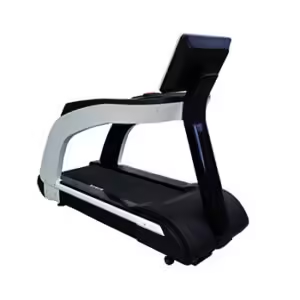
Now that you are familiar with the different types of treadmills and their features, it’s time to make an informed decision. Whether you need a treadmill for light walking or intense running sessions, understanding the options will help you pick the right one for your home gym. Don’t wait any longer—choose the perfect treadmill and take the first step towards achieving your fitness goals today!
What’s the difference between a manual and a motorized treadmill?
Manual treadmills rely on the user’s movement to power the belt, while motorized treadmills use an electric motor to control the belt’s speed.
Are folding treadmills durable?
Yes, folding treadmills are generally built with durable materials, but they may not be as heavy-duty as commercial models. They are designed to withstand regular home use.
Can I use a manual treadmill for running?
Manual treadmills are best suited for walking or light jogging. Running on a manual treadmill may be challenging, especially at higher speeds.