
In the professional fitness equipment industry, the search for the best stair climber is rarely about finding the most expensive model on the market. Instead, it is about aligning mechanical specifications with the physical constraints of your space and the specific physiological goals of your users.
Whether you are outfitting a high-traffic commercial franchise, a boutique PT studio, or a luxury hotel gym, the “best” choice is the one that maximizes uptime and user safety while minimizing the total cost of ownership. This guide breaks down the selection process across 6 distinct models to help you identify your ideal match.
Table of Contents
The Space Constraint: Solving the Low-Ceiling Dilemma
One of the most common pitfalls in gym design is overlooking vertical clearance. Traditional stair climbers require significant ceiling height because the user is elevated by the base and then moves upward.
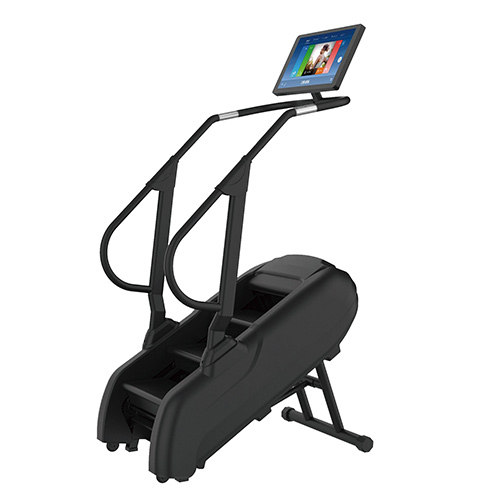
For facilities with height restrictions, such as basement studios or renovated office spaces, a stair climber for low ceilings is a mechanical necessity. The Compact Stair Climber P1019 was engineered specifically for these environments. By optimizing the step-up height without sacrificing the depth of the stair, it allows for a full-intensity workout in spaces where traditional units would risk user injury.
High-Traffic Durability: The Heavy-Duty Powerhouse
In a 24/7 commercial environment, equipment downtime is the primary driver of member dissatisfaction. When your facility processes hundreds of users daily, the best stair climber must be defined by its structural integrity and heat dissipation capabilities.
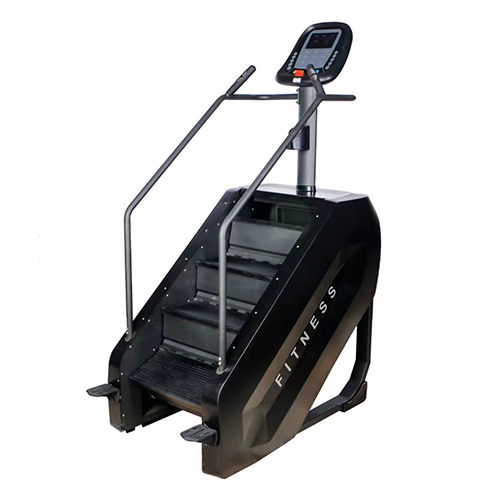
The 9700 Stair Climber serves as our flagship commercial solution. It features an industrial-grade chain drive system and reinforced steel frame designed to handle a maximum user weight of 200kg (440 lbs) consistently. According to the American College of Sports Medicine (ACSM), stair climbing generates significantly higher metabolic equivalents (METs) than flat-surface walking (ACSM MET Guidelines), which places immense localized pressure on the machine’s drive train. The 9700 is built to withstand this specific mechanical stress.
Aesthetics Meets Performance: The Luxury Segment
For boutique fitness brands and high-end hospitality centers, the visual language of the equipment is as important as its function. You need a machine that reflects a premium brand identity while providing a whisper-quiet user experience.

The Luxury Stepper ZF1500 bridges the gap between industrial performance and minimalist design. It utilizes an advanced electromagnetic braking system that ensures smooth transitions between resistance levels, eliminating the “jerking” sensation found in lower-end models. This makes it a top contender for those seeking the best stair climber for environments where noise pollution must be kept to a minimum, such as hotel floors located directly above guest rooms.
Technical Comparison: Mapping Features to Needs
To make an informed decision, you must compare the mechanical footprints and intended use cases of the available fleet.
Professional Comparison Matrix
| Model | Primary Use Case | Key Technical Advantage | Footprint (LxWxH) |
| 9700 | High-Traffic Commercial | Reinforced Drive Chain & LED Console | 1600 x 970 x 2100 mm |
| ZF1500 | Luxury Boutique / Hotel | Ultra-Quiet Electromagnetic Braking | 1500 x 850 x 2100 mm |
| ZF1100 | Standard Commercial | High-Strength ABS Shell & Ergonomic Rails | 1450 x 820 x 2080 mm |
| P1019 | Low-Ceiling / Small Space | Optimized Step-up Height | 1350 x 800 x 1950 mm |
| P1018 | Versatile Studio Use | Balanced Weight-to-Stability Ratio | 1400 x 810 x 2000 mm |
| P1011 | Budget-Conscious / Light Use | Simplified Electronics / Low Maintenance | 1320 x 780 x 1900 mm |
The Biomechanics of Climbing: Training for Results
Why is the best stair climber so effective for fat loss and muscle hypertrophy? Unlike a treadmill, where the belt assists in the “pull-back” phase of the stride, a stair climber requires the user to lift their entire body weight against gravity with every step.
Research published in the Journal of Strength and Conditioning Research (JSCR Archive
) highlights that vertical climbing increases the activation of the Gluteus Maximus and Vastus Lateralis significantly more than traditional incline walking.
For users focused on:
- Glute Isolation: High-step models like the High-Quality ZF1100 provide the necessary range of motion.
- Cardiovascular Endurance: The P1018 offers consistent resistance profiles for Zone 2 heart rate training.
Safety Features: Protecting the User and the Facility
A professional-grade machine must include redundant safety systems. When evaluating the best stair climber for an unstaffed or 24-hour gym, look for infrared sensor technology.
Many of our models, including the P1011, are equipped with “auto-stop” sensors at the base of the stairs. If a user slips or an object falls into the stairs, the machine terminates movement instantly. This reduces facility liability and prevents mechanical damage to the internal motor.
Maximizing ROI: Price vs. Total Cost of Ownership
In B2B procurement, the sticker price is often misleading. A cheaper machine that requires monthly technician visits is far more expensive than a premium unit that runs for years with basic cleaning.
Choosing a best value stair climber for gym startups involves looking at the ZF1100. It offers the core structural components of our flagship 9700 but simplifies the entertainment console. This allows gym owners to invest in a “workhorse” machine that delivers a 5-star workout experience without the 5-star price tag.
For those managing smaller budgets or residential apartment gyms, the P1011 provides the essential vertical training experience. It is a streamlined, effective tool that focuses on the core mechanics of climbing, ensuring you get the highest possible return on your equipment investment.
Maintenance Protocol for Longevity
Even the best stair climber requires a proactive maintenance schedule. Because these machines operate in a “sweat-heavy” environment, corrosion is the enemy.
1.Daily: Wipe down the side rails and consoles with non-corrosive disinfectant.
2.Weekly: Vacuum the base to prevent dust from entering the motor shroud.
3.Monthly: Inspect the chain tension and lubricate moving parts as per the technical manual.
This disciplined approach ensures that your investment remains a high-performing asset for years to reach.
Conclusion: Defining Your “Best Stair Climber”
The best stair climber is the one that fits your space today and survives your traffic tomorrow.
- If you have limited height, choose the P1019.
- If you have high-volume traffic, invest in the 9700.
- If you prioritize design and quiet operation, go with the ZF1500.
- If you need maximum ROI, the ZF1100 is your ideal candidate.
By focusing on your facility’s specific reality—rather than just marketing specs—you ensure a better experience for your members and a healthier bottom line for your business.
FAQ
What is the minimum ceiling height needed for a commercial stair climber?
Generally, you should add at least 50-60cm (20-24 inches) to the height of the user. For low ceilings, the P1019 is specifically designed with a lower base to maximize clearance.
s a stair climber better than an elliptical for weight loss?
Yes. Stair climbing is a weight-bearing exercise that requires more energy to lift the body vertically, typically resulting in higher calorie burn per hour compared to the elliptical.
Can these machines be used in a home gym?
Absolutely. While designed for commercial durability, models like the P1011 and P1018 are popular for high-end home gyms due to their reliability and footprint.