
Welcome to My Blog!
Before we dive into the content, I’d love for you to join me on my social media platforms where I share more insights, engage with the community, and post updates. Here’s how you can connect with me:
Facebook:https://www.facebook.com/profile.php?id=61553215985287
LinkedIn:https://www.linkedin.com/showcase/99329941/admin/dashboard/
Tiktok:www.tiktok.com/@shandongvitalfitness
Now, let’s get started on our journey together. I hope you find the content here insightful, engaging, and valuable.
Table of Contents
Introduction
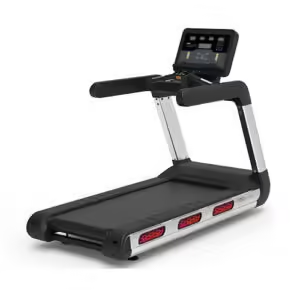
When buying a treadmill, one key question many shoppers ask is how much does a treadmill weigh. Treadmill weight affects portability, ease of setup, durability, and overall performance. A lightweight treadmill might be easier to move, but a heavier treadmill is often more stable and built for long-term use. The weight of a treadmill depends on several factors, including frame material, motor size, running deck dimensions, and additional features. Whether you’re looking for a home treadmill or a commercial-grade machine, understanding treadmill weight can help you make an informed decision.
Factors That Affect How Much a Treadmill Weighs
Treadmill weight varies depending on its design, materials, and purpose. The frame is a major contributor to weight, with steel-framed treadmills being heavier and more durable, while aluminum frames offer a lighter, more portable alternative. Some models incorporate plastic components to reduce weight, but this may impact durability.
The motor also plays a big role. A treadmill with a smaller motor, typically between 1.5 and 2.5 HP, is lighter and better suited for walking or light jogging. In contrast, treadmills with motors above 3.0 HP tend to be much heavier due to the larger, more powerful components required for high-speed running and intense workouts.
The size of the running deck also matters. Compact treadmills with a deck length of 40 to 50 inches are generally lighter, while treadmills with longer decks—over 60 inches—add significant weight, providing a more comfortable running experience. The belt material, cushioning system, and incline mechanisms also contribute to the total weight of the machine.
How Much Does a Treadmill Weigh?
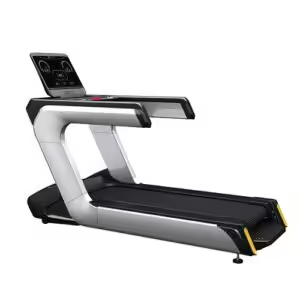
Treadmills come in a range of weights depending on their type. Compact folding treadmills are the lightest, often weighing between 70 and 150 lbs, making them easy to move and store. Standard home treadmills fall in the range of 150 to 250 lbs, striking a balance between durability and portability. For those who need a treadmill for intense workouts, heavy-duty home models can weigh anywhere from 250 to 350 lbs, offering more stability. Commercial-grade treadmills, designed for gym use, are the heaviest, often exceeding 300 lbs and sometimes reaching over 500 lbs.
Average Treadmill Weights
| Treadmill Type | Weight Range (lbs) | Best For |
|---|---|---|
| Compact Folding Treadmill | 70 – 150 | Small spaces, portability |
| Standard Home Treadmill | 150 – 250 | Home workouts, jogging |
| Heavy-Duty Home Treadmill | 250 – 350 | Running, intense training |
| Commercial Gym Treadmill | 300 – 500+ | Gyms, high-performance use |
Choosing the Right Treadmill Based on Weight
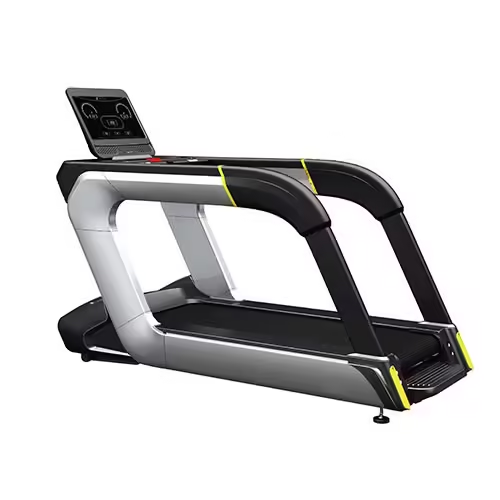
The weight of a treadmill has a direct impact on its stability and ease of use. Heavier treadmills are generally more stable, especially for high-speed running, as they don’t wobble or shift as easily. On the other hand, lighter treadmills are easier to transport and store, making them a better choice for small spaces.
Another factor to consider is weight capacity. A treadmill’s weight is often linked to its user weight limit, with heavier treadmills supporting higher capacities. A standard home treadmill typically supports around 250 lbs, while heavy-duty and commercial treadmills can accommodate users up to 400 lbs or more.
Storage and space considerations are also important. If you have limited space, a folding treadmill is a great option since it is usually lighter and designed for easy storage. However, if you have a dedicated workout space, a heavier, non-folding treadmill offers better stability and durability.
Conclusion
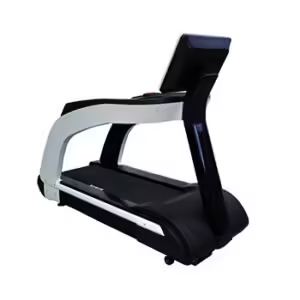
Understanding how much does a treadmill weigh helps you choose the best model for your needs. Whether you need a lightweight treadmill for easy storage or a heavy-duty model for serious workouts, weight plays a crucial role in performance and stability. Ready to find the perfect treadmill? Explore your options today and invest in the right one for your fitness goals!
FAQ
How much does a treadmill weigh on average?
Most treadmills weigh between 150 and 300 lbs, depending on their frame, motor, and features.
Can I move a treadmill by myself?
Lighter treadmills under 150 lbs can usually be moved alone, but heavier models require two people or a dolly.
Does a heavier treadmill last longer?
In many cases, yes. Heavier treadmills often have stronger frames and motors, making them more durable.
What is the best treadmill weight for home use?
For home use, a treadmill weighing 150 to 250 lbs offers a good mix of stability and portability.
Are commercial treadmills much heavier than home treadmills?
Yes, commercial treadmills typically weigh 300 to 500 lbs due to their reinforced construction and powerful motors.