
You’ve been there. Every morning, you step onto the machine, set a steady pace, and stare at the wall for forty-five minutes. You’re consistent, but the scale isn’t moving. You’ve hit the dreaded weight loss plateau. The problem isn’t your dedication; it’s your strategy. In the fitness world, more time does not always equate to better results. Integrating a HIIT workout on elliptical into your routine is the surgical strike your metabolism needs to break through that wall.
Most people treat the elliptical as a “leisurely stroll” machine. However, when used with high-intensity protocols, it transforms into one of the most effective fat-shredding tools in your home gym. By shifting from long, boring sessions to a high-octane 20-minute cardio plan, you can trigger a metabolic response that keeps your body burning fat long after you’ve stepped off the pedals.
Table of Contents
What is HIIT?
Before we dive into the pedals, we need to answer a fundamental question: what is hiit? High-Intensity Interval Training (HIIT) is a training protocol where you give 100% effort through quick, intense bursts of exercise, followed by short, sometimes active, recovery periods. Why a HIIT workout on elliptical beats standard running comes down to heart rate zones.
Standard cardio keeps your heart rate in a “steady state,” usually around 60-70% of your maximum. HIIT, however, pushes you into the 80-90% range. This creates “Oxygen Debt,” or what scientists call Excess Post-exercise Oxygen Consumption (EPOC). This is the secret sauce of fat loss. According to Harvard Health, HIIT can produce metabolic benefits that are similar to, or even greater than, much longer sessions of moderate-intensity exercise.
Compare HIIT vs LISS Workout
When you Compare HIIT vs LISS workout (Low-Intensity Steady State), the winner depends on your goals. LISS is excellent for recovery days or building basic aerobic capacity. However, if your goal is fat burning efficiency, LISS has a major drawback: your body becomes too efficient at it. Over time, your metabolism adapts, and you burn fewer calories for the same amount of work.
Performing a HIIT workout on elliptical allows you to bypass this adaptation. While a LISS session only burns calories during the activity, HIIT raises your basal metabolic rate for hours afterward. This is known as the “Afterburn Effect.” If you are looking for the best elliptical workout for maximum calorie burn in short time, the interval method is statistically superior for preserving muscle while stripping away subcutaneous fat.
What Muscles Does an Elliptical Machine Target?
One of the biggest myths is that the elliptical is only for legs. In reality, a HIIT workout on elliptical targets the core, chest, back, and arms, provided you aren’t just leaning on the stationary handles. By actively pushing and pulling the moving handlebars, you turn a leg-dominant exercise into a legitimate full body workout.
So, what muscles does an elliptical machine target?
- Lower Body: Glutes, hamstrings, quads, and calves.
- Upper Body: Pectorals (pushing), Rhomboids and Lats (pulling), and Triceps/Biceps.
- Core: Your obliques and abs work overtime to stabilize your torso as your limbs move in opposition.
This multi-muscle recruitment is exactly why this machine is so effective for a home hiit workout. You are essentially getting a resistance training session and a cardio session in one compact timeframe.
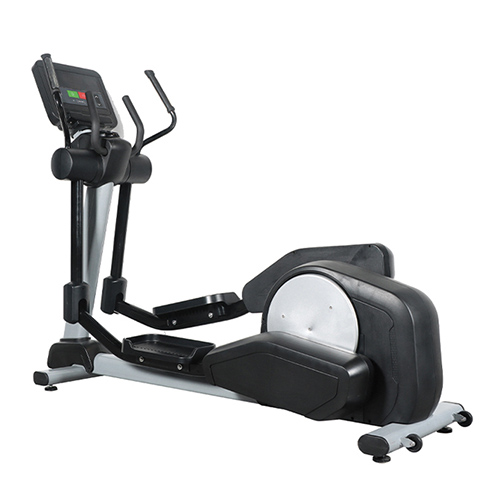
Best Elliptical Workout for Maximum Calorie Burn in Short Time
To start your HIIT workout on elliptical, you need to understand the “RPE” scale (Rate of Perceived Exertion). On a scale of 1 to 10, your recovery should be a 3, and your “Work” burst should be an 8 or 9.
Stuck on a Plateau? Try This 20-Minute HIIT Elliptical Workout to Blast Fat:
1.Warm-up (0:00 – 3:00): Low resistance, moderate pace. Get the blood flowing.
2.The Sprint (0:30): Increase resistance to a level that feels like pedaling through thick mud. Pedal as fast as possible.
3.The Recovery (1:00): Drop the resistance back down. Keep moving, but slowly.
4.Repeat: Perform this 30s/60s cycle 10 times.
This specific 20-minute cardio structure is designed to maximize heart rate variability. Research from the Mayo Clinic suggests that this type of interval training can even reverse some cellular aspects of aging in muscles, making it the best HIIT workout on elliptical for long-term health.
Efficiency Comparison: Why the Elliptical Wins
Consistency with your HIIT workout on elliptical is key, but why choose this machine over a treadmill or a stationary bike? The answer lies in the “Impact vs. Intensity” ratio.
| Metric | Elliptical HIIT | Treadmill HIIT | LISS Cycling |
| Calorie Burn (20 min) | High (300-400) | High (300-400) | Low (150-200) |
| Joint Impact | Low/Zero | High | Low |
| Muscle Activation | Full Body | Lower Body | Lower Body |
| Afterburn (EPOC) | Significant | Significant | Minimal |
As shown, your HIIT workout on elliptical should include the upper body to truly maximize that calorie burn. Unlike the treadmill, which puts immense stress on the ankles and knees, the elliptical’s elliptical path mimics the natural gait without the “thud” of the pavement.
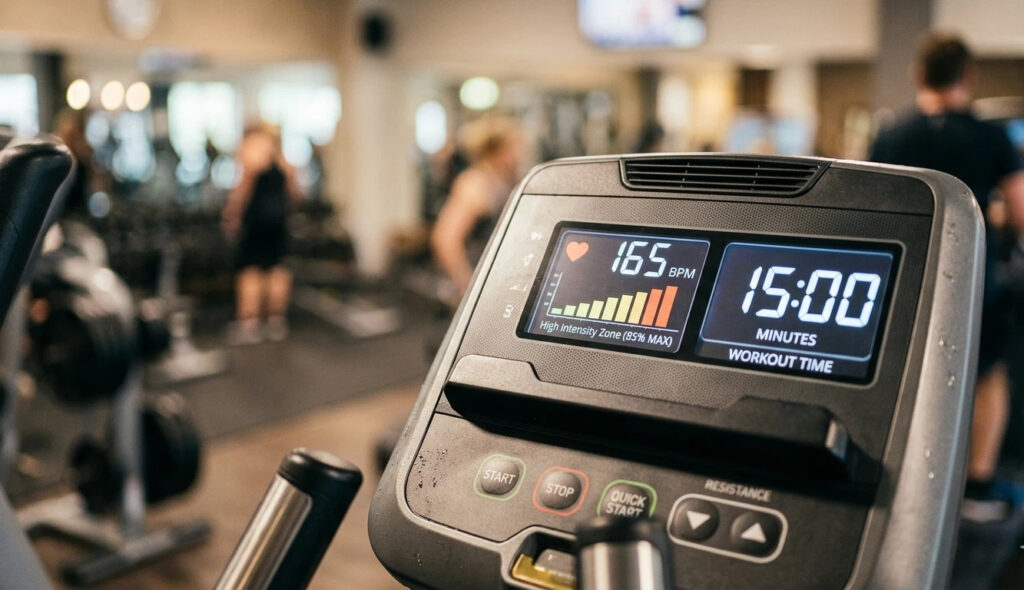
Maximizing Your Home HIIT Workout Results
During a HIIT workout on elliptical, your heart rate is the most important metric. If you find the intervals becoming “easy,” do not just pedal faster—increase the resistance. Resistance is what builds the metabolic demand. If you are doing a home hiit workout, ensure your machine is on a level surface; any rocking or instability will bleed off the energy you should be putting into the pedals.
Furthermore, don’t ignore the “Reverse” feature. Pedaling backward during your recovery phases can target your hamstrings and glutes from a different angle, ensuring you leave no muscle fiber unworked. This HIIT workout on elliptical protocol is designed to be uncomfortable. If you can hold a conversation during your 30-second sprint, you aren’t working hard enough.
Conclusion
The evidence is clear: the era of “jogging to nowhere” is over. By embracing the intensity of a 20-minute session, you unlock a level of fat burning efficiency that steady-state cardio simply cannot match. This HIIT workout on elliptical method is the ultimate “time-hack” for the busy professional or the stay-at-home parent who needs maximum results in minimum time.
Final thoughts on the HIIT workout on elliptical method: it’s not about how long you stay on the machine, but the fire you ignite while you’re there. Stop counting minutes and start making the minutes count.
FAQ
How many times a week should I do this?
Because HIIT is taxing on the central nervous system, 2-3 times a week is plenty. Overtraining can actually stall fat loss.
Can I do this if I have bad knees?
Yes! That is the primary benefit of the elliptical. It provides a high-intensity stimulus without the joint-jarring impact of running.
Should I do HIIT before or after weight lifting?
For maximum fat loss, many experts suggest doing it after lifting, or as a completely separate session, so you have full energy for your heavy lifts.
Is 20 minutes really enough?
If the intensity is high enough, yes. Science shows that short bursts of near-maximal effort are more effective for metabolic health than hours of low-effort movement.